
Pilates

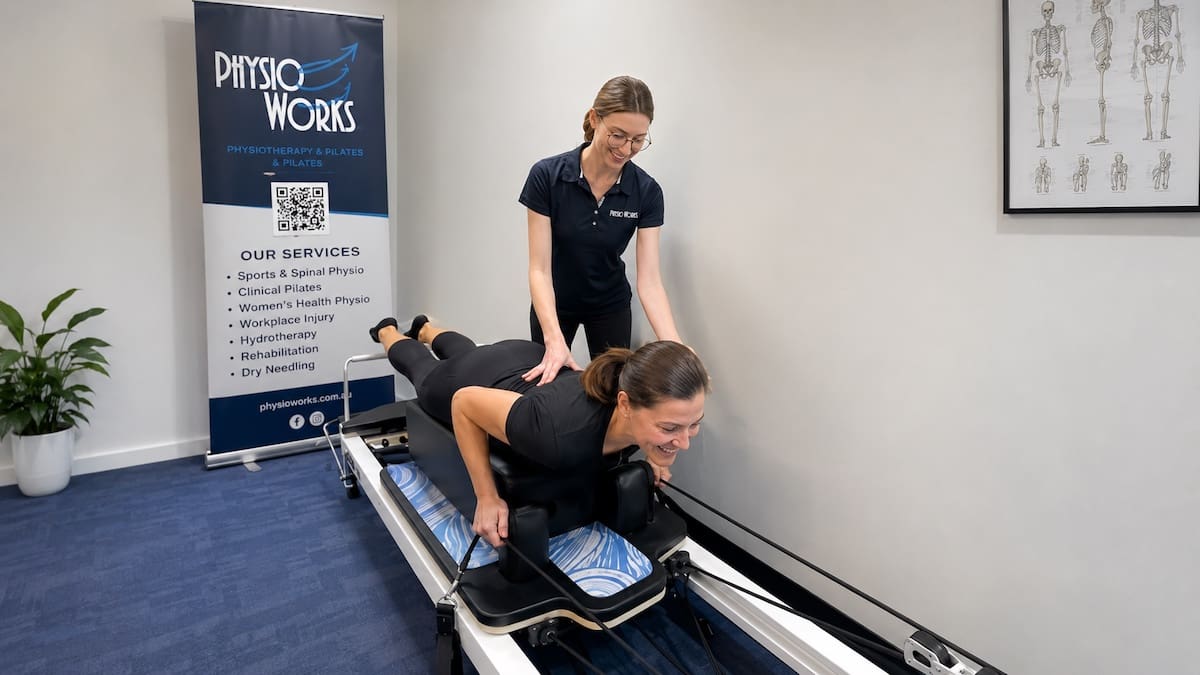
Pilates is a controlled exercise method that may help improve strength, balance, posture, movement control, and body awareness. It is often used with core stability retraining and broader rehabilitation for people managing back, neck, shoulder, or postural problems.
At PhysioWorks, Pilates is not treated as a one-size-fits-all class. A physiotherapist can help decide whether clinician-led Pilates, reformer Pilates, mat Pilates, home exercises, or a different rehabilitation plan suits your symptoms, goals, and current capacity.
Quick answer: Pilates may help some people improve movement control, strength, balance, and exercise confidence.
Best fit: It works best when the program matches your body, pain behaviour, exercise history, and recovery stage.
What Is Pilates?
Pilates is a low-impact exercise method that focuses on posture, breathing, control, and smooth movement. It often trains the deeper trunk muscles while also improving how the hips, shoulders, spine, and limbs work together.
Pilates can be mat-based or equipment-based. Equipment such as a reformer can add support, resistance, and feedback. This can help people practise movement with more control, especially when they are rebuilding confidence after pain or injury.
Common reasons people try Pilates
- improve deep core muscle control
- build low-impact strength
- improve posture and body awareness
- support back, neck, or shoulder rehabilitation
- improve balance, flexibility, and movement confidence
Can Pilates Help Back, Neck, or Shoulder Pain?
Pilates may help some people with back, neck, or shoulder pain by improving strength, movement control, and confidence with exercise. However, it is not automatically better than every other exercise approach.
Research on Pilates for low back pain suggests it can reduce pain compared with no exercise, while results are often similar to other well-planned exercise programs. This means the program design matters more than the label. You can also read more about Pilates for back pain treatment, Pilates for shoulder pain treatment, and neck pain treatment.
Pilates May Suit You If
- you want guided, low-impact exercise
- you flare up when exercises progress too quickly
- you need help with control, posture, or confidence
- you are returning to exercise after pain or injury
- you want a supervised pathway before joining a general class
Why Core Stability Matters in Pilates
Your deeper trunk muscles help support the spine and guide efficient movement. In some people with pain, these muscles can lose timing, endurance, or coordination. Pilates can help retrain these movement patterns in a controlled way.
This does not mean every ache comes from a weak core. Pain is usually more complex than that. Instead, Pilates may be one useful way to improve control, strength, breathing, and tolerance to activity. It is often paired with core stability exercises, general strength work, and graded return to normal activity.
Clinician-Led Pilates vs General Pilates Classes
Clinician-led Pilates is more tailored than a general class. A physiotherapist can assess your pain pattern, movement quality, exercise tolerance, and precautions before choosing the right exercises.
General Pilates classes may still suit many healthy people. However, they can move too quickly or include exercises that are not ideal for someone with pain, a recent injury, or a history of exercise flare-ups. PhysioWorks Sandgate also offers 1-on-1 reformer Pilates and mat Pilates sessions for people who want closer supervision, individual technique coaching, and personalised progressions.
Clinical Pilates vs General Pilates
| Clinical Pilates | Tailored to pain, injury, movement goals, and safe progressions. |
| General Pilates | Suited to general fitness when exercises match your ability. |
| Reformer Pilates | Uses equipment for resistance, support, feedback, and progression. |
| Mat Pilates | Uses floor-based exercises to train control, breathing, strength, and mobility. |
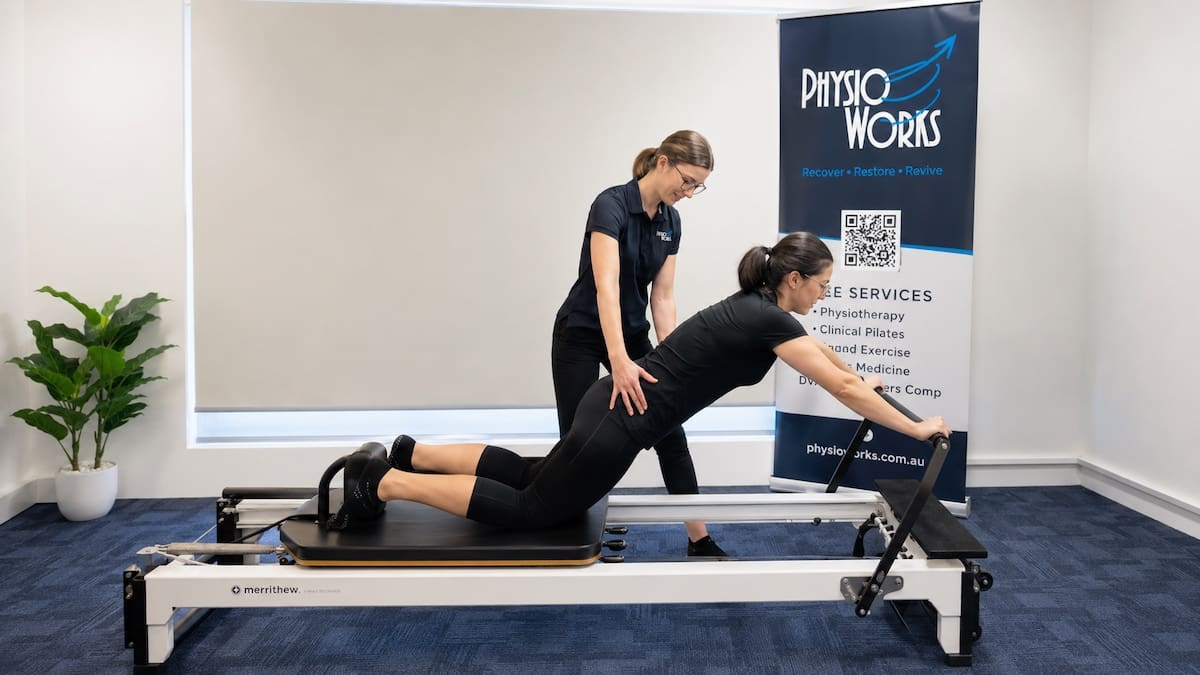
Prefer 1-on-1 Pilates at Sandgate?
PhysioWorks Sandgate also offers 1-on-1 reformer Pilates and mat Pilates sessions for people who want individual guidance rather than a group class.
This option may suit you if you are recovering from pain or injury, new to Pilates, unsure how hard to exercise, or want a physiotherapist to tailor each session to your movement goals.
Who Is Pilates Best Suited To?
Pilates may suit people who want a low-impact way to improve control, strength, posture, balance, and movement confidence. It can be useful for some people with back pain, neck pain, shoulder pain, postural problems, or reduced confidence with exercise.
Still, Pilates is not ideal for everyone at every stage. If exercises are too hard, poorly supervised, or progressed too quickly, symptoms can worsen. Some people may need to start with simpler rehabilitation exercises, pain reduction, mobility work, or a different strength plan first.
How Often Should You Do Pilates?
The right frequency depends on your goals, symptoms, recovery stage, and exercise background. Some people benefit from one or two supervised sessions each week plus home exercises. Others may use Pilates as one part of a broader strengthening program.
The World Health Organization recommends regular weekly physical activity and muscle-strengthening exercise for long-term health. Pilates may support those habits when it is planned at the right level and progressed safely.
When Should You Get Advice Before Starting Pilates?
Consider a physiotherapy assessment first if pain is persistent, worsening, sharp, or linked with pins and needles, weakness, dizziness, balance changes, or unexplained symptoms. You should also get advice if past exercise programs have flared your symptoms.
A physiotherapist can help you decide whether Pilates, general strengthening, posture correction, or another rehabilitation pathway is the best fit. Healthdirect also explains the role of physiotherapy in managing pain, injury, and movement problems.
Related PhysioWorks Articles
- 1-on-1 Reformer Pilates and Mat Pilates at Sandgate
- Clinician-Led Pilates at Sandgate
- Pilates for Back Pain Treatment
- Pilates for Shoulder Pain Treatment
- Neck Pain Treatment
- Core Stability Exercises
- Deep Core Muscles Guide
- Posture Correction
- Rehabilitation Exercises
- Sports Injury Management
Pilates FAQs
Is Pilates good for back pain?
Pilates may help some people with back pain by improving movement control, strength, and confidence with activity. It is not the only useful option. The best plan depends on your diagnosis, pain behaviour, exercise tolerance, and goals.
What is the difference between Pilates and clinical Pilates?
Clinical Pilates is usually guided by a physiotherapist or trained clinician. It is tailored to your pain, injury history, movement limits, and rehabilitation goals. General Pilates classes are usually broader and may not be designed for individual injury management.
Can Pilates make pain worse?
Yes. Pilates can aggravate pain if exercises are too advanced, poorly supervised, or not suited to your condition. Technique, load, breathing, and progression matter. A personalised program may reduce the risk of symptom flare-up.
Is reformer Pilates better than mat Pilates?
Not always. Reformer Pilates can provide support and resistance, which may help some people. Mat Pilates can also be useful. The better option depends on your symptoms, goals, movement control, and how much guidance you need.
Can I do 1-on-1 Pilates at Sandgate?
Yes. PhysioWorks Sandgate offers 1-on-1 reformer Pilates and mat Pilates sessions. These sessions may suit people who want individual guidance, closer supervision, technique coaching, or a tailored exercise plan.
How do I know if Pilates is right for me?
If you have pain, stiffness, recurring injury, or uncertainty about exercise, start with an assessment. A physiotherapist can help decide whether Pilates suits you now or whether another rehabilitation approach is more appropriate first.
Do I need a physiotherapy assessment before Pilates?
You may not need one if you are healthy, confident, and exercising without symptoms. An assessment is useful if you have pain, a recent injury, a medical concern, or a history of symptoms flaring during exercise.
What to Do Next
If you want to build strength, improve movement control, or return to exercise with more confidence, Pilates may form part of a helpful rehabilitation plan. The key is choosing the right exercises at the right level.
If pain, stiffness, or movement problems are holding you back, book an assessment with a PhysioWorks physiotherapist. We can help you decide whether clinician-led Pilates, reformer Pilates, mat Pilates, or another rehabilitation pathway best matches your needs.
Choose your clinic and appointment pathway
Select a PhysioWorks clinic to continue to live booking, an appointment request or reception assistance.


References
- Franks J, Thwaites C, Morris ME. Pilates to Improve Core Muscle Activation in Chronic Low Back Pain: A Systematic Review. Healthcare (Basel). 2023;11(10):1404. doi:10.3390/healthcare11101404
- Patti A, Thornton JS, Giustino V, et al. Effectiveness of Pilates exercise on low back pain: a systematic review with meta-analysis. Disabil Rehabil. 2024;46(16):3535-3548. doi:10.1080/09638288.2023.2251404
- Lazoura E, Savva C, Ploutarchou G, et al. Effectiveness of the Pilates method in patients with chronic neck pain: a systematic review with meta-analysis. BMC Musculoskelet Disord. 2025;26:629. doi:10.1186/s12891-025-08888-2
- Bull FC, Al-Ansari SS, Biddle S, et al. World Health Organization 2020 guidelines on physical activity and sedentary behaviour. Br J Sports Med. 2020;54(24):1451-1462. doi:10.1136/bjsports-2020-102955
