Youth - Kids Injuries

Youth – Kids Injuries

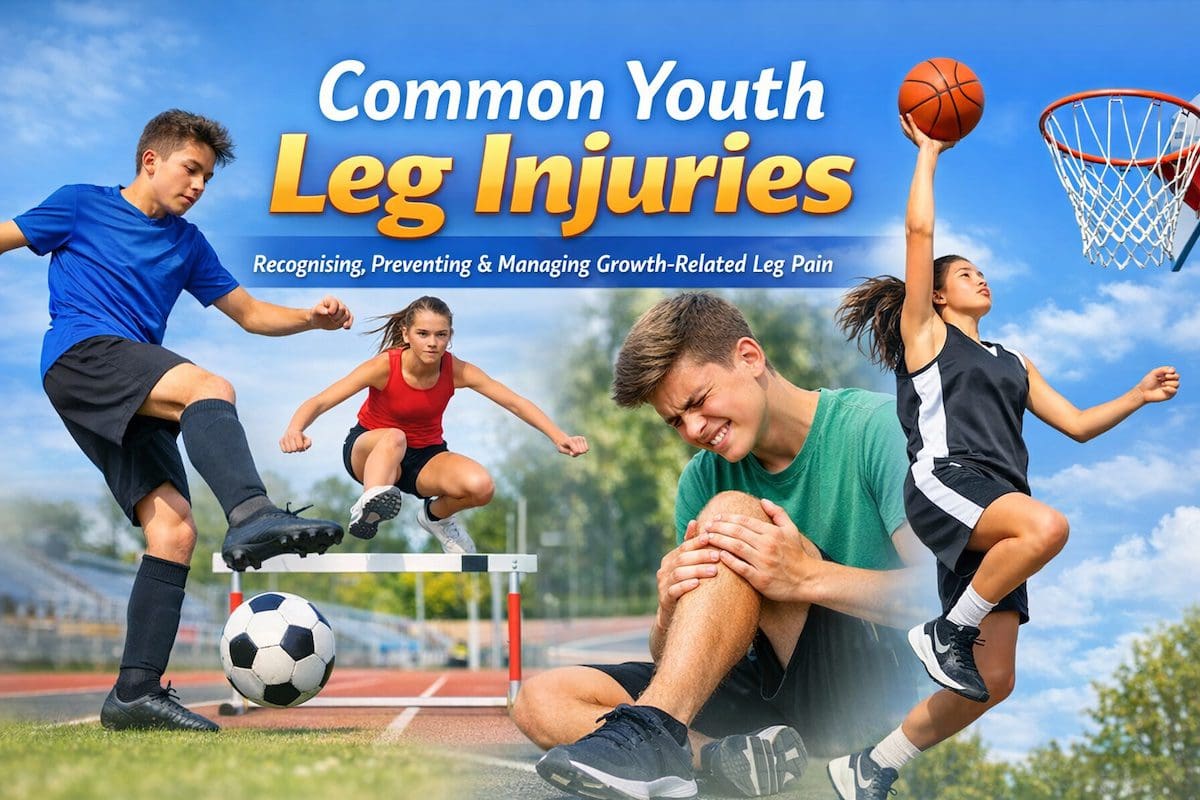
Common Youth Leg Injuries

Article by John Miller & Erin Runge
Common youth leg injuries in young athletes during running, jumping, and sport
Young athletes with common youth leg injuries

Common youth leg injuries usually involve growth plates, tendons, joints, or bone stress around the hip, knee, shin, heel, and ankle. Many start with repeated running, jumping, kicking, or fast growth rather than one major trauma. This guide helps parents, coaches, and young athletes recognise common patterns and find the right next step through our wider kids sports injuries and kids leg pain resources.

In growing athletes, leg pain often reflects a mix of training load, growth spurts, recovery habits, footwear, and movement control. Some problems settle quickly with guided load reduction, while others need earlier assessment to rule out more serious issues such as SCFE, Perthes disease, or a stress-related injury.

What is the most common youth leg injury?

The most common youth leg injuries are growth-related conditions such as Osgood-Schlatter disease at the knee and Sever’s disease at the heel, followed by overuse problems such as shin splints and ankle sprains. These issues often develop during growth spurts combined with running and jumping sports.

Quick signs to watch

  • pain that builds with sport, running, or jumping
  • limping during or after activity
  • swelling, tenderness, or pain over a growth plate
  • morning stiffness or pain after rest
  • pain that does not settle with a few days of lighter activity

What are common youth leg injuries?

Common youth leg injuries include growth-related knee pain, heel pain, hip conditions, ankle sprains, avulsion injuries, and overuse bone or tendon irritation. The most common patterns usually affect active children and teenagers during periods of rapid growth, especially when sport load rises faster than recovery.

At PhysioWorks, the most frequent youth lower-limb presentations include Osgood-Schlatter disease, Sinding Larsen Johansson syndrome, patellofemoral pain syndrome, Sever’s disease, avulsion injuries, and sprained ankles. Some young athletes also develop patella dislocation, meniscus injuries, or hip pain linked to growth and sport.

Common youth leg injuries by area

Youth leg injuries often cluster by body region. Looking at the pain location can help narrow the likely cause, although children can struggle to describe pain clearly, so a careful assessment still matters.

Where is the pain? Quick guide

  • Hip / groin: Perthes disease, SCFE, or avulsion injury
  • Front of knee: Osgood-Schlatter disease or Sinding Larsen Johansson syndrome
  • Around the kneecap: patellofemoral pain syndrome
  • Inner or deep knee: meniscus or ligament injury
  • Shin: shin splints or tibial stress fracture
  • Heel: Sever’s disease, which is very common in growing athletes
  • Ankle: sprain or instability

Pain location helps guide diagnosis, but a proper assessment still matters if symptoms persist, worsen, or cause limping.

Hip and pelvis injuries

Hip and pelvis pain in children and teenagers may come from growth-related bone conditions, traction injuries, or sport overload. More important diagnoses include Perthes disease, SCFE, and pelvic avulsion injuries. Groin or upper-thigh pain after sprinting or kicking can also point to a muscle or tendon issue.

Knee injuries

The knee is one of the most common pain sites in growing athletes. Typical causes include Osgood-Schlatter disease, Sinding Larsen Johansson syndrome, patellofemoral pain syndrome, patella dislocation, knee ligament injury, and meniscus tears.

Shin, heel, and ankle injuries

Lower-leg pain can come from Sever’s disease, ankle sprains, chronic ankle instability, shin splints, or tibial stress fracture. Heel pain in children is especially likely to reflect calcaneal apophysitis during running and jumping sports.

Why do common youth leg injuries happen during growth spurts?

Common youth leg injuries often rise during growth spurts because bones, muscles, tendons, and coordination do not all adapt at the same speed. This can increase stress on growth plates, apophyses, and lower-limb tissues, especially when sport and training continue to build at the same time.

Growth-related pain often follows a distal-to-proximal pattern through the lower limb, and faster gains in height or leg length can raise the chance of overuse and growth-related injuries in youth athletes.

When should you worry about common youth leg injuries?

You should worry about common youth leg injuries when pain causes limping, night pain, major swelling, inability to weight-bear, locking, repeated giving way, or pain that keeps returning despite rest. Hip, groin, and knee pain with a limp deserves earlier assessment because some growth-related hip conditions need prompt diagnosis.

Red flags include a child who refuses sport because of pain, has visible swelling, cannot hop or jog, has pain after a fall that is not settling, or reports pain at rest. Hip pain may be felt in the groin, thigh, or even the knee, so unusual knee pain with a limp should not be ignored.

Seek earlier assessment if a child or teenager has a limp, cannot fully weight-bear, has major swelling, locking, repeated giving way, pain at night, or hip/groin pain that refers to the knee.

Load management for common youth leg injuries

Load management means reducing irritation first, rebuilding strength and control next, then progressing back to sport in stages. It is one of the most important principles for common youth leg injuries because repeated load without enough recovery can keep growth-related pain and overuse symptoms going.

Overuse injuries in young athletes are strongly linked to repetitive stress without enough recovery, while growth and maturity changes can further increase risk. In practice, that often means temporarily reducing sprinting, jumping, kicking, hills, or extra training sessions rather than stopping all movement for long periods.

  • Reduce: calm the painful load by modifying training, sport volume, and aggravating drills.
  • Rebuild: improve flexibility, strength, landing control, calf capacity, hip control, and sport mechanics.
  • Progress: return gradually to running, training, and games once pain response, function, and confidence improve.

Helpful supports for youth leg injuries

Some simple supports can help reduce load and improve comfort during recovery, especially alongside physiotherapy and training modification.
  • Supportive footwear: helps reduce impact and improve load distribution
  • Heel lifts or inserts: may ease strain in conditions such as Sever’s disease
  • Knee taping or braces: can assist with patellofemoral or growth-related knee pain
  • Compression: may help with swelling and recovery after activity

These options should match the diagnosis and activity level, so it is worth discussing the right choice for your child.

How can physiotherapy help common youth leg injuries?

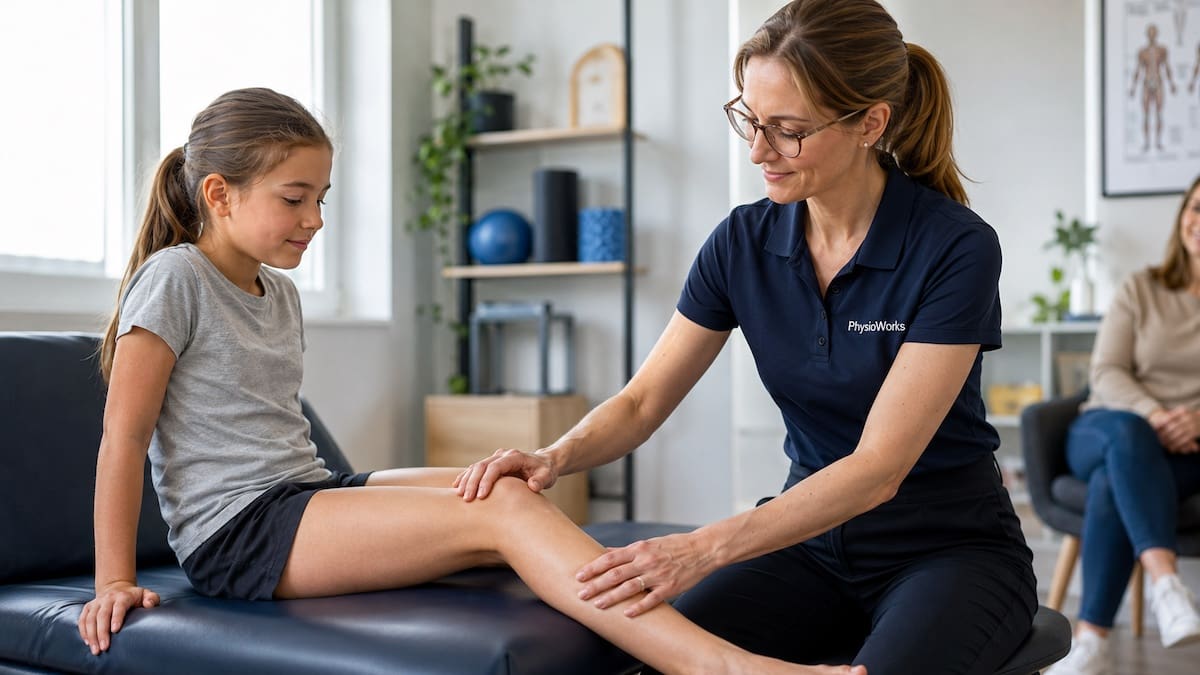
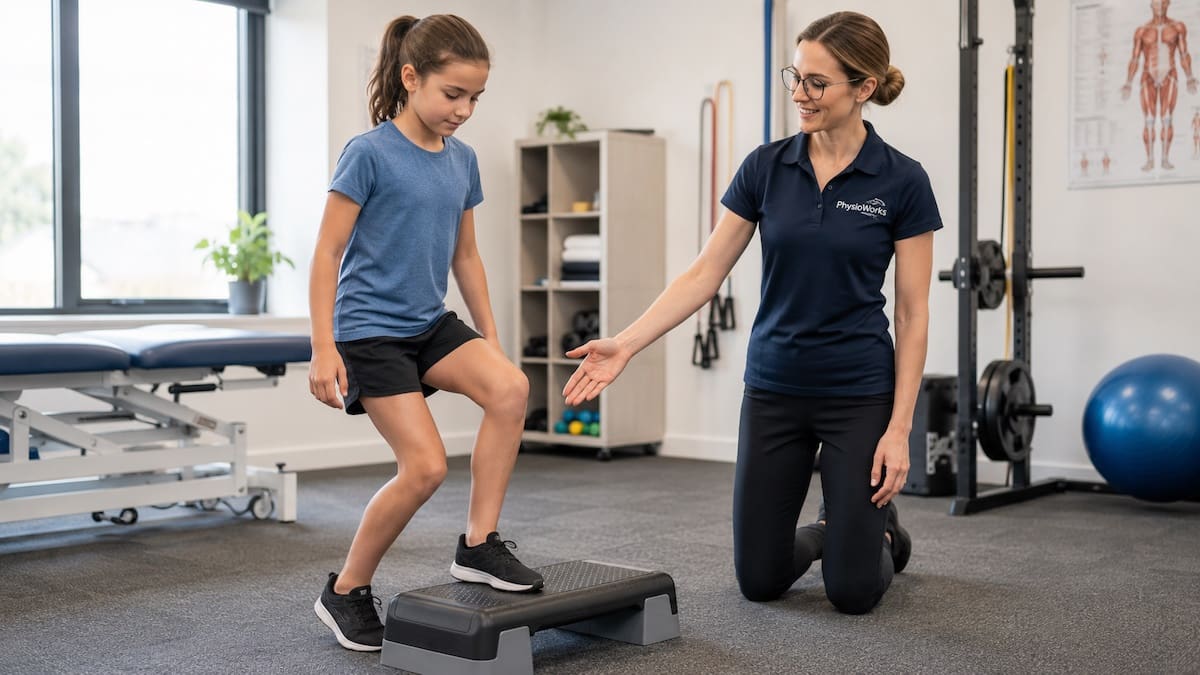
Physiotherapy for common youth leg injuries aims to confirm the likely source of pain, rule out more serious causes, and guide safe return to activity. Treatment may include load advice, joint and muscle assessment, strength work, mobility exercises, footwear guidance, taping, and return-to-sport planning.

We also help parents and coaches decide what the child can still do safely. Many youth injuries improve well with early guidance, especially growth-related knee and heel pain, but the best plan depends on the diagnosis, age, maturity stage, sport demands, and whether symptoms are worsening or settling.

FAQs

Is leg pain normal in growing children?

Some leg pain is common in growing children, but ongoing sport pain is not something to ignore. Repeated pain during running, jumping, or training can point to a growth-related injury, tendon overload, bone stress, or joint irritation that benefits from proper assessment.

What is the most common cause of heel pain in children?

The most common cause of heel pain in active children is Sever’s disease, also called calcaneal apophysitis. It is one of the most common causes of heel pain in growing athletes, and conservative treatment is usually effective.

Can a child feel hip pain in the knee?

Yes. Some hip conditions in children and teenagers can refer pain into the thigh or knee. That is why unexplained knee pain with limping, reduced hip movement, or groin pain deserves a careful assessment rather than assuming the knee itself is the main problem.

Should children stop sport completely if they have leg pain?

Not always. Many common youth leg injuries improve with modified load rather than full rest. The better plan is usually to reduce the aggravating volume or intensity, keep tolerated activity going, and build back up with guided progressions.

When does a young athlete need a scan or X-ray?

A scan or X-ray is not needed for every case of youth leg pain. It becomes more relevant when there is major trauma, inability to weight-bear, persistent night pain, suspected fracture, suspected significant hip pathology, or symptoms that are not improving as expected.

What should parents do first for common youth leg injuries?

Start by reducing painful sport load, avoiding drills that sharply increase symptoms, and arranging assessment if the child is limping, swelling, or not settling. Early guidance often shortens recovery and helps prevent a manageable overuse problem becoming a longer interruption.

What to do next

If your child or teenager has ongoing leg pain, repeated soreness after sport, or a limp that is not settling, book an assessment sooner rather than later. Early diagnosis can help you avoid training mistakes, protect a growing athlete, and get a clearer plan for school sport, club sport, and recovery.

PhysioWorks can help identify the likely source of common youth leg injuries, explain what is safe to continue, and guide a staged return to running, jumping, and training.

Book your appointment – 24/7

Choose your preferred PhysioWorks clinic and book online.

Follow PhysioWorks

Get free physiotherapy tips, exercise videos, recovery advice, and blog updates.

Facebook Instagram YouTube B X Email PhysioWorks

References

  1. Brenner JS, Watson A. Overuse injuries, overtraining, and burnout in young athletes. Pediatrics. 2024;153(2):e2023065129.
  2. Hernandez-Lucas P, Barrios-Fernandez S, Vera-Garcia FJ, et al. Conservative treatment of Sever’s disease: a systematic review. Int J Environ Res Public Health. 2024;21(4):436.
  3. Parry GN, Johnson DM, Gledhill A, et al. Associations between growth, maturation and injury in youth athletes engaged in elite pathways: a scoping review. BMJ Open Sport Exerc Med. 2024;10(3):e001976.

Common Youth Arm Injuries

Gymnast performing handstand with shoulder stability assessment by physiotherapist
Handstand shoulder control assessment in gymnast

Common youth arm injuries usually affect the elbow, shoulder, wrist, or growth plates in active children and teenagers. They often develop from repeated throwing, tumbling, gripping, falls, or rapid training spikes. If your child plays overhead or weight-bearing sport, compare this page with kids sports injuries and kids arm pain to narrow down the most likely cause.

Because growing bones are still developing, young athletes can get injuries that behave differently from adult tendon problems. Growth plates and apophyses are often the weak point, especially around the elbow, shoulder, and wrist. That is why early load changes, good technique, and the right assessment matter.

Common signs to watch for

  • Pain with throwing, serving, tumbling, or gripping
  • Pain that eases with rest but returns during sport
  • Tenderness around the elbow, shoulder, wrist, or forearm
  • Reduced speed, strength, accuracy, or confidence
  • Swelling, guarding, clicking, or locking

What are common youth arm injuries?

Common youth arm injuries include thrower’s elbow, medial apophysitis, growth plate stress injuries, gymnast’s wrist, sprains, fractures, and osteochondritis dissecans. The exact diagnosis depends on your child’s age, sport, training load, and where the pain sits.

In throwing and racquet sports, the main problems often involve the inside of the elbow or the shoulder. In gymnastics and tumbling, repeated weight-bearing can overload the wrist, elbow, and growth plates. More general or persistent symptoms may also overlap with broader arm pain patterns.

What causes common youth arm injuries?

Common youth arm injuries usually happen when training load rises faster than the growing body can adapt. Repeated throwing, too many competitions, poor recovery, growth spurts, and falls are some of the biggest drivers.

Recent reviews note that many youth overuse injuries occur at the relatively weaker growth centres rather than at adult-style tendon sites. Repetitive throwing sports are a classic example, but gymnastics, racquet sports, and contact sports can also stress the shoulder, elbow, wrist, and hand.

Thrower’s elbow is one of the best-known youth overuse arm injuries.

Thrower’s elbow and medial apophysitis

Thrower’s elbow usually describes overload on the inner side of the elbow in young overhead athletes. It commonly affects cricket, baseball, softball, and tennis players who throw or serve often, especially during growth spurts or busy tournament periods.

One common diagnosis is medial apophysitis, often called Little League elbow. This happens when repeated valgus stress irritates the growth area near the medial epicondyle. Children may report inner elbow pain, loss of throwing speed, soreness after sport, or tenderness that keeps returning. If your child’s symptoms clearly build with overhead sport, compare them with throwing injuries, baseball injuries, and cricket injuries.

Osteochondritis dissecans and joint surface injury

Osteochondritis dissecans can affect the capitellum of the elbow in young throwing athletes and gymnasts. It involves damage to the bone and cartilage surface and may cause deeper elbow pain, catching, locking, stiffness, or loss of range.

This is more serious than a simple overload flare. Stable cases may settle with unloading and staged rehabilitation, but unstable lesions sometimes need specialist review. For a related PhysioWorks page, see juvenile osteochondritis dissecans.

Growth plate stress injuries in the arm

Growth plate stress injuries happen because immature bone does not tolerate repeated load as well as mature tissue. These injuries can affect the shoulder, elbow, wrist, or hand and deserve attention because delayed diagnosis can prolong symptoms and, in rare cases, affect growth.

Examples include little league shoulder, little league elbow, and gymnast’s wrist. Children often say the arm feels sore during sport, improves with rest, then flares again when training resumes. A spike in throwing volume, too many teams at once, or heavy tumbling loads can all contribute.

Gymnastics upper limb injuries in youth athletes

Gymnastics places high load through the arms because they act as weight-bearing limbs during skills such as handstands, tumbling, and vaulting. This repeated loading can stress the wrist, elbow, and shoulder, particularly during growth spurts.

One of the most recognised conditions is gymnast’s wrist, which involves irritation of the distal radial growth plate. Athletes may report wrist pain with weight-bearing, reduced tolerance to training, or soreness that builds across sessions. Elbow and shoulder overload injuries can also develop with repeated tumbling or high training volumes.

These injuries often behave differently from adult conditions. Growth plate irritation is more common than tendon problems, so early load management is important. If symptoms are persistent, compare with wrist pain or shoulder pain pages to guide next steps.

Common gymnastics-related arm injuries

  • Gymnast’s wrist (distal radial growth plate stress)
  • Elbow overload and osteochondritis dissecans
  • Shoulder overuse injuries during tumbling and bars work
  • Repetitive strain from high training volume

When should you worry about youth arm injuries?

You should worry more about youth arm injuries if pain follows a fall, causes swelling or deformity, keeps returning with sport, wakes your child at night, or leads to locking, catching, numbness, or clear loss of strength.

Get your child assessed sooner if they have:

  • Rapid swelling or visible deformity after trauma
  • Ongoing pain over a growth plate
  • Clicking, catching, locking, or loss of motion
  • Numbness, tingling, or noticeable weakness
  • Pain that keeps returning despite rest

If the pain is local to the elbow, it may also help to review the broader elbow pain cluster. For public health advice on youth throwing safety, the official Pitch Smart guidelines are also worth reviewing with parents and coaches.

How are common youth arm injuries treated?

Most common youth arm injuries improve with the right diagnosis, short-term load reduction, and a gradual return-to-sport plan. Treatment usually focuses on settling irritation, protecting the injured area, restoring strength and movement, and fixing the training or technique issue that caused the overload.

Physiotherapy may include shoulder and elbow strength work, trunk and hip control, wrist or forearm loading, mobility work, technique advice, and staged return to throwing or tumbling. Management is not one-size-fits-all. A child with growth plate irritation needs a different plan from a child with a fracture, instability, or osteochondritis dissecans.

FAQs about common youth arm injuries

Can children get tennis elbow or golfer’s elbow?

Sometimes, but classic adult tendon problems are less common in younger athletes than growth plate irritation. In children and early teenagers, inner or outer elbow pain often needs careful review to rule out apophysitis, instability, or overload at a developing structure.

Is arm pain during throwing normal in kids?

No. Mild muscle soreness can happen after sport, but repeated pain during throwing is not something to push through. If pain changes speed, accuracy, confidence, or willingness to throw, the load or diagnosis needs to be checked.

What sport causes the most youth arm injuries?

Throwing and overhead sports create a high elbow and shoulder load, so baseball, softball, cricket, and tennis are common triggers. Gymnastics also places high stress through the wrist and elbow because the arms become weight-bearing limbs.

Do growth spurts increase the risk?

Yes. Growth spurts can change movement control, flexibility, strength balance, and tissue tolerance. That means a training load that felt fine a few months ago may suddenly become too much for a growing athlete.

Will my child need imaging?

Not always. Many overuse injuries can be suspected from a careful history and physical assessment. However, X-ray, ultrasound, or MRI may be appropriate if there is trauma, suspected fracture, locking, persistent growth plate pain, or concern about osteochondritis dissecans.

How long should my child rest?

That depends on the diagnosis. Some mild overload injuries settle with short-term load reduction and a graded rebuild, while growth plate injuries or joint surface injuries may need a longer break and closer progression. Rest alone is not enough if the load problem is not addressed.

What to do next

If your child has ongoing arm pain with sport, do not rely on guesswork. Start by reducing the painful activity, note exactly what triggers symptoms, and avoid pushing through repeated elbow, shoulder, or wrist pain during growth.

A physiotherapist can assess whether the problem looks like overload, a growth plate injury, joint irritation, or a more significant sports injury. Early guidance often shortens recovery and helps young athletes return with a safer plan.

Book your appointment – 24/7

Choose your preferred PhysioWorks clinic and book online.

Follow PhysioWorks

Get free physiotherapy tips, exercise videos, recovery advice, and blog updates.

Facebook Instagram YouTube B X Email PhysioWorks

References

  1. Lintner LJ, Swisher J, Sitton ZE. Childhood and Adolescent Sports-Related Overuse Injuries. Am Fam Physician. 2023;108(6):544-553.
  2. Caine D, Patel V, Nguyen JC. Overuse Injury of the Epiphyseal Primary Physis. Semin Musculoskelet Radiol. 2024;28(4):375-383. doi:10.1055/s-0044-1785207
  3. Shanley E, Kissenberth MJ, Thigpen CA, et al. Arm Injury in Youth Baseball Players: a 10-Year Cohort Study. J Shoulder Elbow Surg. 2023;32(6S):S106-S111. doi:10.1016/j.jse.2023.02.009
  4. Major League Baseball and USA Baseball. Pitch Smart. Accessed March 30, 2026.

What Are Growing Pains in Children and When Should You Worry?

Article by John Miller & Erin Runge
Growing pains in children calf and knee assessment by physiotherapist

Calm assessment can clarify leg pain patterns.

Growing pains in children describe a common pattern of leg aches that often appear in the evening or overnight. Parents often notice them after busy days of sport, running, jumping or active play.

Despite the name, research has not confirmed that growth itself causes the pain. Many children seem to experience a muscle ache pattern linked with activity, fatigue and recovery. Most cases are not serious. However, some youth injuries and growth-related conditions can feel similar at first.

Quick answer

Growing pains usually feel like an ache in the calves, thighs or behind the knees. Symptoms tend to appear in the evening or overnight, then settle by morning. They should not cause swelling, redness, heat or ongoing limping. If pain does not match this pattern, or it limits sport and daily life, a physiotherapist can assess what may be driving the symptoms. For a broader guide, start with our Youth Sports Injuries page.

What do growing pains usually feel like?

Children describe growing pains in different ways. Some say their legs ache, throb or feel sore. Others wake at night and ask for a rub. Many parents notice that their child looks fine the next morning and runs around as usual.

Typical features include:

  • evening or night-time aches, often after a very active day
  • pain in the calves, thighs or behind the knees
  • normal walking and running the next day
  • no swelling, redness or heat around a joint
  • no ongoing limp or refusal to bear weight

Why do growing pains happen?

The exact cause remains debated. However, many clinicians view growing pains as a load-and-recovery issue. In simple terms, a child’s muscles and joints may feel sore when activity increases faster than the body can adapt.

This can happen during growth spurts, sports seasons or busy school terms. It can also occur when children stack school sport, training, weekend games and active play without enough recovery.

Temporary changes in flexibility, coordination and strength can occur as children grow. As a result, some children place more stress through certain tissues until their movement patterns and strength catch up.

Growing pains vs sports injury

Growing pains in children step-down screening for front-of-knee control

Movement screening can help guide next steps.

Parents often ask, “How do I know it is not an injury?” Growing pains usually do not cause pain during sport. They also rarely cause limping. In contrast, an overload injury often hurts during or after activity and may linger into the next day.

These growth-related conditions can feel similar at first:

Can my child keep playing sport?

Many children can keep playing if their pain follows the typical growing pains pattern and settles by morning. However, pause and organise assessment if pain increases during activity, causes limping, changes running style or affects confidence.

When should parents worry?

Book an assessment if your child has any of the following signs:

  • pain during the day, or pain that reliably flares during sport
  • limping, reduced activity or refusal to bear weight
  • swelling, redness, heat or marked tenderness
  • persistent pain on one side only
  • pain that steadily worsens rather than coming and going
  • fever, feeling unwell or unexplained weight loss

What signs suggest this is not just growing pains?

Growing pains usually come and go. They should not cause day-time pain, swelling or an ongoing limp. Persistent one-sided pain, pain over a bony area, swelling, sport-related pain or pain that worsens over time suggests another cause and should be assessed.

Other youth leg pain causes include avulsion fractures, muscle strains, tendon overload, tibial stress injuries and foot or ankle overload.

What can help growing pains at home?

Simple care may help when symptoms follow the usual growing pains pattern.

  • Use gentle massage or warmth before bed.
  • Keep bedtime routines steady during busy sports weeks.
  • Reduce sharp spikes in running, jumping and weekend sport load.
  • Try gentle stretches if they feel comfortable.
  • Track whether symptoms settle fully by morning.

Avoid pushing through pain that changes your child’s walking, running or mood. That pattern needs review.

How physiotherapy may help

A physiotherapist can check movement quality, strength, flexibility, balance and sport load. They may also review footwear, training changes, running and jumping demands, and recovery routines.

Depending on your child’s needs, this may include pacing advice during busy weeks, simple mobility work, strength progressions and recovery strategies that fit school and sport routines. Assessment can also help rule out other causes of leg pain. That reassurance helps families make confident decisions about sport participation.

For a more detailed pathway, see our Kids Leg Pain guide.

Growing pains FAQs

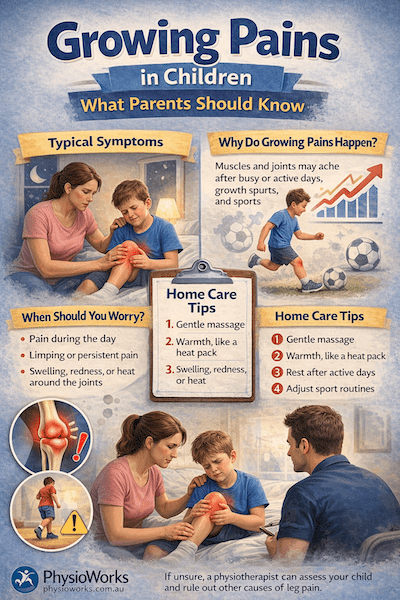
Growing pains in children infographic explaining symptoms and when to worry

Infographic outlining growing pain symptoms, warning signs and simple care advice.

What age do growing pains happen?

Growing pains commonly occur in primary school years and early adolescence, but patterns vary between children. Age alone does not confirm the diagnosis, so the symptom pattern matters more than the exact age.

Do growing pains happen in both legs?

They often affect both legs, especially the calves, thighs or behind the knees. Some children report one side more at times. Persistent one-sided pain, especially with tenderness, swelling or limping, should be assessed.

Do growing pains mean my child is growing quickly?

Not necessarily. The term is common, but research has not shown that bone growth directly causes the pain. Activity load, fatigue and recovery may play a role for some children.

Can my child keep playing sport with growing pains?

Many children can continue sport if symptoms fit the typical pattern and settle by morning. If pain starts during sport, changes movement or causes limping, reduce load and organise assessment.

What helps growing pains at home?

Gentle massage, warmth, comfortable stretching and sensible activity pacing may help. A simple symptom diary can also track activity, pain timing, pain location and whether symptoms settle by morning.

When should I see a physiotherapist?

Consider assessment if pain persists, worsens, causes limping, happens during the day, affects sport or comes with swelling, redness or heat.

What to do next

If your child’s symptoms fit the typical pattern and settle by morning, monitor activity load and recovery for a week or two. If pain changes, becomes one-sided, limits sport or causes limping, arrange an assessment.

A physiotherapist can assess your child’s movement and help guide a safe plan for school, sport and play.

Book your appointment – 24/7

Choose your preferred PhysioWorks clinic and book online.

Follow PhysioWorks

Get free physiotherapy tips, exercise videos, recovery advice, and blog updates.

Facebook Instagram YouTube B X Email PhysioWorks

References

  1. O’Keeffe M, Kamper SJ, Montgomery L, et al. Defining growing pains: a scoping review. Pediatrics. 2022;150(2):e2021052578. doi:10.1542/peds.2021-052578
  2. Zhang W, Xu X, Leng H, et al. An exploration of clinical features and factors associated with growing pains. Pain Reports. 2024;9(4):e1164. doi:10.1097/PR9.0000000000001164
  3. Pavone V, Vescio A, Valenti F, Sapienza M, Sessa G, Testa G. Growing pains: what do we know about etiology? A systematic review. World Journal of Orthopedics. 2019;10(4):192-205. doi:10.5312/wjo.v10.i4.192