
How Do You Wear a Tennis Elbow Brace?
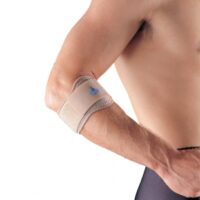
A tennis elbow brace is usually worn around the upper forearm, a few centimetres below the painful outer elbow. Correct position and tension matter more than simply tightening the strap.


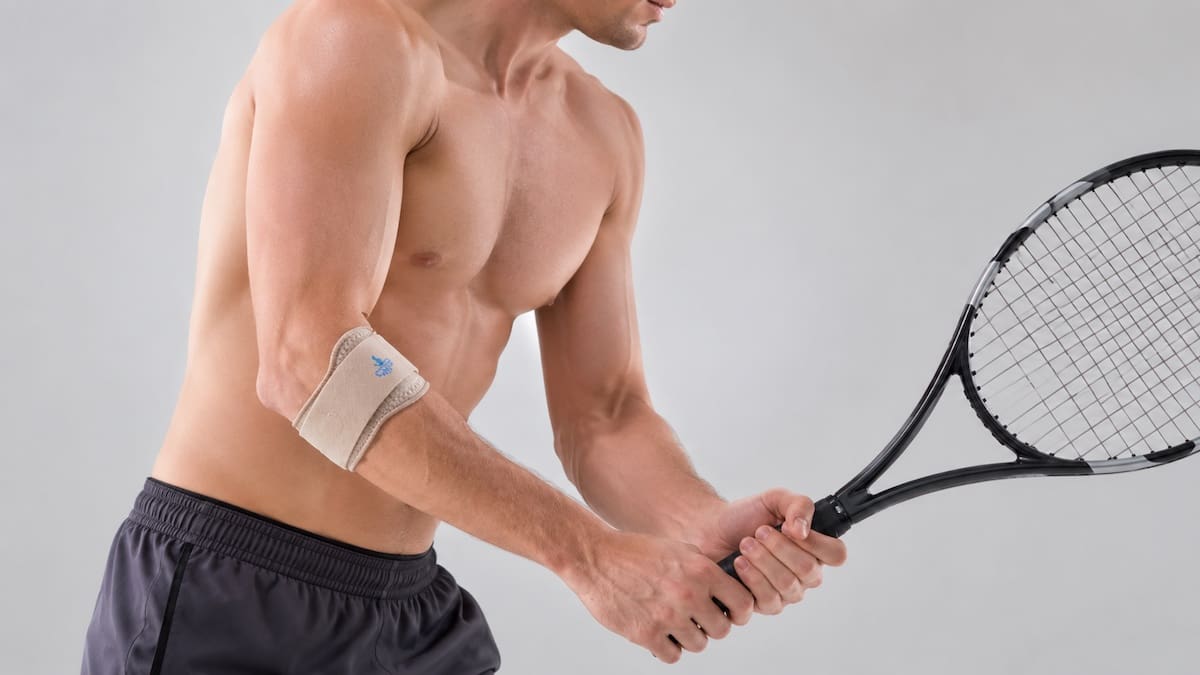
A correctly fitted counterforce brace may reduce discomfort during gripping, lifting, manual work, gym exercise or racquet sports. However, bracing is usually an activity aid rather than a complete treatment for lateral elbow tendinopathy.
For the broader diagnosis, treatment and rehabilitation pathway, see our Tennis Elbow guide.
How Do You Position a Tennis Elbow Brace?
A counterforce strap normally sits over the muscle bulk of the upper forearm rather than directly over the elbow joint. Individual brace designs vary, so also check the manufacturer’s fitting instructions.
-
Find the painful outer elbow
Tennis elbow commonly causes pain near the prominent bony point on the outside of the elbow.
-
Move down onto the forearm
Position the strap a few centimetres below the painful area, over the upper forearm muscles.
-
Position the pressure pad
Place the pad over the muscle area that tightens when you grip or lift rather than directly over the bony elbow point.
-
Fasten the strap
Make the brace firm enough to feel supportive without restricting wrist, finger or elbow movement.
-
Test it during a light task
Try a light gripping activity such as lifting a mug. The task should feel the same or more comfortable, not more painful.
How Tight Should a Tennis Elbow Strap Be?
The strap should feel firm and supportive, not restrictive. Your wrist, fingers and elbow should move normally, and your hand should remain its usual colour and temperature.
More pressure is not necessarily better. An overly tight brace may irritate the skin or place unnecessary pressure on nerves and blood vessels.
Good fit
The strap stays in place and feels supportive during gripping without restricting movement.
Too loose
The brace slips down the forearm or provides no noticeable support during the aggravating activity.
Too tight
You develop numbness, tingling, throbbing, swelling, unusual coldness or a change in hand colour.
When Should You Wear a Tennis Elbow Brace?
Many people use a tennis elbow brace during activities that aggravate their symptoms rather than wearing it continuously.
Examples include:
- gripping tools or carrying bags;
- racquet sports;
- gym exercises and weight training;
- gardening or manual work;
- repetitive wrist or hand activities; and
- some prolonged computer or keyboard tasks.
You usually do not need the brace while resting or sleeping unless a health professional has given you specific advice to do so.
Should You Wear a Tennis Elbow Brace All Day?
Most people do not need to wear a tennis elbow brace continuously. Use it for activities where it provides a clear benefit, then remove it when the activity finishes.
A brace does not strengthen the tendon simply by being worn. If you become dependent on it for ordinary daily activities or symptoms return whenever you remove it, an assessment may help identify why the elbow remains sensitive.
Persistent outer elbow symptoms can overlap with other causes of elbow pain or pain referred from elsewhere in the arm or neck.
Does a Tennis Elbow Brace Fix the Problem?
A brace may help reduce pain during some activities, particularly over the short term, but it does not restore tendon capacity by itself. Research supports counterforce bracing as one possible symptom-management option, while rehabilitation commonly also addresses activity load and progressive strengthening.
Your rehabilitation plan may include changes to aggravating tasks, grip or lifting technique and progressive exercise. The appropriate approach depends on your symptoms, work, sport and physical assessment.
See our Tennis Elbow treatment and rehabilitation guide for the broader recovery pathway.
Which Type of Tennis Elbow Brace Should You Choose?
Two common options are a counterforce strap and an elbow compression sleeve. They provide different types of support.
Counterforce strap
A narrow strap applies targeted pressure around the upper forearm. Some people prefer this style for gripping, lifting, racquet sports or manual tasks that provoke local outer elbow pain.
Compression sleeve
A sleeve provides broader compression around the elbow and forearm. Some people prefer its more general support and coverage.
Brace construction and pressure-pad position vary between products. Check the manufacturer’s instructions and sizing information before use.
You can also view our elbow braces and supports.
When Should You Get Your Elbow Assessed?
Consider a physiotherapy or medical assessment when:
- pain persists for more than a few weeks;
- your grip strength is becoming weaker;
- pain spreads well down the forearm or into the hand;
- you have numbness, tingling or neck-related arm symptoms;
- you cannot complete your usual work, exercise or household activities; or
- the brace consistently makes your symptoms worse.
A physiotherapist can assess whether your symptoms are consistent with tennis elbow, review brace position and guide appropriate load management and progressive strengthening. Learn more about PhysioWorks physiotherapy.
Choose your clinic and appointment pathway
Select a PhysioWorks clinic to continue to live booking, an appointment request or reception assistance.
Tennis Elbow Brace Options
If you want to compare available supports, browse our elbow brace range. Product design, sizing and pressure-pad position vary, so use the fitting instructions supplied with the brace.
-
- Braces & Supports, Elbow
Tennis Elbow Strap with Silicon Pad – OPPO 1486
$26.95Add to cartQuick View -
 Braces & Supports, Elbow
Tennis Elbow Strap with Silicon Pad – OPPO 1489
$37.00Add to cartQuick View -
Frequently Asked Questions
Where should a tennis elbow brace sit?
Place the strap around the upper forearm, usually a few centimetres below the painful bony point on the outside of the elbow. The pressure pad should sit over the forearm muscle bulk rather than directly over the elbow joint.
How tight should a tennis elbow strap be?
The strap should feel snug and supportive without restricting wrist, finger or elbow movement. Loosen or remove it if you notice numbness, tingling, swelling, throbbing, unusual coldness or a change in hand colour.
Can you wear a tennis elbow brace all day?
Most people use a tennis elbow brace during activities that trigger symptoms rather than wearing it continuously. Remove it when it is not needed unless a health professional has advised you differently.
Should the pressure pad sit on the inside or outside of the forearm?
For typical tennis elbow symptoms, the pad generally sits over the upper outer forearm muscle area below the painful outer elbow. Designs vary, so follow the manufacturer’s fitting instructions for your particular brace.
Can a tennis elbow brace make symptoms worse?
Yes. A poorly positioned or overly tight brace may increase discomfort or place unnecessary pressure on the skin, nerves or blood vessels. Remove it if symptoms worsen or you develop altered sensation, swelling, unusual coldness or hand colour changes.
Do you still need exercises when using a brace?
Often, yes. A brace may help control symptoms during some activities, but load management and progressive strengthening usually remain important parts of rebuilding the forearm tendon’s capacity.
References
- Lucado AM, Day JM, Vincent JI, et al. Lateral Elbow Pain and Muscle Function Impairments: Clinical Practice Guidelines Linked to the International Classification of Functioning, Disability and Health. J Orthop Sports Phys Ther. 2022;52(12):CPG1-CPG111. doi:10.2519/jospt.2022.0302.
- Shahabi S, Bagheri Lankarani H, Heydari ST, et al. The effects of counterforce brace on pain in subjects with lateral elbow tendinopathy: A systematic review and meta-analysis of randomized controlled trials. Prosthet Orthot Int. 2020;44(5):323-336. doi:10.1177/0309364620930618.
- Singh HP, Watts AC, et al. BESS patient care pathway: Tennis elbow. Shoulder Elbow. 2023.
