
Soft Tissue Massage


Soft tissue massage for upper back tension.
Soft tissue massage Brisbane appointments focus on easing tight muscles, improving comfort, and helping your body move more freely. It may suit desk-related tension, training overload, or ongoing stiffness that keeps returning.
Many people book soft tissue massage for neck, shoulder, back, hip, or leg tightness. If you want to compare massage styles first, start with our Massage Brisbane overview.
Quick summary: Soft tissue massage uses hands-on pressure and movement to work with muscles, tendons, and fascia. Your therapist adjusts pressure, position, and technique to match your comfort, symptoms, and goals.
At PhysioWorks, soft tissue massage often sits alongside other hands-on and movement-based options. Depending on your goals, your therapist may also discuss remedial massage, therapeutic massage, or deep tissue massage.
Book a Massage Appointment
Massage is available at selected PhysioWorks clinics. Choose your preferred clinic to view current booking options.
Related Massage Services
Soft tissue massage can overlap with several massage styles. These pages may help you choose the right appointment type.
- Remedial massage for focused muscle tension and problem areas
- Deep tissue massage for firmer pressure through overloaded muscles
- Trigger point therapy for localised muscle knots and tender points
- Myofascial release for fascia-related tightness and movement restriction
- All Brisbane massage services
What Is Soft Tissue Massage?
Soft tissue massage is hands-on treatment for muscles, tendons, and fascia. Your therapist may use kneading, sustained pressure, gliding strokes, compression, or gentle movement to work with tight or sensitive tissues.
The aim is practical. Treatment may help reduce protective muscle guarding, improve tissue glide, and make daily movement feel easier. Pressure can range from light to firm. Some sessions feel relaxing, while others feel more targeted around stubborn tight spots.
If you prefer lighter pressure, read about relaxation massage and Swedish massage.
When Do People Book Soft Tissue Massage?
People often book soft tissue massage when muscle tightness, soreness, or stiffness affects work, exercise, sleep, or general comfort.
- Neck and shoulder tightness, including tension linked with desk work
- Upper back or lower back stiffness after long sitting, lifting, or training
- Heavy legs, calf tightness, or hamstring tightness after sport or gym sessions
- Localised muscle knots that feel tender or hard to relax
- General stiffness where movement feels restricted
- Recovery support after a busy work week, travel, or training block
For area-specific information, see our guides to back massage, neck massage, and leg massage.
How May Soft Tissue Massage Help?
Massage may help some people with short-term pain relief, muscle relaxation, flexibility, and post-exercise soreness. Results vary, and massage works best when it matches your symptoms, comfort level, and activity load.
Current research supports a balanced message. A recent evidence review found many studies on massage therapy for painful adult conditions, but the certainty of evidence varies across conditions. For general public guidance, Healthdirect describes massage as a complementary therapy that may be used alongside usual medical care rather than as a replacement for it.
What Can Affect Your Response?
- Your sensitivity: sore tissue may need lighter pressure first.
- Your activity load: training, work posture, and sleep can keep symptoms active.
- Your goals: relaxation, recovery, and targeted muscle work may need different techniques.
- Your follow-up plan: gentle movement and load pacing can help results last longer.
What Happens During a Soft Tissue Massage Session?
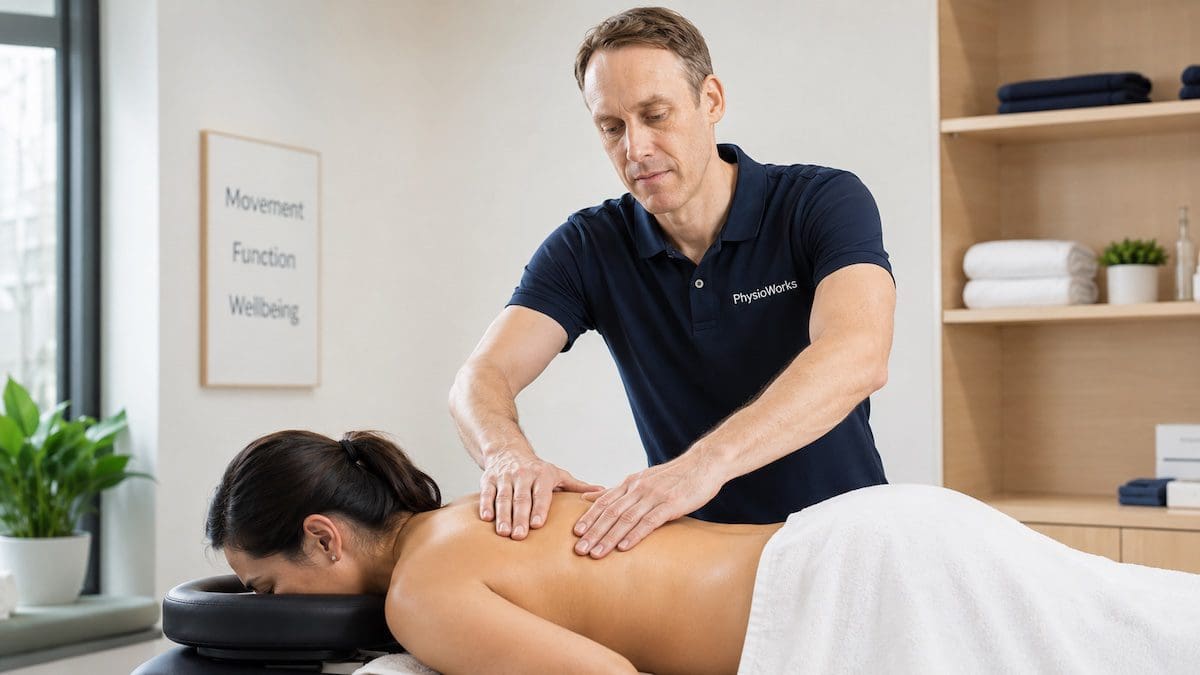
First, your therapist will ask where you feel tight, sore, or restricted. They may ask what triggers your symptoms, what helps, and what you want from the session.
Next, they will tailor the pressure and technique to your comfort. You can ask for lighter or firmer pressure at any time. After treatment, your therapist may suggest simple self-care such as gentle walking, hydration, heat, stretching, or training-load pacing.
Does Soft Tissue Massage Hurt?
Soft tissue massage can feel tender over tight or sensitive areas. However, it should stay tolerable. Many people describe the best pressure as firm but controlled, rather than sharp or overwhelming.
Tell your therapist what you feel during the session. Clear feedback helps them adjust pressure, treatment position, and technique.
When Should You Choose Another Massage Style?
Soft tissue massage overlaps with several massage styles. The right option depends on your main goal.
- Choose deep tissue massage if you prefer firmer pressure through tight, overloaded muscles.
- Choose relaxation massage if stress, sleep, or general wellbeing is your main focus.
- Choose sports massage if training, competition, or recovery is driving your symptoms.
- Choose sports recovery massage if soreness after exercise is your main concern.
When Might Massage Not Be the Right First Step?
Massage may not be the right first step if symptoms are sharp, worsening, unexplained, or linked with a recent injury. It is also worth seeking medical advice first if you have unexplained swelling, fever, infection signs, a new neurological symptom, or a health condition that affects bruising, bleeding, or tissue healing.
If you are unsure, book a physiotherapy appointment or speak with your GP before choosing massage.
Brisbane Massage Therapists
Our Brisbane massage therapists work across PhysioWorks clinics and provide hands-on care for tight muscles, recovery, and day-to-day stiffness. Choose a therapist and appointment time that suits your symptoms, preferred pressure, and location.
Remedial Massage Therapists
Our remedial massage therapists help relieve muscle tension, improve flexibility, reduce soft tissue pain, and support recovery from training loads, desk posture, and everyday physical stress.
Debbie Cox

Ashish Shrestha
What To Do Next
If tight muscles, training overload, or work-related stiffness is affecting your comfort, book a soft tissue massage appointment and explain your main goal at the start of the session.
If symptoms keep returning, feel sharp, or affect normal activity, your therapist may suggest a physiotherapy review or a combined plan with simple movement and load advice.
Massage Products
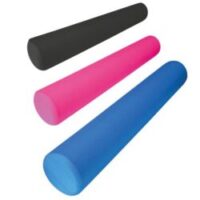
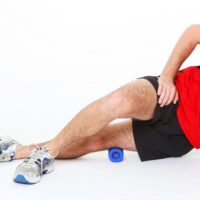
These muscle and soft tissue products are commonly used by our remedial massage therapists and physiotherapists to relax or loosen muscles.
-
 Gift Ideas, Christmas Gift Ideas, Exercise Equipment, Foot, Knee, Massage Tools, Pain Management
Footeez Lockeroom
$45.00Add to cartQuick View -
-
- Christmas Gift Ideas, Exercise Equipment, Gift Ideas, Massage Tools, Pain Management
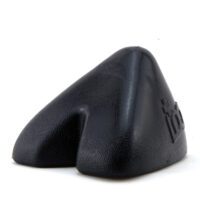
Pocket Physio MAX
$24.95Select optionsQuick View -
 Exercise Equipment, Back, Elbow, Foot, Massage Tools, Shoulder
Pocket Physio
$14.95Select optionsQuick View -
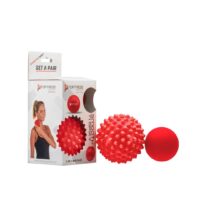 Exercise Equipment, Gift Ideas, Massage Tools
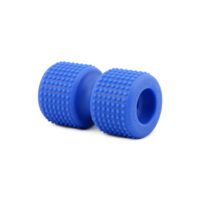
Smooth n Spiky Massage Balls (2 Pack)
$20.00Select optionsQuick View - Pain Management, Christmas Gift Ideas, Liniments & Gels, Product Search
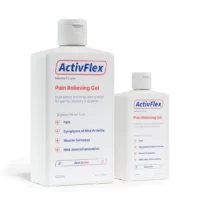
ActivFlex Pain Relief Gel
$27.95 – $42.95Select optionsQuick View - Liniments & Gels, Massage Liniments, Pain Management
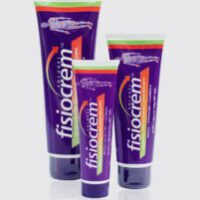
Fisiocrem
$16.95 – $39.95Select optionsQuick View -

-

-






Research References
- Mak S, Allen J, Begashaw M, et al. Use of massage therapy for pain, 2018–2023: a systematic review. JAMA Netw Open. 2024;7(7):e2422259. doi:10.1001/jamanetworkopen.2024.22259
- Chen P-C, Wei L, Huang C-Y, Chang F-H, Lin Y-N. The effect of massage force on relieving nonspecific low back pain: a randomized controlled trial. Int J Environ Res Public Health. 2022;19(20):13191. doi:10.3390/ijerph192013191
- Davis HL, Alabed S, Chico TJA. Effect of sports massage on performance and recovery: a systematic review and meta-analysis. BMJ Open Sport Exerc Med. 2020;6(1):e000614. doi:10.1136/bmjsem-2019-000614
- Tang S, Li X, Ma X, et al. The effectiveness of instrument-assisted soft tissue mobilization on pain and function in patients with musculoskeletal disorders: a systematic review and meta-analysis. BMC Musculoskelet Disord. 2025;26(1):257. doi:10.1186/s12891-025-08492-4
- Healthdirect Australia. Massage therapy guide. Accessed July 3, 2026.
