
Sacroiliac Joint Pain (SIJ)
Sacroiliac Joint Pain: Symptoms, Causes & Treatment
Sacroiliac joint pain, often called SIJ pain, can cause discomfort around the lower back, pelvis and buttock. Symptoms can overlap with back, hip and nerve-related conditions, so identifying the likely source matters.


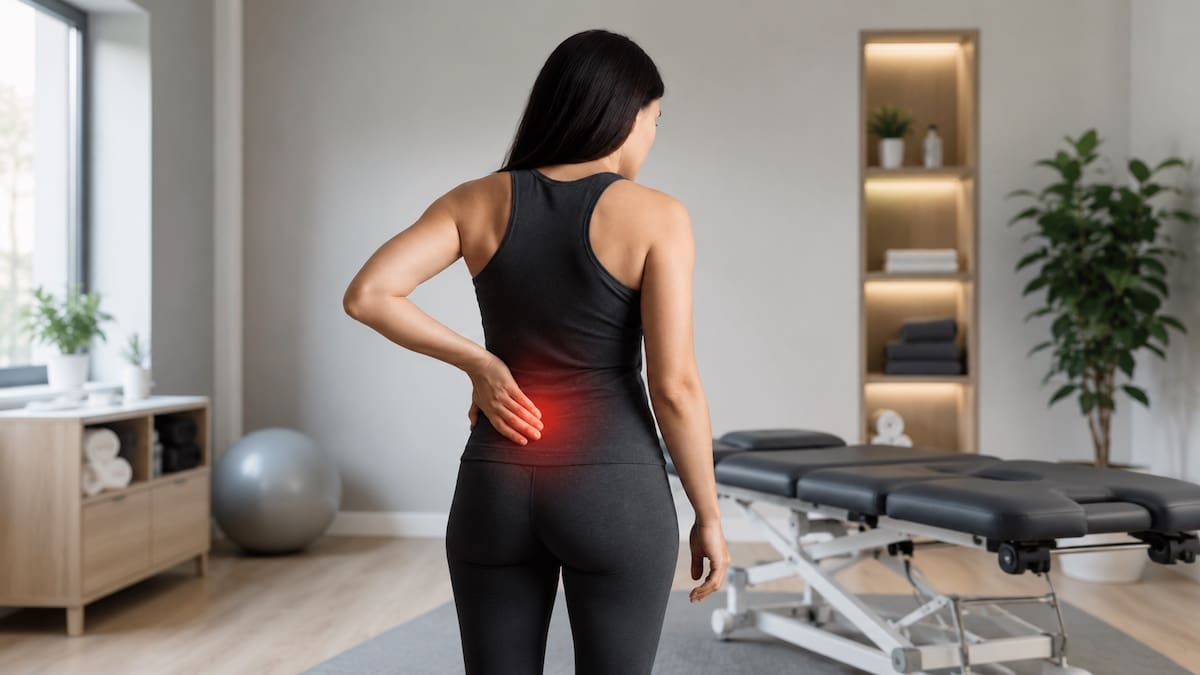
Sacroiliac joint pain may cause discomfort around the lower back, buttock and posterior pelvis.
The sacroiliac joints connect the sacrum at the base of your spine to the two sides of your pelvis. Pain around this region may spread into the buttock, groin or upper thigh.
SIJ pain can feel similar to lower back pain, sciatica or hip pain. A physiotherapy assessment can help determine whether the SIJ region is a likely contributor and identify other possible sources of your symptoms.
Common SIJ Pain Patterns
Location
Pain often sits near one side of the belt line, posterior pelvis or upper buttock.
Common triggers
Walking, stairs, single-leg loading, rolling in bed and changing position may aggravate symptoms.
Pain spread
Discomfort can extend towards the groin, outer hip or upper thigh without necessarily coming from a nerve.
What Is Sacroiliac Joint Pain?
Sacroiliac joint pain describes pain thought to arise from, or be strongly associated with, the sacroiliac joint region. Each SIJ sits between the sacrum and one side of the pelvis.
The joints move only a small amount. However, they help transfer load between your trunk and legs during walking, bending, lifting and changes of direction.
SIJ-region pain does not mean your pelvis is permanently “out of place”. Symptoms often reflect a combination of local sensitivity, movement, muscular capacity, activity load and other health factors.
What May Contribute to Sacroiliac Joint Pain?
There is rarely one cause. Symptoms may begin after a clear event or build gradually as several factors combine.
- A fall, collision or direct impact involving the pelvis
- Awkward lifting, twisting or a sudden change of direction
- Repeated uneven loading during work, walking or sport
- A rapid increase in exercise or activity
- Reduced hip, trunk or lower-limb capacity
- Poor tolerance for prolonged sitting or standing
- Pregnancy-related changes in load and ligament support
- Previous lumbar spine, hip or pelvic symptoms
- Inflammatory conditions affecting the sacroiliac joints
Finding a contributing factor does not prove that it caused the pain. Assessment should consider your full symptom pattern rather than relying on one posture, muscle or movement finding.
What Are the Symptoms of Sacroiliac Joint Pain?
The most common symptom is pain near the back of the pelvis or upper buttock. It may feel like a deep ache, sharp catch or localised tenderness.
- Pain close to one side of the belt line
- Buttock pain that is more noticeable on one side
- Discomfort when walking or taking longer steps
- Pain during stairs or standing on one leg
- Symptoms when rolling in bed or getting out of bed
- Pain after sitting or standing for a long time
- Discomfort with bending, lifting or twisting
- Pain extending towards the groin, outer hip or upper thigh
Pain, tingling, numbness or weakness that travels well below the knee may suggest greater involvement of a lumbar nerve and needs careful assessment.
Why Can SIJ Pain Feel Like Sciatica?
Both conditions can cause buttock and upper-leg pain. However, sciatica usually involves irritation or sensitivity of a lumbar nerve root. It may produce pain, pins and needles, numbness or weakness further down the leg.
SIJ-region pain is often more localised near the posterior pelvis. It may increase with rolling in bed, stairs, walking, standing on one leg or moving between sitting and standing.
These patterns can overlap. Symptoms alone may not identify the source with certainty.
How Is Sacroiliac Joint Pain Assessed?
A physiotherapist assesses whether the SIJ region is a likely contributor by considering your history, symptom location and response to movement. No single physical test confirms SIJ pain.
An assessment may include:
- Lumbar spine and hip movement testing
- A cluster of sacroiliac pain-provocation tests
- Walking, stair and single-leg tasks
- Hip, trunk and lower-limb strength testing
- Balance and pelvic load-control tasks
- Neurological tests when leg symptoms are present
- Screening for trauma, inflammatory disease or other warning signs
The assessment should also consider other possible sources, including the lumbar spine, hip joint, gluteal tendons and nearby muscles.
Will I Need a Scan?
Imaging is not needed for most uncomplicated SIJ-region pain. A scan may be considered after significant trauma, when symptoms are unusual or persistent, when inflammatory disease is suspected, or when the result could change medical management.
Standard imaging does not always identify the source of common mechanical pain. Clinical assessment remains important even when imaging has already been completed.
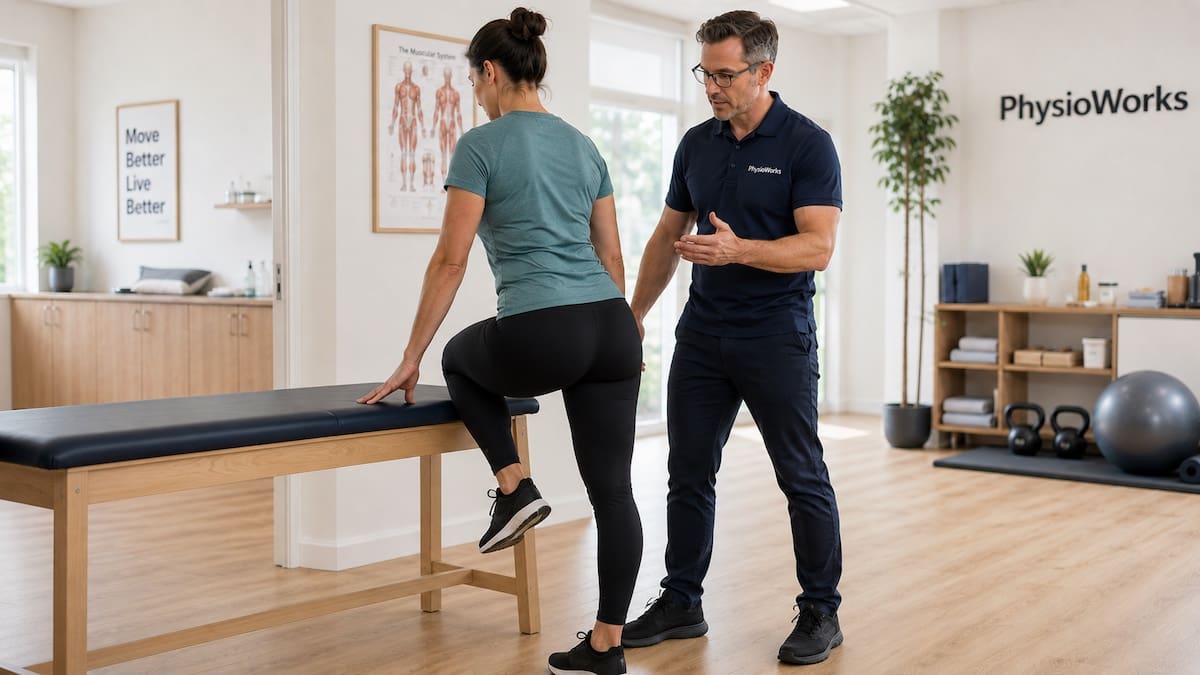
Single-leg testing can help assess how the trunk, pelvis and hip manage load.
What Else Can Feel Like Sacroiliac Joint Pain?
Several conditions can cause similar pain around the buttock, pelvis, hip or upper thigh.
- Lower back pain with referred pain into the buttock
- Sciatica or lumbar nerve irritation
- Hip joint pain
- Gluteal tendinopathy
- Greater trochanteric pain syndrome
- Proximal hamstring or deep gluteal pain
- Pregnancy-related pelvic girdle pain
- Sacral stress injury or fracture after relevant trauma or loading
- Inflammatory sacroiliitis or axial inflammatory disease
When Could Inflammatory Back Pain Be Involved?
Medical assessment may be appropriate when buttock or lower back pain occurs with prolonged morning stiffness, regular night pain, alternating buttock pain or symptoms that improve after getting up and moving.
Other relevant features include psoriasis, inflammatory bowel disease, a history of eye inflammation or a family history of inflammatory spinal disease.
How Can Physiotherapy Help SIJ Pain?
Physiotherapy treatment depends on the likely pain source, activities that trigger symptoms and factors identified during assessment. Care should suit the individual rather than follow one standard SIJ program.
Settle Pain and Maintain Useful Movement
Early management may include temporary changes to aggravating activities while maintaining comfortable movement. Complete rest is rarely the best long-term strategy.
- Modify painful walking, lifting or exercise loads
- Use comfortable positions and change position regularly
- Continue gentle movement within a tolerable range
- Apply heat or cold when it provides short-term relief
- Use manual therapy when it improves movement or comfort
Build Trunk, Hip and Lower-Limb Capacity
Exercise may help improve confidence and your ability to manage load through the pelvis. The program should reflect your symptoms and current capacity.
- Core and trunk strengthening
- Gluteal and hip strengthening
- Single-leg balance and control exercises
- Walking and stair progressions
- Graded lifting and work-specific exercise
- Gradual return to gym, running or sport
Retrain Aggravating Tasks
Your physiotherapist may modify how you approach walking, stairs, lifting, turning or prolonged positions. Small changes can reduce irritation while your capacity improves.
The aim is not to maintain one perfect posture. Instead, treatment should improve your tolerance for a range of positions and activities.
Can an SIJ Belt Help?
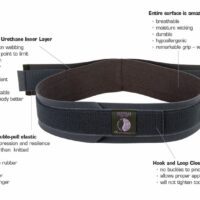
An SIJ belt may help some people by providing firm compression around the pelvis. It may be useful during painful walking, pregnancy-related pelvic girdle pain or activities that feel more comfortable with support.
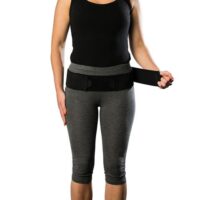
A belt should sit low around the pelvis rather than around the waist. It should feel supportive without causing numbness, skin irritation or increased pain.
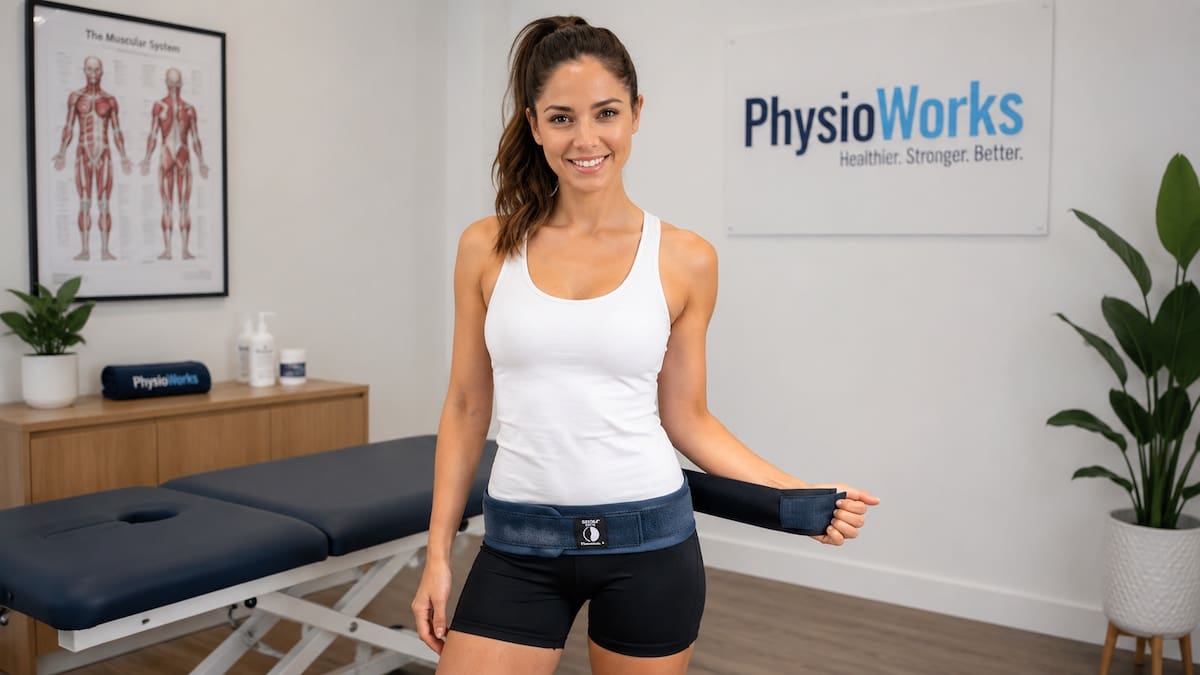
An SIJ belt is usually one part of management rather than a complete solution. Exercise, activity progression and treatment of other contributing factors may still be needed.
How Long Does Sacroiliac Joint Pain Take to Improve?
Recovery time varies. A recent and uncomplicated episode may improve over several weeks. Persistent symptoms, pregnancy-related pelvic girdle pain, inflammatory disease, major trauma or overlapping back and hip conditions may take longer.
Rehabilitation often moves through three broad stages:
1. Settle symptoms
Reduce clearly aggravating loads while maintaining comfortable movement and daily activity.
2. Rebuild capacity
Improve trunk, hip and lower-limb strength, balance and control with gradually increasing exercise.
3. Return to normal loading
Progress walking, lifting, work, gym, running or sport according to symptoms and function.
Progress is rarely perfectly linear. Short flare-ups can occur when activity changes. Your overall trend and function are usually more useful than one painful day.
What Can You Do at Home?
- Change position regularly rather than staying still for long periods
- Continue comfortable walking if symptoms do not steadily increase
- Temporarily reduce tasks that clearly flare the pain
- Use shorter strides or shorter walks if walking is painful
- Keep loads close to your body when lifting
- Avoid repeatedly testing painful movements throughout the day
- Build activity gradually rather than returning at full volume
Generic stretches do not suit everyone. Stop an exercise if it causes sharp pain, increasing leg symptoms, numbness or weakness.
When Should You Seek Urgent Medical Care?
- Loss of bladder or bowel control
- Numbness around the groin or saddle area
- Progressive leg weakness
- A major fall, collision or other significant trauma
- Fever, chills or feeling seriously unwell
- Unexplained weight loss
- Severe and constant night pain
- A history of cancer with new and unexplained pain
People with osteoporosis, prolonged steroid use or a recent increase in high-impact loading should seek assessment after sudden severe pelvic or lower back pain.
Sacroiliac Joint Pain FAQs
Can sacroiliac joint pain feel like sciatica?
Yes. SIJ pain can spread into the buttock or upper thigh and may feel similar to sciatica. Sciatica is more likely to include nerve-related pain, tingling, numbness or weakness that travels further down the leg.
Is walking good for SIJ pain?
Gentle walking is often suitable when symptoms remain manageable. Shorten the distance or reduce your stride if pain increases. Stop and seek advice if walking causes progressive leg pain, numbness or weakness.
Should I wear an SIJ belt?
An SIJ belt may provide short-term support for some people, including those with pregnancy-related pelvic pain or discomfort during walking. It should sit low around the pelvis and should not cause numbness, skin irritation or increased pain.
How long does SIJ pain take to settle?
Recovery varies. Some recent episodes improve within several weeks, while persistent pain or symptoms linked with trauma, pregnancy, inflammatory disease or overlapping hip and back conditions may take longer.
When should I see a physiotherapist?
Consider an assessment when pain affects walking, sleep, work, exercise or daily tasks, or when symptoms are not improving. Seek medical care sooner if significant trauma, fever, progressive weakness or bladder or bowel symptoms are present.
Can exercise help sacroiliac joint pain?
Exercise may help improve strength, load tolerance and confidence. The right exercises depend on your symptoms, current ability and whether the main contributor comes from the SIJ region, lumbar spine, hip or another structure.
What To Do Next
If pelvic or buttock pain is affecting walking, sleep, work or exercise, a physiotherapy assessment can help identify the most likely source and guide a practical treatment plan.
-
Book an assessment
Consider physiotherapy when symptoms persist, recur or limit normal activity.
-
Act sooner when warning signs are present
Seek medical care promptly after significant trauma or if you develop fever, progressive weakness, saddle numbness or bladder or bowel changes.
-
Consider short-term support if appropriate
Discuss an SIJ belt when pelvic compression makes walking or daily activity feel more comfortable.
Choose your clinic and appointment pathway
Select a PhysioWorks clinic to continue to live booking, an appointment request or reception assistance.
SIJ Support Products
These SIJ support products are commonly used by our physiotherapists to help reduce SIJ pain, improve comfort, and support your recovery at home.
-
 Back, Braces & Supports, Maternity, Posture
Maternity Back Support – OPPO 2062
$60.00 – $64.00Select optionsQuick View -
-
-

 Back, Braces & Supports, Maternity, Posture
Pregnancy Belly Band & C-Section 3-in-1
$94.99Select optionsQuick View -
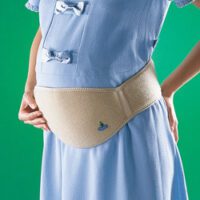 Braces & Supports, Back, Maternity, SIJ
Maternity Support Belt – OPPO 4062
$37.00Select optionsQuick View -
 Back, Braces & Supports, Maternity, SIJ
Core Stability Support – OPPO 3462
$54.00Select optionsQuick View -
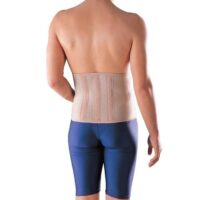
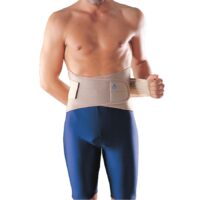
- Braces & Supports, Back, Maternity, SIJ
AOM38 AllCare Ortho Core Stability Belt
$49.95Select optionsQuick View
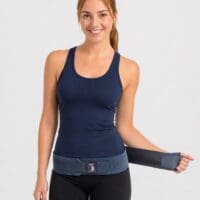
References
- Wong M. Anatomy, Abdomen and Pelvis, Sacroiliac Joint. StatPearls. StatPearls Publishing; 2023.
- Migliorini F, Lucenti L, Bardazzi T, et al. Management of sacroiliac joint pain: current concepts. Eur J Orthop Surg Traumatol. 2025;35:208. doi:10.1007/s00590-025-04308-2.
- Yan H, Zhao P, Guo X, Zhou X. The effects of core stability exercises and Mulligan mobilisation with movement techniques on sacroiliac joint dysfunction. Front Physiol. 2024;15:1337754. doi:10.3389/fphys.2024.1337754.
- Dogan N, Sahbaz T, Diracoglu D. Effects of mobilisation treatment on sacroiliac joint dysfunction syndrome. Rev Assoc Med Bras. 2021;67(7):1003-1009. doi:10.1590/1806-9282.20210436.
- Cocconi F, Migliorini F, Maffulli N. Sacroiliac joint pain: what treatment and when. Expert Opin Pharmacother. 2024.
