
Cricket Stress Fracture
Cricket Stress Fracture


Cricket stress fracture physiotherapy may help fast bowlers manage lower back pain, protect a lumbar bone stress injury, rebuild strength and trunk control, and plan a staged return to bowling. These injuries commonly involve the pars region of the lumbar spine and sit within the broader spondylolysis spectrum.
Fast bowling repeatedly loads the lower back through extension, rotation and side-bending. When bowling load rises faster than the body can recover and adapt, bone stress can develop. Young fast bowlers may be particularly vulnerable during growth phases, especially when school, club, representative cricket and net sessions overlap.
What Is a Cricket Stress Fracture?
A cricket-related lumbar bone stress injury usually affects the pars interarticularis, a small bridge of bone at the back of a vertebra. Bone stress injuries can range from an early stress reaction to a more established stress fracture.
In cricket, these injuries are seen particularly in fast bowlers because the bowling action repeatedly loads the lumbar spine. They form part of the broader stress fracture family and are closely related to spondylolysis.
Symptoms can begin as mild lower back pain and gradually become more noticeable if bowling continues without enough recovery. Teenagers with persistent back pain may also find our teenager back pain guide useful.
Why Do Fast Bowlers Get Lumbar Bone Stress Injuries?
Fast bowling asks the spine, hips, trunk and legs to transfer high forces quickly. Lumbar load increases as the bowler extends, rotates and side-bends through the delivery action. Injury risk may rise when workload, technique, growth, fatigue, recovery and physical capacity combine unfavourably.
- Workload spikes: rapid increases in balls bowled, net sessions or match spells.
- Repeated extension and rotation: repeated loading of the lower back during the bowling action.
- Mixed bowling action: some technique patterns may increase trunk counter-rotation load.
- Reduced hip and trunk control: fatigue or reduced physical capacity can shift more load towards the lumbar spine.
- Adolescent growth: growing athletes may have reduced load tolerance during some growth phases.
- Rushed return after back pain: symptoms may recur if bowling load increases before strength, control and bowling tolerance recover.
Our cricket injuries guide explains other common injuries and workload issues seen in cricketers.
Common Symptoms of Cricket Stress Fracture
Cricket stress fractures usually cause localised lower back pain that builds with bowling. Pain may occur on one side, although some bowlers feel it centrally. Symptoms can begin quietly and become increasingly noticeable during training or matches.
- Lower back pain during or after bowling.
- Pain that increases later in a bowling spell.
- Pain with arching backwards or twisting.
- Pain with sprinting or prolonged batting in some players.
- Stiffness or soreness the day after training or matches.
- Reduced bowling pace, accuracy, confidence or follow-through comfort.
- Pain beginning to affect sitting, school, work, sleep or gym training.
If several of these signs fit your symptoms, reduce your bowling load and arrange an assessment. Early advice may help avoid repeatedly testing the painful area, unnecessary complete rest or continuing to bowl through increasing pain.
How Is a Cricket Stress Fracture Assessed?
Your physiotherapist will assess your symptom pattern, spinal movement, hip function, trunk control and cricket demands. The assessment may also review bowling volume, recent workload changes, recovery, gym training, previous back pain and growth or training history.
The aim is to determine whether your presentation fits a lumbar bone stress injury or whether another cause of lower back pain is more likely.
Do You Need Imaging?
If a lumbar bone stress injury is suspected, your physiotherapist may recommend further medical review through your GP or sports doctor. Imaging may be appropriate in some cases. MRI can help identify early bone stress changes and may contribute to diagnosis and return-to-bowling planning.
When Should You Stop Bowling?
You should stop or substantially reduce bowling if pain builds during spells, worsens with extension or rotation, or leaves you more symptomatic the following day. Continuing to bowl through increasing symptoms may delay recovery and expose the area to further bone stress.
Stopping bowling does not always mean stopping all exercise. Depending on the injury stage and your symptoms, you may be able to continue modified gym training, walking, cycling, selected fielding work or other non-provocative conditioning.
The appropriate level of activity should match your symptoms, injury stage and clinical assessment.
Treatment for Cricket Stress Fracture
Most cricket-related lumbar bone stress injuries are managed without surgery. Physiotherapy commonly focuses on protecting the irritated area, maintaining appropriate fitness, rebuilding physical capacity and gradually preparing the bowler for cricket-specific loading.
Your rehabilitation plan should take account of your symptoms, imaging findings where available, age, sport level, physical capacity and season demands.
- Relative rest from bowling and painful extension-based loading.
- Modified conditioning to maintain fitness where appropriate.
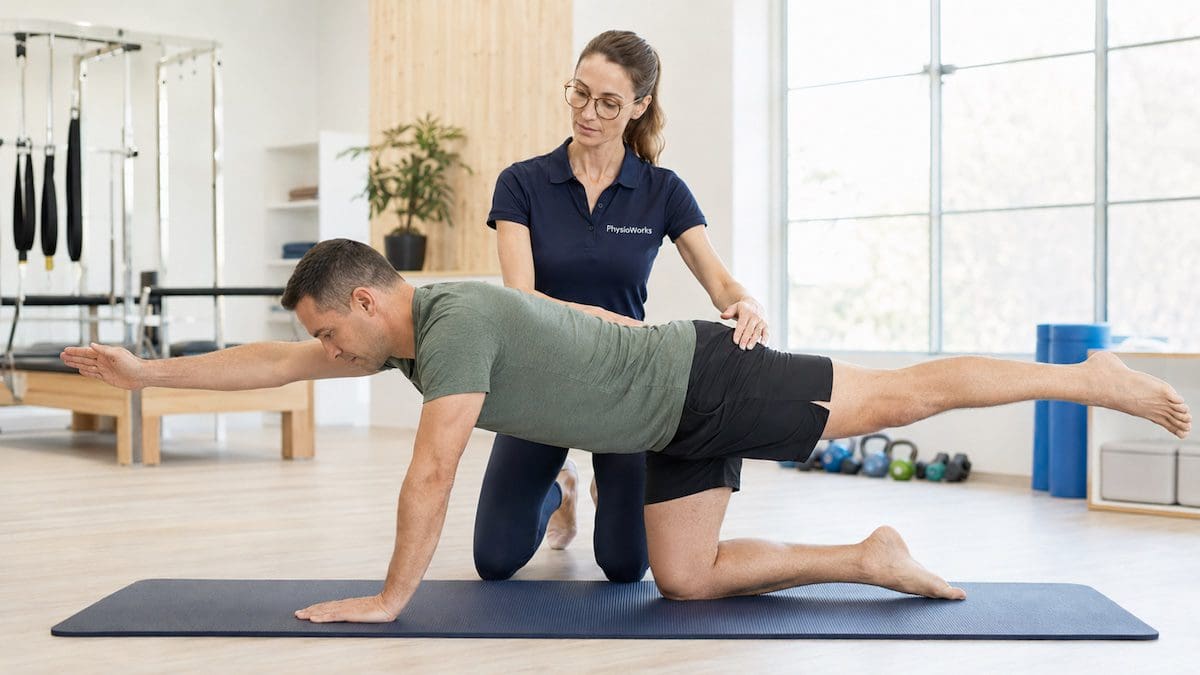
- Hip, gluteal and trunk strength and control exercises.
- Progressive strength work for bowling, running and fielding demands.
- Workload planning with coaches, parents and support staff where relevant.
- A graduated return-to-bowling programme based on symptoms and capacity.
Some bowlers also benefit from targeted core stability exercises as part of restoring trunk endurance and control under increasing load.
Cricket Stress Fracture Rehab Stages
Rehabilitation should progress in stages. Moving too quickly can aggravate symptoms, while prolonged unnecessary rest can reduce strength, fitness and confidence. Progression should therefore respond to symptoms and physical capacity rather than the calendar alone.
| Stage | Main goal | Typical focus |
|---|---|---|
| Settle | Reduce symptoms and protect bone healing | Pause bowling, modify aggravating gym work and maintain safe activity where tolerated |
| Rebuild | Restore strength and control | Trunk endurance, gluteal strength, hip mobility and low-impact conditioning |
| Reload | Prepare for cricket-specific forces | Progressive strength, rotation control, running tolerance and graded throwing |
| Return to bowl | Reintroduce bowling safely | Short planned spells, recovery days, symptom checks and gradual workload increases |
| Return to match play | Tolerate full cricket demands | Match bowling, batting, fielding, recovery planning and monitoring of post-session symptoms |
How Long Does a Cricket Stress Fracture Take to Heal?
Many fast bowlers require around 3 to 6 months before returning to full match bowling, although some athletes need longer. Recovery time varies according to the stage and severity of the injury, symptoms, scan findings where used, age, growth status and how quickly physical and bowling capacity return.
Return to bowling should not rely on time alone. Your plan should also consider pain response, movement control, strength, fitness, bowling mechanics and how your back responds later that day and the following day after each loading step.
Can You Keep Training While Recovering?
Often, yes. However, your training usually needs to change. The goal is to maintain useful fitness and strength without repeatedly irritating the healing area.
Depending on your injury stage, early options may include walking, cycling, swimming where comfortable, selected strength exercises and modified fielding. Later stages may add running, more demanding trunk and lower-limb strength, rotational control and cricket-specific conditioning.
Avoid high-volume bowling, repeated painful lumbar extension, aggressive twisting and heavy spinal loading until those activities are appropriate for your stage of recovery.
How Can Fast Bowlers Reduce Their Risk?
Load management is an important part of reducing lumbar bone stress risk. Young fast bowlers often play for several teams, which means their total bowling volume may be much higher than any one coach realises.
Track bowling across nets, warm-ups, school cricket, club training, representative sessions and matches rather than counting match overs alone.
- Increase bowling volume gradually rather than making sudden jumps.
- Allow recovery between demanding bowling sessions.
- Avoid repeatedly combining heavy net sessions with long match spells when symptoms are present.
- Plan lighter periods during busy school, club or representative cricket schedules.
- Develop trunk, hip and leg strength before and during the season.
- Review bowling technique when back pain repeatedly returns.
- Prioritise sleep, adequate fuelling, hydration and recovery.
If throwing volume is also high, our throwing injuries guide explains common shoulder and elbow loading issues.
Related Cricket and Back Guides
Cricket-related lumbar bone stress can overlap with other lower back pain patterns. These guides can help you understand related conditions and treatment pathways.
- Cricket injuries — common cricket injuries, loading issues and physiotherapy management.
- Stress fracture — broader guide to bone stress injuries, assessment and rehabilitation.
- Back pain — overview of back pain conditions and treatment pathways.
- Lower back pain — common causes, warning signs and physiotherapy options.
- Spondylolysis — guide to pars bone stress injury.
- Spondylolisthesis — vertebral slip that can be associated with pars injuries in some people.
- Sports physiotherapy Brisbane — sport-specific injury assessment and return-to-sport planning.
- Back pain physiotherapy — physiotherapy treatment and rehabilitation options for back pain.
Cricket Stress Fracture FAQs
Can I keep playing with a cricket stress fracture?
Continuing to bowl while symptoms build can increase bone stress and delay recovery. Many athletes do better with reduced bowling load and a structured rehabilitation plan guided by a physiotherapist, GP or sports doctor.
Do I need an MRI for a cricket stress fracture?
A physiotherapist can screen and assess the problem, then your GP or sports doctor may request imaging if a bone stress injury is suspected. MRI can help detect early stress change and contribute to return-to-bowling decisions.
Can teenagers get cricket stress fractures?
Yes. Adolescents can be vulnerable during growth phases, especially when bowling workloads rise quickly or loads from several teams overlap. Early load control, assessment and rehabilitation planning may reduce the risk of the injury progressing.
How can I prevent a cricket stress fracture?
Risk reduction usually focuses on avoiding sudden workload increases, maintaining appropriate recovery and fuelling, developing hip, trunk and leg strength, and following a staged return-to-bowling plan after back pain or bone stress injury.
When can I bowl again after a cricket stress fracture?
Return to bowling depends on your pain response, healing stage, strength, control, fitness, imaging findings where used and bowling demands. Many bowlers start with short planned spells and gradually progress towards full training and match bowling.
What to Do Next
If your lower back pain builds during bowling, hurts with arching or twisting, or leaves you noticeably stiff or sore the next day, reduce your bowling load rather than repeatedly testing it.
A physiotherapist can assess your movement, loading tolerance and cricket demands, consider whether further medical review or imaging is appropriate, and plan a staged return to bowling based on your recovery rather than guesswork.
Choose your clinic and appointment pathway
Select a PhysioWorks clinic to continue to live booking, an appointment request or reception assistance.
Back Support Products
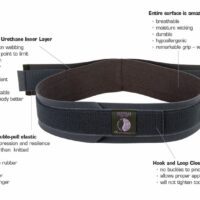
These back support products are commonly used by our physiotherapists to help reduce back pain, improve comfort, and support your recovery at home.
-
- Braces & Supports, Back, Maternity, SIJ
AOM38 AllCare Ortho Core Stability Belt
$49.95Select optionsQuick View -
 Back, Braces & Supports, Maternity, SIJ
Core Stability Support – OPPO 3462
$54.00Select optionsQuick View -
-
 Braces & Supports, Back, Maternity, SIJ
Maternity Support Belt – OPPO 4062
$37.00Select optionsQuick View -
-

 Back, Braces & Supports, Maternity, Posture
Pregnancy Belly Band & C-Section 3-in-1
$94.99Select optionsQuick View -
 Back, Braces & Supports, Maternity, Posture
Maternity Back Support – OPPO 2062
$60.00 – $64.00Select optionsQuick View


References
- Orchard JW, Saw R, Kountouris A, et al. Management of lumbar bone stress injury in cricket fast bowlers and other athletes. S Afr J Sports Med. 2023;35(1). doi:10.17159/2078-516X/2023/v35i1a14430
- Farhart P, Beakley D, Diwan A, et al. Intrinsic variables associated with low back pain and lumbar spine injury in fast bowlers in cricket: a systematic review. BMC Sports Sci Med Rehabil. 2023;15(1):114. doi:10.1186/s13102-023-00736-7
- Keylock L, Alway P, Felton P, et al. Lumbar bone stress injuries and risk factors in adolescent cricket fast bowlers. J Sports Sci. 2022;40(12):1336-1342. doi:10.1080/02640414.2022.2080161
- Keylock L, Alway P, Peirce N, et al. Lumbar spine bone mineral adaptation: cricket fast bowlers versus controls. BMJ Open Sport Exerc Med. 2023;9(2):e001481. doi:10.1136/bmjsem-2022-001481
