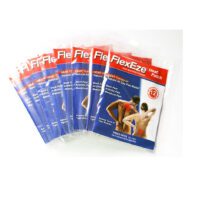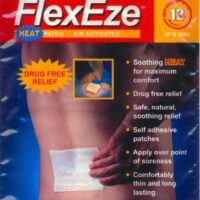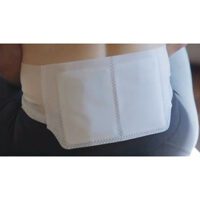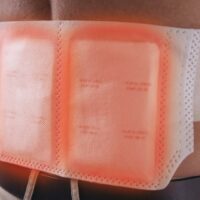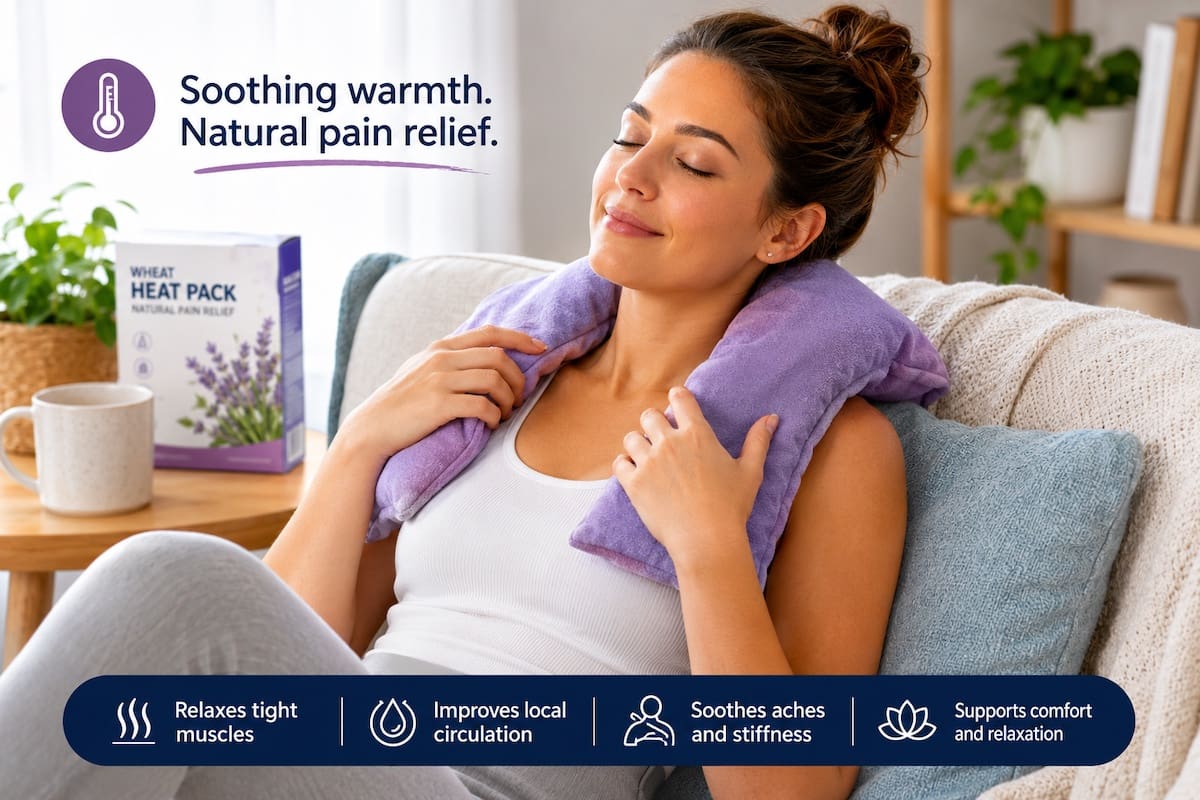
Many people use heat therapy at home for muscle stiffness, neck tension, lower back pain and other familiar aches. Heat does not fix every cause of pain, but it may make movement feel easier when symptoms are linked to stiffness or muscle guarding.
For a broader clinical overview, see our heat therapy guide.
When Does a Heat Pack Help?
Heat packs tend to suit symptoms that feel stiff, tight, achy or slow to warm up. They are often more useful for familiar or ongoing symptoms than for a newly injured area that remains hot and swollen.
- ongoing or recurrent muscle tightness
- stiff joints that feel better with warmth
- general muscle soreness after activity
- persistent back or neck pain that feels tight or achy
- morning stiffness that eases once you begin moving
Heat may also make it more comfortable to begin gentle walking, mobility exercises or other suitable muscle treatment strategies.
Heat or Cold: Which Makes More Sense?
Consider heat when
Pain feels stiff, tight, achy or familiar, and warmth feels comfortable.
Consider cold when
A recent injury feels hot, swollen or bruised and cooling feels soothing.
Why Can Heat Reduce Pain?
Heat does not necessarily change the underlying cause of pain. Instead, it can temporarily influence several processes that affect how an area feels and moves.
Sensory signals
Warmth activates temperature receptors and can temporarily make pain signals less prominent.
Muscle guarding
Comfortable warmth may help tense or guarded muscles feel less tight.
Local circulation
Superficial heat widens small blood vessels near the skin and increases local blood flow.
Movement
Warming an area may make it more comfortable to start walking, stretching or completing suitable exercises.
The effect is usually temporary. Therefore, heat often works best as one part of a broader approach that includes appropriate movement, exercise and activity management.
When Should You Avoid Heat?
Heat is not suitable for every painful area. Avoid a heat pack when warmth could worsen irritation, conceal an important change or increase the risk of a burn.
- over a newly injured area that remains markedly hot or swollen
- over very red, inflamed or infected skin
- over an area with numbness or reduced feeling
- where circulation is significantly impaired
- directly over open wounds, broken skin or a fresh burn
- when you cannot check the skin regularly
- when heat clearly makes symptoms worse
Extra care is important when a person may have reduced skin sensation, difficulty checking the skin or impaired circulation. This can occur with some neurological conditions, diabetes and in some older adults.
For related information, see our pain management and muscle strain guides.
How to Use a Heat Pack Safely
A heat pack should feel comfortably warm rather than very hot. Follow the manufacturer’s instructions and check your skin regularly while using it.
- Follow the heating instructions supplied with the pack.
- Do not exceed the recommended microwave heating time.
- Make sure the microwave turntable can move freely.
- Shake or redistribute the filling after heating where the product instructions recommend it.
- Use a towel or clothing layer when needed for comfort and skin protection.
- Check the skin after the first few minutes and regularly afterwards.
- Use the pack for about 15 to 20 minutes unless advised otherwise.
- Allow the pack to cool fully before reheating it.
Healthdirect advises following the manufacturer’s heating instructions and allowing wheat packs to cool properly because overheating can cause burns or fires.
If you are unsure whether heat is safe for your situation, speak with your physiotherapist, doctor or pharmacist.
Heat Packs for Ongoing Back or Neck Pain
Heat packs may help ongoing back or neck pain when symptoms feel muscular, stiff or guarded. Warmth can make it easier to begin moving, although it does not identify or correct the underlying reason that symptoms keep returning.
Consider an assessment when symptoms repeatedly return, spread into an arm or leg, disturb sleep or limit work, sport or daily activity. You can also read about recurrent back pain and chronic muscle pain.
Why Choose a Wheat Heat Pack?
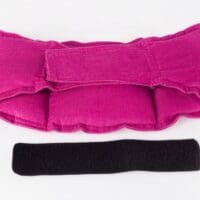
Wheat heat packs are popular because they are reusable, simple to warm and flexible enough to mould around many body areas. Their shape can provide more targeted warmth than a shower or bath.
- Convenient: many wheat packs can be heated in a microwave.
- Flexible: the filling can mould around the neck, shoulders, lower back or joints.
- Reusable: a well-maintained pack can provide repeated use.
- Targeted: different shapes can suit different body areas.
Examples include long neck heat packs and back heat packs.
Heat Pack FAQs
Can I sleep with a heat pack on?
No. Remove the heat pack before you go to sleep. You may not notice excessive heat or skin irritation while sleeping, and placing a wheat pack beneath bedding may increase fire and burn risks.
Is a heat pack better than a hot shower?
Neither option is always better. A warm shower heats a larger area, while a heat pack provides targeted warmth to one region, such as the lower back, neck or shoulders. Choose the option that feels comfortable and is safe for your skin and health.
Do heat packs help chronic back pain?
Heat packs may provide short-term relief when ongoing back pain feels tight, stiff or achy. They often work best alongside gentle movement, pacing and an exercise program suited to the cause of the symptoms.
Should I use heat or cold for a new injury?
Consider the symptoms rather than relying only on the time since injury. Avoid heat when the area remains markedly hot, swollen or red. A cold pack may feel more comfortable in this situation. Stop either treatment if it makes symptoms worse.
How long should I use a heat pack?
Many people use a heat pack for about 15 to 20 minutes. Check the skin regularly, allow the pack to cool fully before reheating and follow the product instructions.
When should I see a physiotherapist?
Consider physiotherapy when pain keeps returning, spreads, affects sleep or limits normal activity. Heat may ease symptoms temporarily, but an assessment can help identify contributing factors and guide suitable treatment and exercise.
What to Do Next
Use a heat pack when symptoms feel stiff, tight, achy and familiar, provided warmth feels comfortable and you can safely monitor your skin. Avoid heat when the area is markedly hot, red, swollen, infected, numb or has broken skin.
If pain keeps returning, spreads or limits daily life, a physiotherapist can assess possible contributing factors and guide treatment, exercise and self-care.