
Sciatica
Sciatica Symptoms, Causes & Treatment
Sciatica is nerve-related pain that usually starts in the lower back or buttock and travels into the leg. It most often develops when a nerve root in the lower back becomes irritated or compressed.


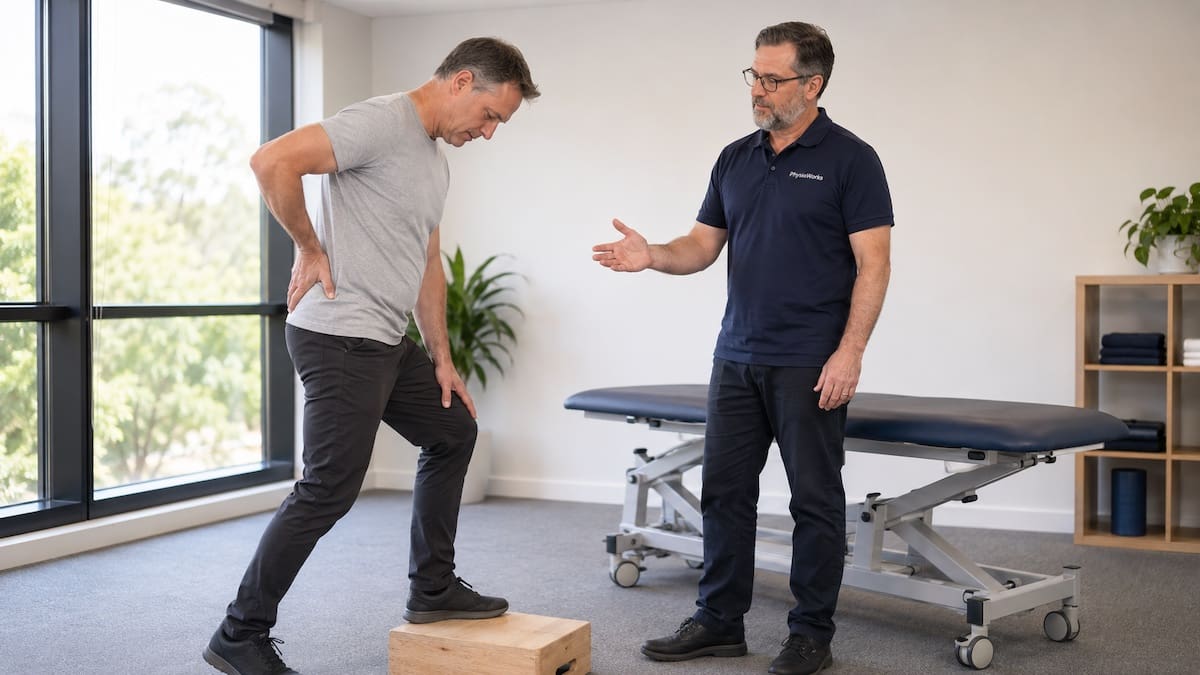
A bulging or herniated disc is a common cause of sciatica. Other causes include narrowing around the spinal nerves and age-related changes in the lower back.
Sciatica sits within the broader back pain cluster and may occur with or without significant lower back pain. Symptoms can include leg pain, pins and needles, numbness or weakness.
Sciatica at a Glance
Typical symptoms
Pain may travel from the lower back or buttock into one leg, sometimes with tingling, numbness or weakness.
Common source
Sciatica most often relates to irritation or compression of a lumbar or sacral nerve root.
Recovery
Many episodes improve over several weeks, although neurological symptoms and more severe cases may take longer.
What Is Sciatica?
Sciatica describes pain and other nerve-related symptoms that follow part of the sciatic nerve distribution. It most commonly occurs when a lumbar or sacral nerve root becomes irritated or compressed.
The sciatic nerve forms from nerve roots between L4 and S3. It then travels through the buttock and down the back of the leg. Although symptoms may be felt along the nerve’s pathway, the underlying irritation frequently starts near the spine.
Sciatica is a symptom pattern rather than a diagnosis by itself. When a lumbar nerve root is affected strongly enough to cause neurological changes such as numbness, weakness or altered reflexes, clinicians may use the term lumbar radiculopathy.
Identifying the likely source of the symptoms helps guide treatment, further investigation and recovery planning.
What Are the Common Symptoms of Sciatica?
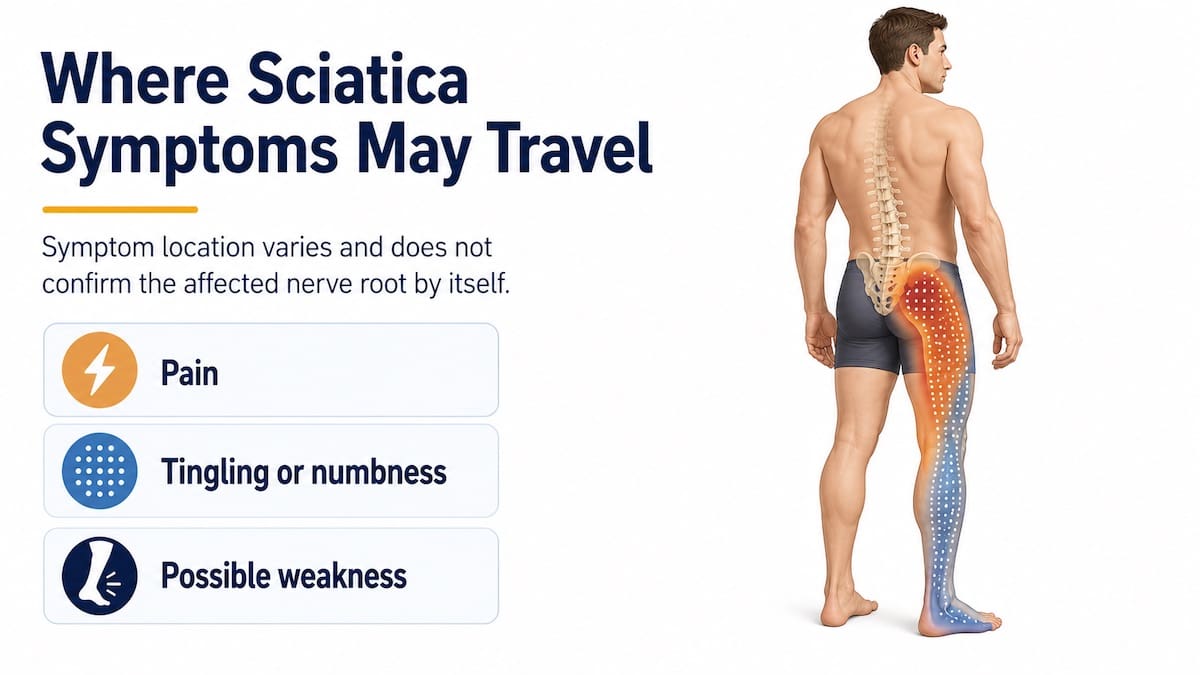
Sciatica usually affects one side. Symptoms often extend below the knee, although their location and severity can vary depending on the nerve root involved.
- Sharp, aching, burning or shooting pain into the leg
- Pins and needles or tingling
- Numbness in part of the leg or foot
- Weakness in the leg, ankle or foot
- Pain aggravated by sitting, bending, lifting, coughing or sneezing
- Reduced tolerance for walking, sitting, work or exercise
Some people have significant leg pain with little or no back pain. Others notice a combination of back, buttock and leg symptoms.
What Causes Sciatica?
Sciatica most commonly develops when a spinal nerve root becomes inflamed, irritated or compressed. A bulging or herniated disc is a frequent cause, particularly in younger and middle-aged adults.
Other possible causes include:
- Spinal stenosis, which reduces the available space around the nerves
- Spondylolisthesis, where one vertebra shifts relative to another
- Lumbar spondylosis and other age-related spinal changes
- Inflammation or sensitivity around a spinal nerve root
Not every episode involves severe structural compression. Symptoms can also remain sensitive after an initial flare, particularly when sitting, bending, lifting or activity levels change suddenly.
What Else Can Feel Like Sciatica?
Not every episode of buttock or leg pain comes from a spinal nerve root. Assessment may need to distinguish sciatica from other conditions that can produce similar symptoms.
Deep buttock and piriformis-related symptoms
Conditions around the deep buttock may irritate the sciatic nerve or produce sciatica-like buttock and leg symptoms without a lumbar nerve-root problem.
Referred lower back pain
Some back structures can refer pain into the buttock or thigh without causing true nerve-root symptoms such as numbness, weakness or altered reflexes.
Other nerve problems
Peripheral nerve irritation and some neurological conditions can also cause tingling, numbness or weakness. The pattern of symptoms and clinical examination helps guide the next step.
Why Does Sciatica Cause Leg Pain?
Nerves carry signals between the spine and the leg. When a nerve root becomes irritated, symptoms can be felt anywhere within the area supplied by that nerve.
This may produce pain, tingling, numbness or weakness in the buttock, thigh, calf or foot, even though the main source of irritation is in the lower back. This pattern is one reason sciatica is considered a form of nerve pain rather than simple muscular soreness.
How Is Sciatica Diagnosed?
Sciatica is usually identified through a clinical assessment. One symptom, movement test or scan finding does not prove that a particular structure is responsible for the symptoms.
A physiotherapist may assess:
- Your back, hip and leg movement
- Positions that aggravate or ease symptoms
- Leg and foot strength
- Sensation and reflexes
- Nerve sensitivity and mobility
- Walking, sitting, lifting and other functional tasks
The assessment also considers whether another hip, back or neurological condition could be contributing to the symptoms.
Do You Need an MRI for Sciatica?
Most people with uncomplicated sciatica do not need an immediate MRI. Imaging may be considered when symptoms are severe, neurological changes are progressing, surgery or an injection is being considered, or symptoms are not improving as expected.
Healthdirect provides further general information about sciatica symptoms and medical care.
How Can Physiotherapy Help Sciatica?
Physiotherapy aims to help settle symptoms, restore movement tolerance, rebuild strength and support a gradual return to normal activity. The rehabilitation plan should match your symptoms, daily demands and likely source of irritation.
Education and Activity Guidance
Understanding which movements are temporarily sensitive can reduce unnecessary fear and help you remain active. Complete rest is rarely required. Instead, management commonly focuses on adjusting aggravating activities while gradually rebuilding tolerance.
Walking and General Movement
Walking often provides a practical way to maintain activity. During a flare-up, shorter and more frequent walks may be better tolerated than one long walk that significantly increases leg symptoms.
Exercise and Strengthening
Exercise may include progressive leg strengthening, trunk conditioning, walking and functional tasks. Depending on the presentation, this may involve core stability training and graded exercises for the hips and lower limbs.
Nerve Mobility Exercises
When appropriate, carefully prescribed nerve mobility exercises may help improve tolerance to movement. These exercises should remain gentle and should not repeatedly provoke strong or lasting leg symptoms.
Manual and Adjunct Therapies
Some people gain short-term symptom relief from manual therapy, massage, acupuncture or dry needling. These approaches may support comfort and movement but should not replace an active rehabilitation plan when exercise and graded activity are appropriate.
Returning to Work, Exercise and Daily Activity
Rehabilitation should gradually restore the activities that matter to you. This may include sitting, driving, lifting, household tasks, work duties, gym exercise or sport. Progress is usually based on symptom response rather than a fixed timetable.
How Long Does Sciatica Take to Recover?
Recovery time varies. Some people improve over several weeks, while others take several months. Symptoms may take longer to settle when nerve irritation has been present for an extended period or when weakness has developed.
Recovery can be influenced by:
- The underlying cause
- The severity and duration of the symptoms
- Whether strength or sensation has changed
- Work, lifting and activity demands
- Sleep, general health and recovery capacity
- How activity and exercise are progressed
Fluctuations do not always mean the condition is worsening. However, new or progressing weakness, increasing numbness or major bladder or bowel changes require prompt medical review.
When Should You Seek Help for Sciatica?
Consider an assessment when leg pain, numbness or weakness limits your sleep, sitting, walking, work or exercise. Assessment may also help when symptoms are not improving after the first couple of weeks or when you are unsure whether the problem is nerve-related.
Earlier review is appropriate when weakness is present, symptoms are progressing or pain is significantly affecting normal daily activities.
Related Sciatica and Back Pain Guides

FAQs About Sciatica
What is sciatica?
Sciatica is nerve-related pain that usually travels from the lower back or buttock into the leg. It most often occurs when a nerve root in the lower back becomes irritated or compressed.
What causes sciatica?
A bulging or herniated disc is a common cause. Sciatica can also relate to spinal stenosis, spondylolisthesis, age-related spinal change or inflammation around a spinal nerve root.
How long does sciatica last?
Some people improve within several weeks, while others take several months. Recovery depends on the cause, symptom severity, duration, neurological changes and the person’s daily activity demands.
Is walking good for sciatica?
Walking is often helpful when it remains within your current tolerance. Shorter, more frequent walks may be better than pushing through a long walk that substantially increases leg pain or tingling.
Can you have sciatica without back pain?
Yes. Some people mainly feel pain, tingling or numbness in the buttock or leg with little or no lower back pain. The nerve irritation can still originate near the lumbar spine.
Does sciatica always come from the back?
Most true sciatica relates to irritation of a nerve root in the lower back. However, deep buttock, hip and other nerve conditions can produce similar symptoms. A clinical assessment can help distinguish between them.
Can sciatica cause weakness?
Yes. An irritated nerve root can affect the muscles it supplies. Weakness may occur in the leg, calf, ankle or foot. New or progressing weakness should be assessed promptly.
When is sciatica an emergency?
Seek urgent care if sciatica occurs with saddle numbness, loss of bladder or bowel control, difficulty starting urination, rapidly worsening weakness or severe symptoms affecting both legs.
Choose your clinic and appointment pathway
Select a PhysioWorks clinic to continue to live booking, an appointment request or reception assistance.
Back Support Products
These back support products are commonly used by our physiotherapists to help reduce back pain, improve comfort, and support your recovery at home.
-
 Back, Braces & Supports, Maternity, Posture
Maternity Back Support – OPPO 2062
$60.00 – $64.00Select optionsQuick View -
 Braces & Supports, Back, Maternity, SIJ
Maternity Support Belt – OPPO 4062
$37.00Select optionsQuick View -
-
 Back, Braces & Supports, Maternity, SIJ
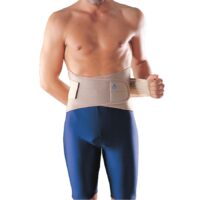
Core Stability Support – OPPO 3462
$54.00Select optionsQuick View -
-

 Back, Braces & Supports, Maternity, Posture
Pregnancy Belly Band & C-Section 3-in-1
$94.99Select optionsQuick View - Braces & Supports, Back, Maternity, SIJ
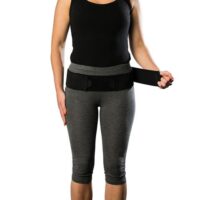
AOM38 AllCare Ortho Core Stability Belt
$49.95Select optionsQuick View -

Back Pain Tips: 7 Evidence-Based Ways to Move Better, Hurt Less & Recover Faster
A Physiotherapist’s Guide to a Stronger, Healthier Back
Discover practical, research-based strategies to ease back pain, move with confidence, and build long-term strength. Written by physiotherapist John Miller, this concise guide blends science and decades of clinical experience to help you recover faster and stay active for life.
- Clear, actionable advice grounded in current research
- Whole-person approach: movement, sleep, mindset and care team
- Includes a quick flare-up plan, FAQs and daily habits

Follow PhysioWorks
Follow PhysioWorks for practical information about pain, movement, rehabilitation and injury prevention.


References
- Jensen RK, Kongsted A, Kjaer P, Koes B. Diagnosis and treatment of sciatica. BMJ. 2019;367:l6273. doi:10.1136/bmj.l6273.
- Dove L, O’Keeffe M, O’Sullivan P, et al. How effective are physiotherapy interventions in treating people with sciatica? A systematic review and meta-analysis. J Physiother. 2023;69(1):3-15. doi:10.1016/j.jphys.2022.11.001.
- Zaina F, Beyer F, Pillastrini P, et al. Identification of best evidence for rehabilitation to develop the WHO package of interventions for rehabilitation for low back pain. Arch Physiother. 2023;13(1):11. doi:10.1186/s40945-023-00166-w.
- Zhang J, Yang M, Quan S, et al. Efficacy of epidural steroid injection in the treatment of sciatica secondary to lumbar disc herniation: a systematic review and meta-analysis. Front Neurol. 2024;15:1406504. doi:10.3389/fneur.2024.1406504.
- Lequin MB, Verbaan D, Jacobs WCH, et al. Surgery versus prolonged conservative treatment for sciatica: 5-year results of a randomised controlled trial. BMJ Open. 2013;3(5):e002534. doi:10.1136/bmjopen-2012-002534.
