
Moon Boot
Moon Boot: Walking Boot Guide


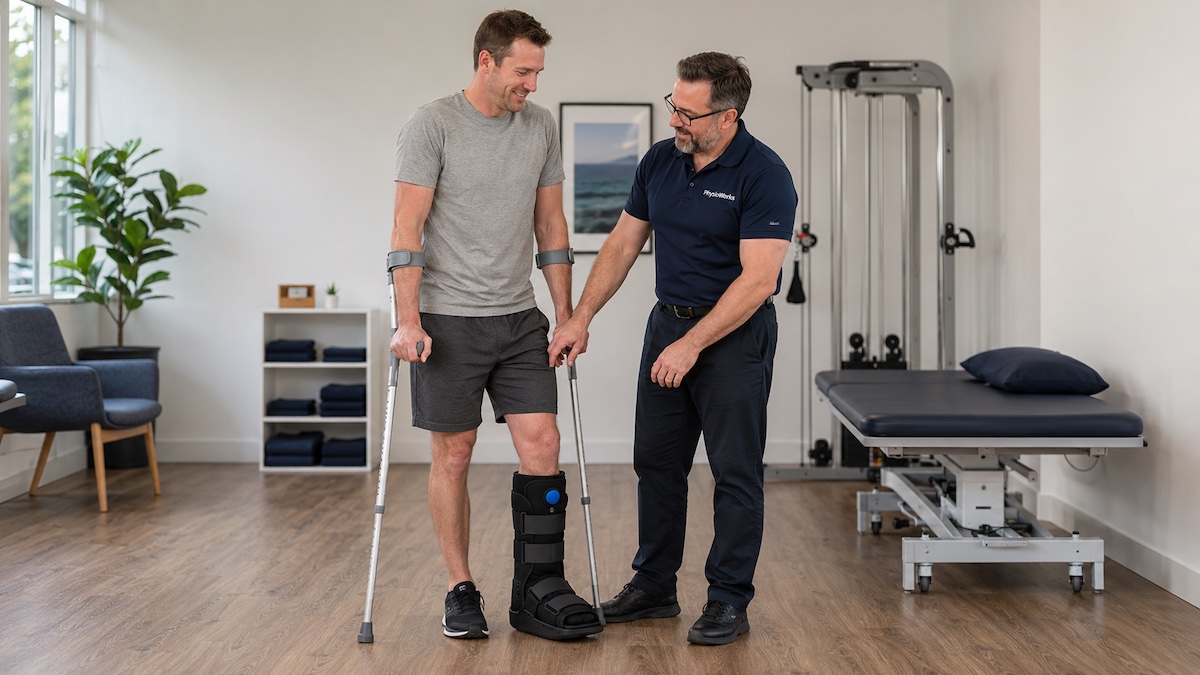
Checking moon boot fit and safe crutch-assisted walking.
A moon boot, also called a walking boot or controlled ankle motion boot, protects the foot and ankle while an injury or operation heals. Its rigid shell limits movement, while the rocker-shaped sole may allow controlled walking when your doctor or physiotherapist has approved weight-bearing.
A walking boot does not make every injury safe to walk on. Your diagnosis, healing stage and specific weight-bearing instructions determine whether you may place no weight, some weight or full weight through the injured leg.
Moon boots are commonly considered for selected ankle injuries, foot injuries, fractures, severe sprains, Achilles tendon injuries and post-operative protection.
What Does a Moon Boot Do?
A moon boot uses a rigid outer frame, padded lining and adjustable straps to restrict unwanted movement through the ankle and foot. Some boots also contain inflatable air cells that can improve contact around the lower leg and accommodate changes in swelling.
The curved or rocker-style sole helps the body move over the planted foot without requiring the ankle to bend normally. This can protect healing tissues, although it also changes stride length, walking speed and loading through the knee, hip and lower back.
Because the boot is removable, your practitioner may allow selected skin care, hygiene, range-of-motion exercises or rehabilitation. Do not remove it unless your treatment plan permits this.
When May a Moon Boot Be Used?
A doctor, surgeon or physiotherapist may recommend a walking boot for selected injuries where controlled immobilisation is appropriate.
Common Reasons for Using a Walking Boot
- Stable ankle fractures
- Selected foot or metatarsal fractures
- Foot stress fractures
- Severe ankle sprains
- High ankle sprains or syndesmosis injuries
- Achilles tendon rupture management
- Selected Achilles tendon or calf injuries
- Post-operative foot or ankle protection
- Temporary protection while awaiting further investigation
A boot is not suitable for every fracture or soft-tissue injury. Some conditions require a cast, stricter immobilisation, surgery or a different brace. Therefore, avoid selecting a moon boot solely from symptoms without first confirming the diagnosis.
Can You Walk in a Moon Boot?
You may walk in a moon boot only when your treating practitioner has approved the required level of weight-bearing.
Instructions may include:
- Non-weight-bearing: do not place the injured foot on the ground.
- Touch weight-bearing: place the foot down lightly for balance only.
- Partial weight-bearing: place a specified amount of weight through the leg.
- Weight-bearing as tolerated: increase loading within the limits your practitioner has set.
- Full weight-bearing: place normal body weight through the boot when approved.
The name “walking boot” does not automatically mean that full weight-bearing is safe. Crutches, a walking frame or another mobility aid may still be required.
How Should a Moon Boot Fit?
A correctly fitted moon boot should feel supportive without causing excessive pressure, numbness or restricted circulation. Your heel should sit fully at the rear of the boot, and the foot should remain centred within the liner.
Moon Boot Fit Checklist
- Your heel sits firmly against the back of the boot.
- Your toes do not press into the front edge.
- The liner lies flat without folds beneath the foot.
- The straps feel firm but do not cause pins and needles.
- Your toes remain warm, normally coloured and easy to move.
- The boot does not slide excessively while walking.
- Pressure remains comfortable around the ankle bones and shin.
Swelling often changes throughout the day. Your practitioner may show you how to adjust the straps or air cells without making the boot too tight. Wear the recommended sock or liner and check your skin regularly, particularly if you have diabetes, reduced sensation or circulation concerns.
Short or Tall Moon Boot?
The best boot height depends on the location and stability of the injury.
Short Walking Boot
A short boot may suit selected forefoot, midfoot or lower ankle conditions. It is lighter and less bulky but provides less control higher up the lower leg.
Tall Walking Boot
A tall boot may provide more control for selected ankle fractures, higher ankle injuries and Achilles tendon protocols. It also affects the knee and walking pattern more noticeably.
Do not assume that a taller boot is always safer. Excessive immobilisation can add weight, restrict movement unnecessarily and make walking more difficult. The diagnosis should guide the choice.
Air or Non-Air Moon Boot?
An air walking boot contains inflatable chambers within the liner. These may help improve contact around the lower leg and accommodate swelling changes. A non-air boot uses fixed padding and may be simpler to fit and manage.
Neither design is automatically better for every injury. Comfort, limb shape, swelling, skin sensitivity and the required level of support should guide selection.
How Do You Put On a Moon Boot?
-
Open the straps and front panels fully.
-
Place your heel firmly at the rear of the liner.
-
Smooth the liner around the foot and lower leg.
-
Position the rigid front panel as instructed.
-
Fasten the straps gradually from the foot upwards.
-
Adjust air cells only according to the product or practitioner instructions.
-
Stand only if your weight-bearing plan permits it.
-
Check toe colour, warmth, sensation and comfort after fitting.
Boots vary in construction. Follow the product instructions and any injury-specific fitting advice supplied by your treating practitioner.
Why Can a Moon Boot Cause Knee, Hip or Back Pain?
A moon boot raises the injured side and restricts ankle movement. This creates an artificial difference in leg height and changes the way the hips, knees and trunk move during walking.
Some people develop discomfort in the opposite hip, knee or lower back, particularly when wearing the boot for longer periods. A supportive shoe of an appropriate height on the other foot may reduce the imbalance. A shoe-levelling device may suit selected people, although it should not compromise safety or the injury plan.
Contact your physiotherapist if you develop new pain, marked limping or difficulty using your crutches safely. They can review the boot fit, walking aid height and movement strategy.
Can You Sleep in a Moon Boot?
Whether you should sleep in the boot depends on your injury and the instructions from your doctor or surgeon. Some fractures, Achilles tendon protocols and early post-operative plans require the boot to remain on overnight. Other plans allow removal for sleep or hygiene.
Do not remove the boot overnight merely because it feels uncomfortable. First confirm the instructions for your diagnosis. If you must sleep in it, protect the other leg and bedding from the rigid edges and check your skin in the morning.
Can You Drive While Wearing a Moon Boot?
Driving in a moon boot can reduce ankle movement, braking speed and vehicle control, particularly when the right foot is affected. A left-sided boot may also affect getting into the vehicle or operating some vehicles safely.
Follow your doctor or surgeon’s advice, make sure you can safely control the vehicle, and check any relevant licensing and insurance requirements before driving. Do not remove the boot solely to drive unless your injury plan permits removal and you can safely control the vehicle.
When Can You Remove a Moon Boot?
Removal instructions vary. Your practitioner may allow the boot to come off for washing, skin checks, sleep or selected rehabilitation exercises. Other injuries require continuous protection during the early healing phase.
Do not begin spending long periods out of the boot simply because pain has improved. Pain often settles before bone, tendon or ligament healing is complete.
How Long Do You Wear a Moon Boot?
Wear time depends on the injury, healing stage, imaging findings, surgery and symptom response. Some soft-tissue injuries need a short period of protection, while fractures or tendon injuries may require the boot for several weeks or longer.
Your practitioner may gradually change:
- The amount of permitted weight-bearing.
- The use of crutches.
- The boot angle or heel wedges.
- The time spent out of the boot.
- The transition to supportive shoes.
- Your rehabilitation exercises.
A planned transition usually works better than abruptly stopping the boot after prolonged use.
Moon Boot Warning Signs
How Can Physiotherapy Help While You Wear a Moon Boot?
Physiotherapy may help you protect the injury while maintaining as much safe movement and strength as your treatment plan permits.
Your physiotherapist may assist with:
- Checking boot fit and pressure areas.
- Teaching safe crutch or walking-frame use.
- Reviewing weight-bearing technique.
- Maintaining knee, hip and trunk strength.
- Managing swelling where appropriate.
- Prescribing permitted foot or ankle exercises.
- Reducing excessive limping and secondary discomfort.
- Planning the transition from the boot to normal footwear.
- Restoring balance, calf strength and walking capacity.
- Guiding a return to work, exercise or sport.
Rehabilitation should match the diagnosis. For example, an ankle fracture, Achilles rupture and severe ankle sprain require different loading and exercise progressions.
How Do You Stop Using a Moon Boot?
Your practitioner may recommend gradually increasing time in a supportive shoe while reducing reliance on the boot. Early walking may feel stiff or weak because the ankle has moved less and the calf muscles have worked differently.
A transition plan may include:
- Short periods in supportive shoes.
- Continued use of crutches where needed.
- Gentle ankle movement when permitted.
- Calf, foot and lower-limb strengthening.
- Balance retraining.
- Gradual increases in walking distance.
- Monitoring swelling and next-day symptoms.
Return to running, jumping, heavy work or sport should follow healing and functional testing rather than the date the boot was removed.
Choose a Moon Boot Carefully
The correct height, size and support level depend on your injury and treatment plan.
PhysioWorks stocks Victor Moonboot options in short and tall designs, with air and non-air versions available.
Moon Boot FAQs
How long should you wear a moon boot?
Wear time depends on your diagnosis, imaging, operation and stage of healing. Some injuries need only a short protection period, while fractures and tendon injuries may require several weeks or longer. Follow the review schedule and transition plan given by your doctor, surgeon or physiotherapist.
Can you walk normally in a moon boot?
A moon boot allows controlled walking rather than a normal gait. The rocker sole reduces the need for ankle movement, but it changes stride length, speed and loading elsewhere in the body. Use crutches and follow your prescribed weight-bearing level until your practitioner advises otherwise.
Can you sleep in a moon boot?
Some injuries require the boot to remain on overnight, while other treatment plans allow removal. The correct advice depends on fracture stability, surgery and tendon protection. Confirm your instructions before sleeping without the boot, particularly during the early healing stage.
Can you drive while wearing a moon boot?
Driving in a moon boot can reduce ankle movement, braking speed and vehicle control, particularly when the right foot is affected. Follow your doctor or surgeon’s advice, make sure you can safely control the vehicle, and check any relevant licensing and insurance requirements before driving.
Should a moon boot feel tight?
The boot should feel firm and supportive but should not cause numbness, pins and needles, cold toes, skin pressure or increasing pain. Swelling changes can affect the fit. Recheck the straps and seek advice if the boot remains uncomfortable or circulation appears affected.
Can you take a moon boot off to shower?
Removal for showering depends on the injury and treatment instructions. Some people may remove the boot while seated and keep the injured leg protected. Others require continuous immobilisation. Confirm your plan and avoid standing without the boot when weight-bearing has not been approved.
What should you wear on the other foot?
A stable, supportive shoe with a sole height closer to the boot may reduce the artificial leg-length difference. Avoid unstable footwear such as thongs or soft slippers. A shoe-levelling device may help selected people, although fit and walking safety should be checked.
When should you stop using a moon boot?
Stop using the boot only when your treating practitioner confirms that healing and loading have progressed sufficiently. Most people benefit from a gradual transition into supportive footwear, walking and rehabilitation rather than abruptly removing the boot for full daily activity.
What to Do Next
Arrange an assessment if you are unsure whether you need a moon boot, cannot fit it comfortably or need help following weight-bearing instructions. A physiotherapist can assess your walking, mobility-aid use, surrounding strength and progression back to normal footwear.
Seek medical review when the diagnosis is unclear, after significant trauma or when symptoms are worsening despite protection. Urgent assessment is required for circulation changes, severe calf swelling, chest pain or unexplained shortness of breath.
Need Help With Your Moon Boot or Recovery?
Book a physiotherapy assessment for help with boot fit, walking aids, injury rehabilitation and a safe return to normal footwear and activity.
Choose your clinic and appointment pathway
Select a PhysioWorks clinic to continue to live booking, an appointment request or reception assistance.
References
- Stassen RC, Franssen S, Meesters B, et al. Prospective randomized controlled trial: early weight bearing after conservative treatment of Weber B ankle fractures (pancake trial). Eur J Orthop Surg Traumatol. 2024;34:591–598. doi:10.1007/s00590-023-03651-6.
- Baji P, Barbosa Capelas EC, Heaslip V, et al. Use of removable support boot versus cast for early mobilisation after ankle fracture surgery: cost-effectiveness analysis and qualitative findings of the Ankle Recovery Trial. BMJ Open. 2024;14(1):e073542. doi:10.1136/bmjopen-2023-073542.
- Walker J, Thomas A, Stolycia ML, Wilkins RA, Lunn DE. Acute biomechanical responses to wearing a controlled ankle motion (CAM) Walker boot during walking. Gait Posture. 2024;108:208–214. doi:10.1016/j.gaitpost.2023.12.011.
- Martin R, et al. The Ankle Recovery Trial (ART): clinical outcomes and patient experience of a pragmatic multicentre RCT comparing cast with removable boot for early mobilization after ankle fracture surgical fixation. Bone Jt Open. 2025;6(11):1416–1424. doi:10.1302/2633-1462.611.BJO-2025-0108.R1.
