
Pillows
Best Pillow for Neck Pain


The best pillow for neck pain is one that supports your head and neck in a comfortable, neutral position for your usual sleeping posture. Pillow height matters more than brand alone. Your sleep position, shoulder width, neck shape and mattress firmness all affect the amount of support you need.
A pillow can reduce unnecessary overnight strain, but it cannot address every cause of neck pain. If symptoms keep returning, our neck pain guide explains other common contributors and when assessment may help.

Which Pillow Setup May Suit You?
Start with your main sleeping position. Then consider how far your shoulder sinks into the mattress. These factors help determine the pillow height you need.
Side sleeper
Usually needs more pillow height because the pillow must fill the space between the shoulder, neck and mattress.
Back sleeper
Often suits a moderate-height pillow that supports the neck curve without pushing the head too far forwards.
Stomach sleeper
Usually needs a very low pillow, because the neck already remains rotated for long periods in this position.
How Do You Choose the Best Pillow for Neck Pain?
Choose a pillow by testing your alignment rather than relying on labels such as “orthopaedic”, “cervical” or “supportive”. A pillow should comfortably fill the space between your head, neck and mattress without forcing your neck into a bent or twisted position.
A useful order is:
-
Start with your sleeping position
Side, back and stomach sleeping create different gaps between your head and the mattress.
-
Consider your shoulder and body shape
A broader shoulder generally creates a larger gap when you sleep on your side.
-
Allow for mattress firmness
A softer mattress lets your shoulder and body sink further, which can reduce the pillow height you need.
-
Choose pillow height and shape
Look for a height that keeps your head comfortably aligned rather than pushed up or allowed to drop down.
-
Choose the material last
Foam, latex and other materials change the feel of a pillow, but the correct height and shape remain more important.
You can compare these principles with our guide to sleeping positions for back and neck health.
How Can You Tell if Your Pillow Is the Wrong Height?
Your pillow may be contributing to your symptoms when you repeatedly wake with stiffness or need to fold, bunch or reshape it to feel supported.
Too high
Your head may be pushed forwards on your back or tilted upwards when you sleep on your side.
Too low
Your head may drop backwards when lying on your back or towards the mattress when lying on your side.
Too soft or worn
The pillow may begin at the correct height but collapse during the night and leave your neck unsupported.
What Pillow Height Suits Side Sleepers?
Side sleepers generally need more pillow height than back sleepers because the shoulder creates a larger gap between the head and mattress.
The correct height varies between people. A broad-shouldered person on a firm mattress may need considerably more support than a smaller person sleeping on a soft mattress.
When lying on your side, look for a position where your head remains reasonably level rather than falling towards the mattress or tilting towards the ceiling.
What Pillow Height Suits Back Sleepers?
Back sleepers usually need moderate support. The pillow should support the natural neck curve without forcing the head forwards.
A pillow that is too high may leave the upper neck flexed for several hours. Conversely, a very flat pillow may not provide enough support for some people.
What About Stomach Sleeping?
Stomach sleeping keeps the neck rotated for prolonged periods. If you prefer this position, a very low pillow or no pillow beneath the head may reduce additional neck bending.
Some people also find that a body pillow helps them remain partly side-lying instead of rolling completely onto their stomach.
Do Contour Pillows Help Neck Pain?
A contour pillow may help when its height and shape match your body and sleeping position. The raised section can support the neck curve during back sleeping or help fill the shoulder-to-neck gap during side sleeping.
However, contour pillows are not automatically better than conventional pillows. A contour that is too high, too low or too firm can still leave your neck in an uncomfortable position.
The key question is not whether the pillow is contoured. It is whether the contour fits you.
Which Pillow Material Should You Choose?
Choose the pillow height and shape first. Then choose a material that provides the feel, temperature and adjustability you prefer.
Memory foam
Memory foam moulds around the head and neck and can provide consistent support. Some people find it warmer than other materials.
Latex
Latex generally feels more responsive or springy and often retains its shape well.
Feather or down
These pillows can feel soft and adjustable, although some designs compress considerably during the night.
Adjustable fill
An adjustable design allows you to add or remove material and can be useful when a fixed pillow height does not suit you.
Research suggests that pillow design, height and material can influence neck symptoms, waking symptoms, sleep quality and spinal alignment. However, current evidence does not identify one pillow that is best for everyone.
For another general consumer perspective, Cleveland Clinic discusses pillow support and waking with a stiff neck.
When Should You Replace Your Pillow?
Replace a pillow when it no longer maintains its intended shape or height. A permanent hollow, flattened section or the need to fold the pillow are practical signs that its support has changed.
Pillow lifespan varies substantially with material, construction, use and washing. Rather than relying on a fixed replacement date, assess whether the pillow still provides the support you originally chose it for.
When Is a Pillow Not Enough?
A pillow may only be one part of the problem if your neck pain continues through the day, frequently wakes you, or is accompanied by headaches or symptoms travelling into the arm.
Other factors can include prolonged sitting, work or screen positions, joint irritation, muscle loading and nerve sensitivity. Our guides to sitting posture and posture correction may also be useful when symptoms build during the day.
Repeated neck-related headaches, neck and arm pain, pins and needles or numbness deserve more attention than simply changing a pillow. Our pinched nerve guide explains some possible nerve-related symptoms.
Compare Pillow Options
If you are ready to compare pillows, start with the height and shape that best match your normal sleeping position. Then compare materials and adjustability.
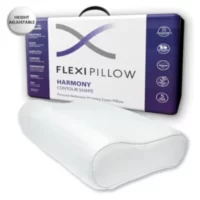
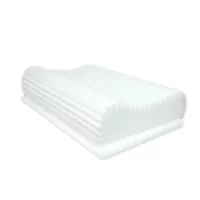
PhysioWorks carries several pillow designs, and the individual product pages provide the current specifications and purchase options. You can also browse the full pillow and cushion range.
Pillow Support Products
- Neck, Christmas Gift Ideas, Gift Ideas, Pillows/Cushions, Posture
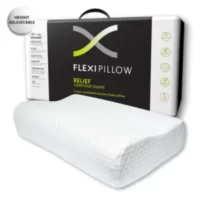
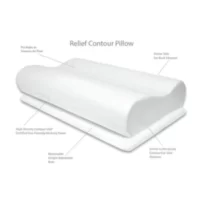
FlexiPillow Relief Contour Pillow
$109.95Add to cartQuick View -
- Christmas Gift Ideas, Neck, Pillows/Cushions
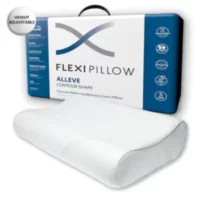
FlexiPillow Alleve Pillow
$109.95Add to cartQuick View

Frequently Asked Questions
What pillow height is best for side sleepers with neck pain?
Side sleepers often need more pillow height than back sleepers because the pillow must fill the space created by the shoulder. The correct height is the one that keeps your head comfortably aligned rather than tilted towards the mattress or ceiling.
Can the wrong pillow cause morning neck pain?
A pillow can contribute to morning neck pain when it holds your neck in an uncomfortable position for several hours. A pillow that is too high, too low or unable to maintain its support may be a factor, although neck pain can have several other causes.
Are memory foam pillows good for neck pain?
Memory foam may suit some people because it moulds around the head and neck. However, the pillow’s height, shape and fit for your sleeping position are more important than choosing memory foam simply because of the material.
Is a contour pillow better for neck pain?
A contour pillow may help when the contour matches your neck, shoulder shape and sleeping position. It is not automatically better than a conventional pillow. The wrong contour height can also feel uncomfortable.
How do I know if my pillow is too high or too low?
When you lie in your normal sleeping position, your head should remain reasonably aligned with your body. A pillow may be too high if it pushes your head forwards or tilts it upwards, and too low if your head drops backwards or towards the mattress.
What to Do Next
First, check your pillow in the position you actually sleep in. Look at your head and neck alignment, then consider your mattress firmness and whether the pillow maintains its shape through the night.
If you are mainly trying to improve your pillow setup, compare the current PhysioWorks pillow and cushion options.
If neck pain continues despite making sensible sleep changes, or you also have recurring headaches or arm symptoms, a physiotherapy assessment may help clarify whether your pillow is the main issue or only one contributing factor.
Choose your clinic and appointment pathway
Select a PhysioWorks clinic to continue to live booking, an appointment request or reception assistance.
References
-
Pang JC-Y, Tsang SM-H, Fu AC-L. The effects of pillow designs on neck pain, waking symptoms, neck disability, sleep quality and spinal alignment in adults: a systematic review and meta-analysis. Clinical Biomechanics. 2021;85:105353. doi:10.1016/j.clinbiomech.2021.105353.
-
Ghosh S, Goyal M, Goyal K. Effect of pillow on pain, disability and sleep quality in patients with chronic neck pain: a systematic review. Rehabilitación. 2025;59(3):100922. doi:10.1016/j.rh.2025.100922.
-
Zhong D, Lin C-C, Hsieh Y-L, et al. The effect of the air massage pillow for individuals with neck pain: a randomized double-blind, cross-over study. QJM. 2025;118(12):895–901. doi:10.1093/qjmed/hcaf161.
