
Exercise Physiology
Exercise Physiology Brisbane
Accredited Exercise Physiology at PhysioWorks Ashgrove, Clayfield and Sandgate.
Build strength, improve balance and work towards everyday activities with exercise tailored to your health, ability and goals. An Accredited Exercise Physiologist assesses your starting point, develops a plan and adjusts it as you progress.
If you know Exercise Physiology is right for you, choose an appointment below. If you have new or worsening pain, an acute injury or unclear symptoms, physiotherapy may be a better first step. You can also use our appointment choice guide.
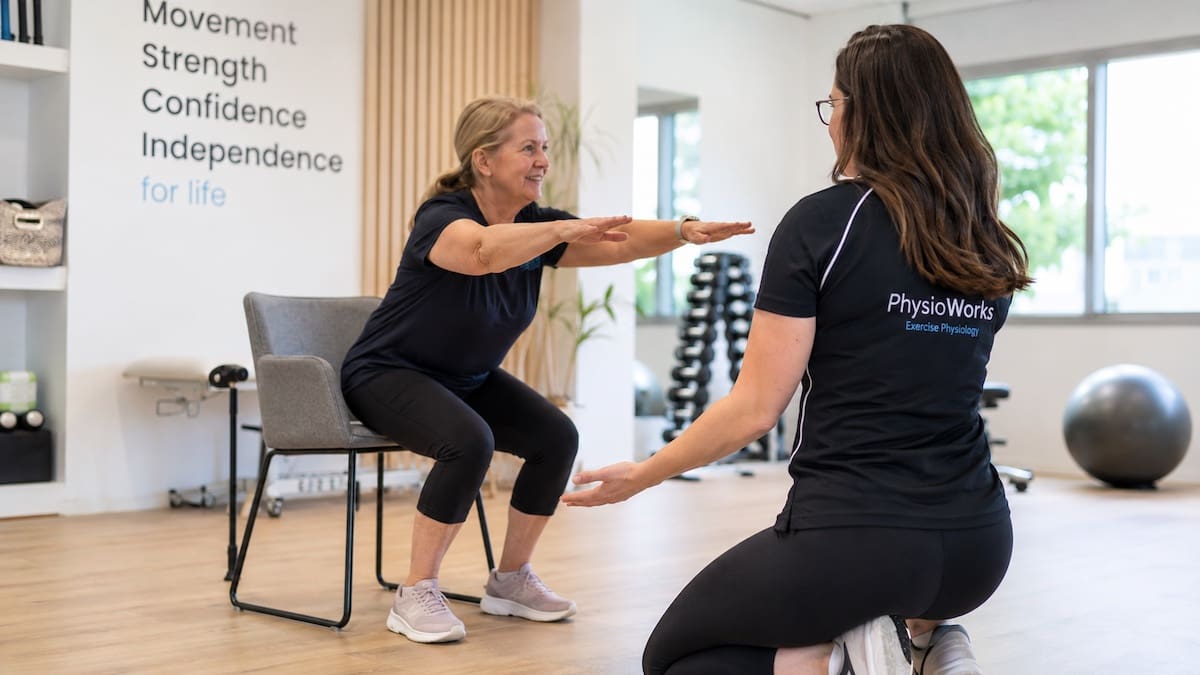
Functional exercise can be tailored to your starting strength, balance and confidence.
PhysioWorks Exercise Physiology
Book Exercise Physiology
Exercise Physiology appointments are available at Ashgrove, Clayfield and Sandgate.
What Is Exercise Physiology?
Exercise Physiology is an allied health service that uses individually prescribed exercise to support health, physical capacity and daily function. Accredited Exercise Physiologists have university-level training in exercise assessment, clinical exercise prescription and progression.
At PhysioWorks, your program may involve strengthening, balance training, walking or aerobic exercise, pacing and a home plan. Your exercise physiologist considers health conditions, symptoms, preferences and the activities that matter to you.
Who May Benefit From Exercise Physiology?
Exercise Physiology may suit people who want structured exercise support for:
- Strength and balance: improving walking, stairs, mobility and confidence with daily tasks.
- Persistent pain and arthritis: building tolerance and function through graded exercise, including for lower back pain and osteoarthritis.
- Chronic health conditions: working towards suitable exercise for cardiovascular, metabolic or other ongoing health needs.
- Recovery and return to activity: rebuilding fitness and physical capacity after illness, injury or an operation, once suitable for exercise.
- Bone health and falls prevention: developing appropriate strengthening and balance routines.
- Neurological conditions or cancer recovery: progressing activity with appropriate clinical and medical guidance.
You do not need to be fit before starting. Your exercise physiologist will consider your current abilities and any precautions. For more information about general activity levels, see the Australian Government’s physical activity guidance.
Physiotherapy or Exercise Physiology: Which Should I Choose?
Physiotherapy
Often a suitable first step for new injuries, acute or worsening pain, unclear symptoms or assessment of a movement problem.
Exercise Physiology
Often suitable for structured strengthening, conditioning, balance, long-term health goals and graded return to activity.
Working together
Some people benefit from physiotherapy assessment alongside ongoing exercise planning and progression.
These roles overlap. The right starting point depends on your presentation and goals. Compare your appointment options if you are uncertain.
What Happens at Your First Exercise Physiology Appointment?
-
Discuss your health and goals
Your exercise physiologist reviews your activity history, relevant medical conditions, symptoms and the goals you want to achieve. Bring relevant referrals, reports and medication information if available.
-
Check your starting point
Depending on your needs, the assessment may include strength, balance, walking, mobility or fitness tests.
-
Start a practical plan
You learn exercises suited to your current capacity, along with ways to manage effort, recovery and progress.
-
Review and progress
Follow-up appointments can adjust load, technique and your home or gym program. Frequency depends on your goals and clinical needs.
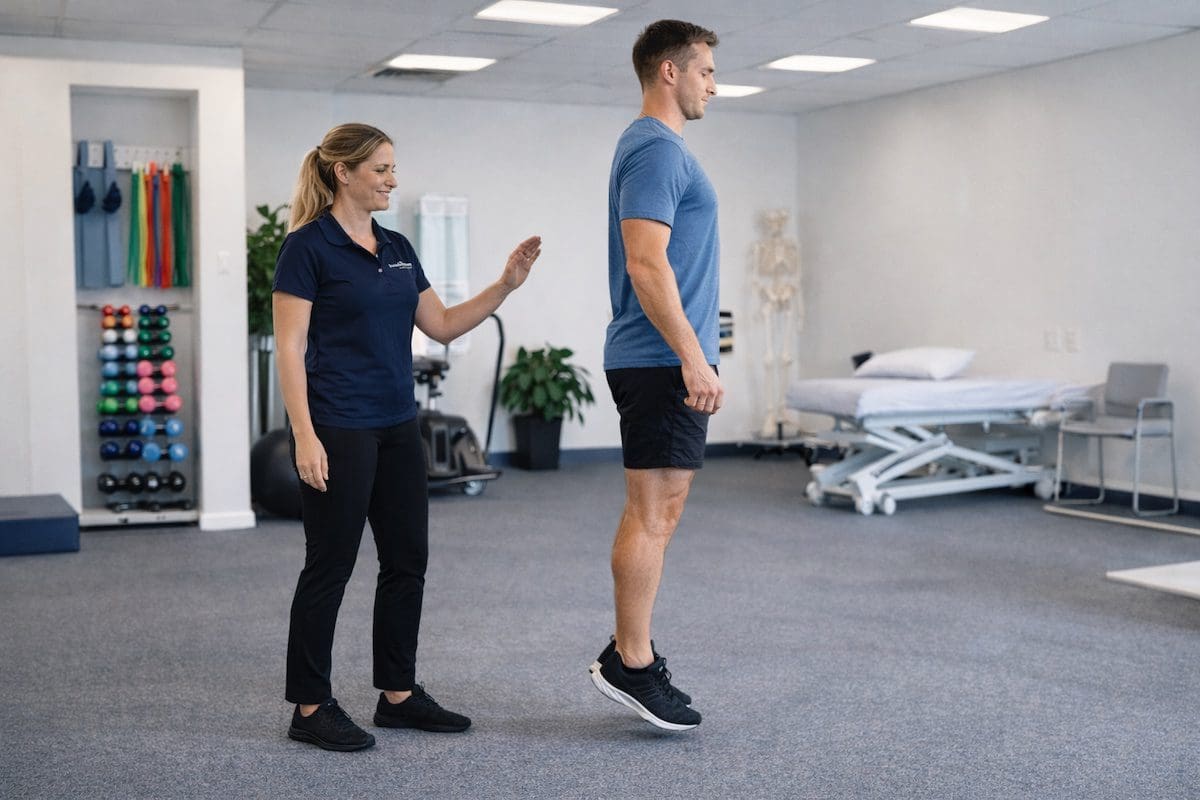
Strength exercises, such as calf raises, can be progressed to suit a person’s capacity and goals.
Explore Exercise Physiology Services
Different goals call for different exercise plans. These guides explain some of the ways structured exercise may support health and function:
- Neurological rehabilitation
- Exercise oncology
- Performance Exercise Physiology
- Exercise and diabetes
- Exercise for mental health
- Individual exercise programs and exercise load management
Supervised Exercise and Group Classes
PhysioWorks also offers supervised exercise programmes. Group sessions are not interchangeable with individual Exercise Physiology appointments. An initial assessment or screening may be required before joining a class. Contact reception to confirm eligibility, class places and the correct pathway.
Balance and Falls Prevention
Supervised exercises for balance, leg strength and walking confidence.
Bone Density Class
Strength and balance exercises for people concerned about bone health or falls.
Group Exercise Classes
Clinician-guided group exercise, with suitability checked before participation.
Hydrotherapy
Water-based exercise at Sandgate, subject to assessment and programme suitability.
For suitable people with hip or knee osteoarthritis, PhysioWorks also offers the GLA:D® Australia programme at Ashgrove. Ask reception about programme entry and the appropriate assessment.
Meet Your Exercise Physiologist
Madison Stanley is an Accredited Exercise Physiologist at PhysioWorks. She develops individual exercise plans to support strength, balance, physical capacity, ongoing health management and return to activity. Her approach considers your goals, health history and current ability.
Exercise Physiology at Ashgrove, Clayfield and Sandgate
Choose the clinic that suits your location and appointment needs. Individual Exercise Physiology appointments use the registered booking pathway for each clinic.
Ashgrove Exercise Physiology
Brisbane inner-west appointments. Reception: 07 3366 4221.
Clayfield Exercise Physiology
Brisbane inner-north appointments. Reception: 07 3862 4544.
Sandgate Exercise Physiology
Sandgate appointments, with separate class and hydrotherapy enquiries. Reception: 07 3269 1122.
Funding, Referrals and Rebates
Some Exercise Physiology appointments may attract a rebate or be funded, depending on your circumstances and the service provided. Confirm eligibility, referral requirements and any approval with your funder or preferred clinic.
- Private health insurance: extras rebates depend on your policy.
- Medicare: eligible patients may access allied health services under a GP Chronic Condition Management Plan (GPCCMP) with an appropriate referral. Earlier eligible GP Management Plans or Team Care Arrangements may remain valid during the transition period.
- DVA: eligibility and referral requirements apply.
- Workers compensation and CTP: cover depends on claim approval and the relevant insurer’s requirements.
- NDIS: access depends on the participant’s plan, the support being provided and applicable funding rules; a GP referral is not universally required.
For official Medicare requirements, see Services Australia: services under a GP Chronic Condition Management Plan.
Exercise Physiology FAQs
Do I need a referral for Exercise Physiology?
You can generally book a private appointment without a referral. Medicare and some other funded pathways require referrals or approvals. Contact your funder or clinic if you are unsure.
Do I need to be fit before I start?
No. Your exercise physiologist considers your current ability and selects suitable exercises and starting levels.
How many appointments will I need?
It varies with your goals, health needs and progress. Your exercise physiologist will discuss a review plan after your assessment.
Can older adults see an exercise physiologist?
Yes. Exercise can be adapted for strength, walking, balance and daily activities, with safety and health needs considered during assessment.
Can I join a group class straight away?
Some programmes require an individual assessment or screening first. Call your preferred clinic to check which class suits you and how to arrange entry.
Can Exercise Physiology help with persistent pain?
Graded exercise may help improve movement confidence, physical capacity and daily function. Your plan should reflect your symptoms and individual needs.
Book Exercise Physiology in Brisbane
For an individual Exercise Physiology appointment, choose Ashgrove, Clayfield or Sandgate below. For class entry, hydrotherapy or help selecting an appointment type, call your preferred clinic.
PhysioWorks Exercise Physiology
Book Exercise Physiology
Choose Ashgrove, Clayfield or Sandgate to book an Exercise Physiology appointment online.
Classes and Specialised Exercise Services
Call reception for Bone Density classes, Hydrotherapy, Functional Capacity Evaluations, group exercise or help choosing the right Exercise Physiology appointment.


Further Reading and References
- Healthdirect Australia: Exercise physiologists
- Australian Government: Physical activity and exercise
- Services Australia: GP chronic condition management allied health services
- Fairag M, Alzahrani SA, Alshehri N, et al. Exercise as a therapeutic intervention for chronic disease management: a comprehensive review. Cureus. 2024;16(11):e74165.
- Zouhal H, Granacher U, Hackney AC, Li S, Laher I. Exercise physiology and its role in chronic disease prevention and treatment—mechanisms and insights. Front Physiol. 2022;13:1038119.