
Acupuncture & Dry Needling
Acupuncture vs Dry Needling: What’s the Difference?
Acupuncture and dry needling both use fine needles to stimulate selected areas of the body. The main differences lie in the clinical approach and how practitioners choose treatment points. Neither is automatically the better option: your symptoms, assessment, health history and preferences should guide the decision.


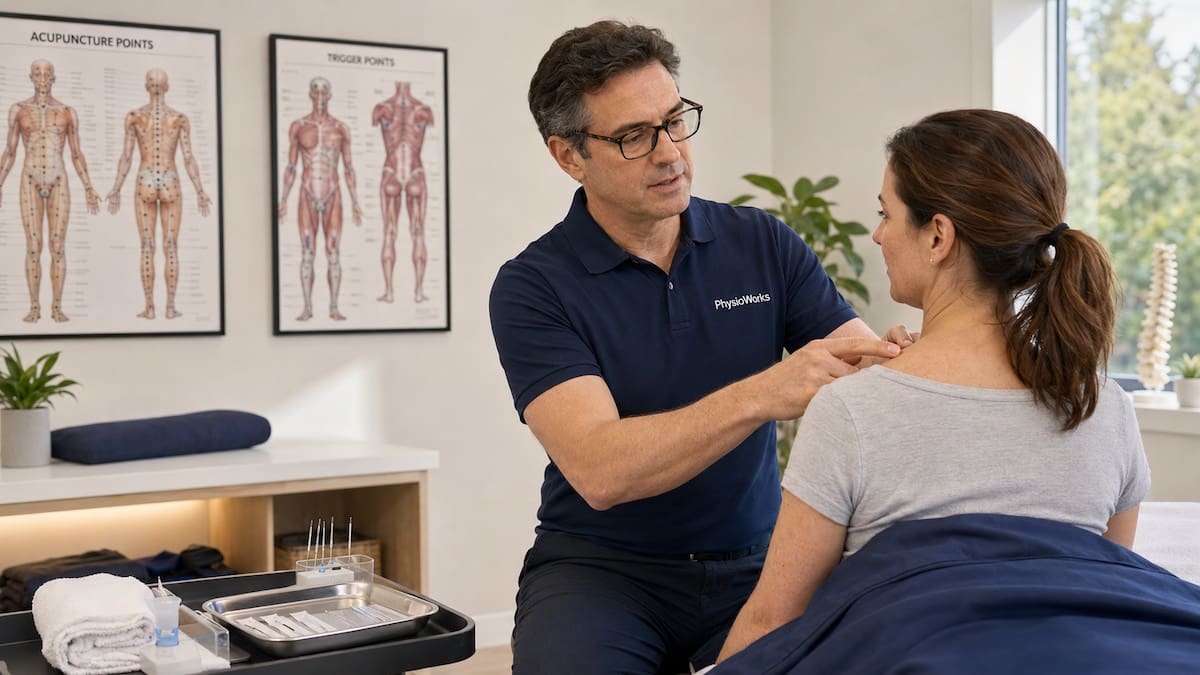
Both techniques use fine needles, although the assessment and point-selection methods may differ.
How Are Acupuncture and Dry Needling Different?
The treatments can look similar because both use thin, solid needles without injecting medicine. Their clinical reasoning, treatment locations and aims may differ.
| Feature | Acupuncture | Dry needling |
|---|---|---|
| Point selection | Commonly uses recognised acupuncture points. | Commonly targets muscles or other tissues selected from an assessment. |
| Clinical approach | May draw on traditional East Asian medicine or contemporary pain-science approaches. | Usually draws on anatomy, movement findings, tenderness and musculoskeletal clinical reasoning. |
| Potential role | May help manage certain pain presentations. | May offer short-term relief for some musculoskeletal pain presentations. |
| Treatment sensations | A brief prick, dull ache or heaviness may occur. | A brief prick, ache or occasional muscle twitch may occur. |
| Broader care | May complement education, exercise and other appropriate treatments. | May complement exercise, movement advice and load management. |
These are common distinctions, not rigid rules. Practitioners may use overlapping techniques, points and explanations.
Which Approach Might Suit You?
Neither technique should be chosen only because pain occurs in a particular body region. A physiotherapist first considers what may be contributing to your symptoms, how they affect daily activities and whether needling offers a reasonable addition to your care.
Acupuncture
May be discussed for selected pain presentations when the expected benefits, evidence, preferences and precautions support its use.
Dry Needling
May be considered when local muscle tenderness or sensitivity appears relevant to symptoms and function.
Assessment is especially important for persistent neck pain, back pain, shoulder pain or muscle pain. Needling is not suitable or necessary for everyone.
What Does the Research Say?
Evidence varies by the condition being treated, the type of needling and what it is compared with. Some acupuncture research supports pain relief for selected persistent pain conditions. Dry needling research suggests that some people with musculoskeletal pain may experience short-term improvement, although results and longer-term benefits are less certain.
Research does not establish that one technique is universally better. A useful treatment should contribute to goals such as easier movement, better activity tolerance or progress with rehabilitation. Your physiotherapist should review your response rather than continue needling automatically.
What Happens During a Needling Appointment?
-
Assessment and discussion
Your physiotherapist reviews symptoms, medical history, goals and relevant precautions. You can discuss non-needling options.
-
Consent and treatment
If you agree, the clinician explains the proposed areas and uses sterile, single-use needles. You may feel a brief prick, dull ache, heaviness or, with some dry needling techniques, a brief muscle twitch. You can ask to stop at any point.
-
Review and next steps
The clinician checks how you feel and, when useful, reassesses movement or activity. They explain aftercare and how the treatment fits with your wider plan.
What Are the Risks and Precautions?
Temporary soreness, minor bleeding, bruising or light-headedness can occur. More serious complications are uncommon but possible, including infection, nerve injury or a punctured lung (pneumothorax), particularly when needling near the chest or upper back.
Before treatment, mention pregnancy, blood-thinning medicines, bleeding disorders, a tendency to faint, immune-system conditions, recent surgery or infection or skin problems near the area. Your clinician should explain the relevant risks and alternatives before asking for consent.
For independent patient information, visit Healthdirect’s acupuncture guide.
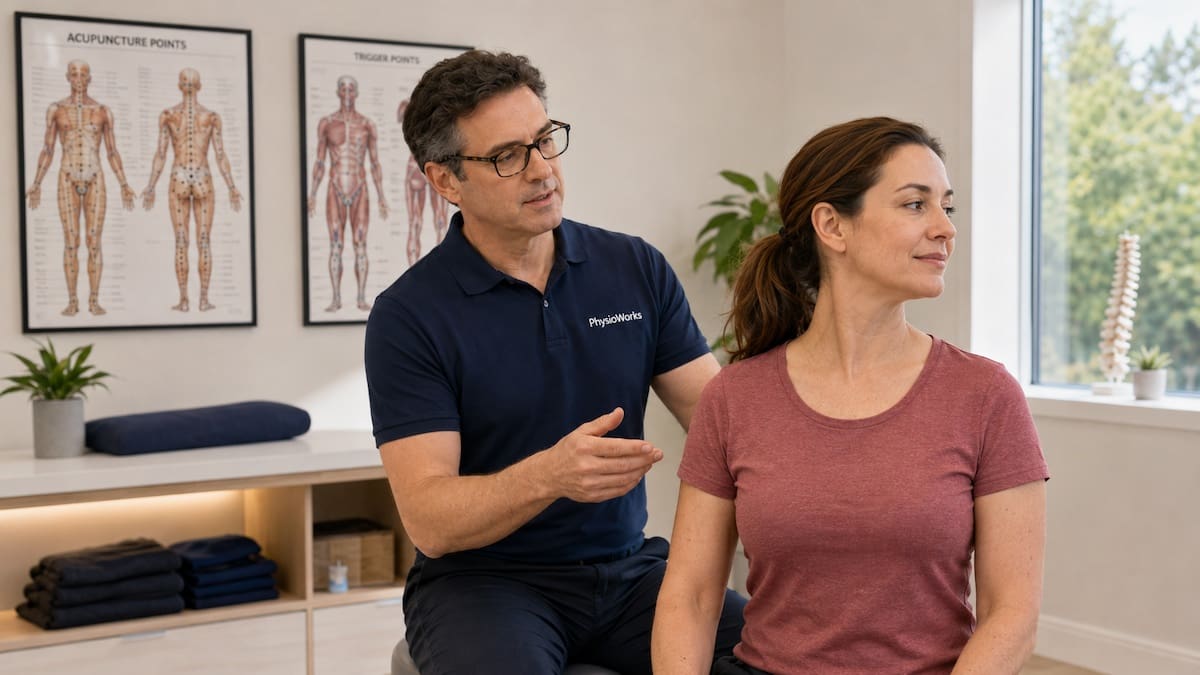
Rechecking movement and symptoms can help determine whether treatment has supported a meaningful goal.
Acupuncture vs Dry Needling FAQs
Is dry needling the same as acupuncture?
No. Both use fine needles, but their usual point-selection methods and clinical frameworks differ. There can also be overlap between approaches.
Is either treatment better for muscle pain?
Neither is consistently better for everyone. The most useful approach depends on the condition, assessment, evidence, preferences and response to treatment.
Do the treatments use the same types of needles?
Both commonly use sterile, single-use, fine solid needles. The difference is mainly in how and why the clinician uses them, not whether medicine is injected.
Can physiotherapists provide acupuncture or dry needling?
Suitably trained physiotherapists may offer these techniques within their scope of practice. Not every physiotherapist provides both, so check availability with the clinic.
Can needling be combined with exercise?
Yes. Where appropriate, needling may be used alongside exercise, education and load management. It should not replace active rehabilitation when that is indicated.
References
- Chys M, De Meulemeester K, De Greef I, et al. Clinical effectiveness of dry needling in patients with musculoskeletal pain: an umbrella review. J Clin Med. 2023;12(3):1205.
- Navarro-Santana MJ, Sánchez-Infante J, Fernández-de-Las-Peñas C, et al. Effectiveness of dry needling for myofascial trigger points associated with neck pain symptoms: an updated systematic review and meta-analysis. J Clin Med. 2020;9(10):3300.
- Ho L, et al. Systematic review of clinical practice guidelines on acupuncture for chronic musculoskeletal pain. BMC Complement Med Ther. 2025.
