
Orthopaedic Braces and Supports
Orthopaedic Braces and Supports
Orthopaedic braces and supports may provide short-term support, compression or movement control after an injury or during a painful flare-up. The most suitable option depends on the body region, injury, activity and stage of recovery.
Braces may be considered for problems such as back pain, knee ligament injuries, shoulder pain or a sprained ankle.
However, not every condition needs a brace. A physiotherapist can assess your symptoms, movement and activity demands and explain whether external support is likely to be useful.
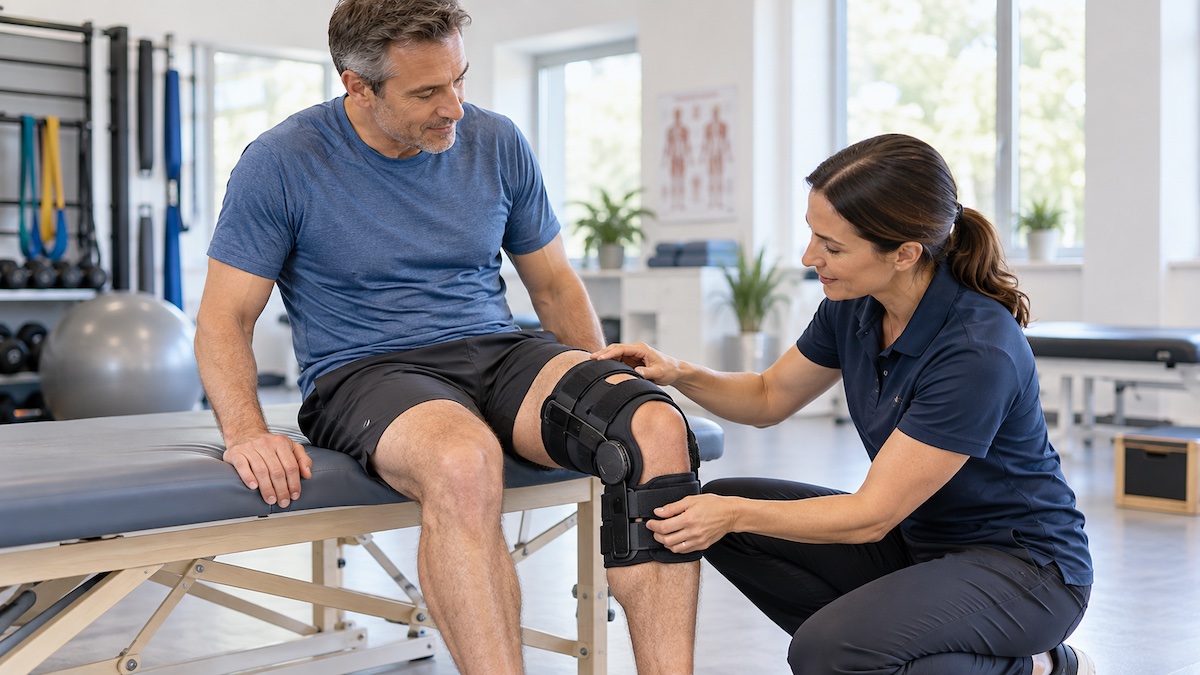
When Can a Brace or Support Help?
A brace may be useful when a joint or body region feels painful, unstable or overloaded. Depending on the problem, a support may provide compression, restrict selected movement or improve confidence during everyday activity.
Situations where bracing may be considered include:
- early recovery after some ligament sprains;
- episodes of joint instability;
- selected knee osteoarthritis symptoms;
- tennis elbow symptoms;
- carpal tunnel symptoms;
- some sacroiliac joint presentations; and
- short-term protection after certain injuries or procedures.
For recent injuries, short-term bracing, taping or walking aids may sometimes form part of early management. See our acute injury treatment guide for more information.
What Does an Orthopaedic Brace Do?
Different braces perform different jobs. The aim is to provide enough support for the problem without unnecessarily restricting useful movement.
Compression
Some supports provide gentle compression that may help with comfort or swelling.
Stability
Straps, stays or stabilisers may provide extra support when a joint feels unstable.
Movement control
More structured braces can limit selected movements when protection is required.
Confidence
Temporary support may make some activities feel more manageable while rehabilitation progresses.
What Types of Orthopaedic Braces Are Available?
Soft Compression Supports
Soft supports generally provide mild compression and relatively little restriction. They may suit some mild symptoms, swelling or activity-related discomfort.
Semi-Rigid Braces
Semi-rigid braces commonly use straps, stays or stabilisers to limit selected movement. They are often used around the knee, ankle or wrist.
Rigid Braces
Rigid braces substantially restrict movement. They may be used after certain injuries or operations and usually require clear professional guidance about fit, duration and progression.
Which Brace or Support Should You Choose?
The appropriate support depends on what you need it to do. Consider:
- the injured body region;
- whether you need compression, stability or movement restriction;
- your diagnosis and stage of recovery;
- the activity you want to perform;
- brace sizing and fit; and
- how long the support is likely to be needed.
Braces and Supports by Body Region
Choose a body region to browse commonly used supports. Product suitability, sizing and the amount of support required vary, so seek advice if you are unsure what you need.
Knee Braces
Knee supports range from compression sleeves to more structured braces for selected ligament, patellar or arthritis-related needs.
Back Braces
Back supports may provide temporary compression or support during selected painful episodes or activities.
Ankle Braces
Ankle supports may be useful after some ankle sprains or when additional stability is required during rehabilitation.
Wrist Braces
Wrist braces may be considered for selected overuse problems, wrist injuries or carpal tunnel symptoms.
Shoulder Braces
Shoulder supports and slings may provide temporary protection or support in selected injury and post-operative situations.
Posture Supports
Posture supports may provide short-term feedback or support. They should not be relied on to hold the body in one permanently “correct” posture.
SIJ Belts
An SIJ belt may provide temporary external support for some people with sacroiliac region symptoms.
Maternity Supports
Pregnancy and maternity supports include selected back, abdominal and pelvic support products intended for short-term comfort and support.
All Braces & Supports
Browse the wider range, including elbow, hand, thumb, foot, heel, calf, hip, thigh, groin, neck and walking supports.
Can a Brace Replace Rehabilitation?
No. A brace may provide useful temporary support, but it does not restore strength, balance, movement control or physical capacity by itself.
Many people benefit from gradually restoring movement and loading while reducing reliance on external support. Supportive taping and strapping follows a similar principle: external support may assist temporarily while active rehabilitation addresses longer-term capacity.
Do Braces Weaken Muscles?
Using a brace for a short period does not automatically weaken your muscles. The greater concern is prolonged reliance if the brace reduces normal activity or replaces appropriate rehabilitation.
When suitable, strengthening, balance work, mobility and gradual return to activity should continue alongside bracing.
When Should You Get Advice Before Using a Brace?
Consider assessment before choosing or continuing a brace if you have:
- a significant injury or suspected fracture;
- marked swelling or visible deformity;
- difficulty taking weight through the injured area;
- repeated joint giving way;
- new numbness, weakness or altered sensation;
- worsening symptoms despite using the support;
- skin irritation, colour change or increasing swelling while wearing the brace; or
- a brace required after surgery or prescribed medical treatment.
Seek urgent medical care for severe trauma, obvious deformity, loss of circulation, a cold or pale limb, or rapidly worsening neurological symptoms.
Frequently Asked Questions
What type of brace should I use for a sprain?
The appropriate brace depends on the joint, injury severity, symptoms and activity. Some mild sprains may suit compression or a less restrictive support, while other injuries may require greater stabilisation. Assessment is useful when the diagnosis or required level of support is unclear.
How tight should a brace feel?
A brace should feel secure without causing numbness, tingling, increasing pain, marked swelling or skin colour changes. Check the manufacturer’s fitting instructions and seek advice if fit remains uncertain.
How long should I wear a brace?
The appropriate duration depends on the injury and reason for using the brace. Some supports are used only during aggravating activities, while more significant injuries or post-operative care may require a specific wearing schedule.
Do braces weaken muscles?
Short-term brace use does not automatically weaken muscles. However, prolonged reliance can reduce activity if rehabilitation is neglected. Where appropriate, use bracing alongside strengthening and gradual return to normal movement.
Can I exercise while wearing a brace?
Sometimes. Whether you should exercise in a brace depends on the injury, exercise and type of support. A physiotherapist can help determine whether the brace should be worn during rehabilitation, sport or only selected activities.
What to Do Next
If you know the type of support you need, browse the relevant brace category above. You can also browse all braces and supports. If you are unsure about the diagnosis, required level of support or fit, a physiotherapy assessment can help clarify the most appropriate next step.
Choose your clinic and appointment pathway
Select a PhysioWorks clinic to continue to live booking, an appointment request or reception assistance.
References
- World Health Organization. WHO releases guidelines on chronic low back pain. Published 7 December 2023. Accessed 4 March 2026.
- Holden MA, et al. Clinical and cost-effectiveness of bracing in symptomatic knee osteoarthritis: a systematic review. BMJ Open. 2021;11(3):e048196.
- Karjalainen TV, Laitinen V, Page MJ, et al. Splinting for carpal tunnel syndrome. Cochrane Database of Systematic Reviews. 2023;CD010003.
