
Club and Team Sports Physiotherapy


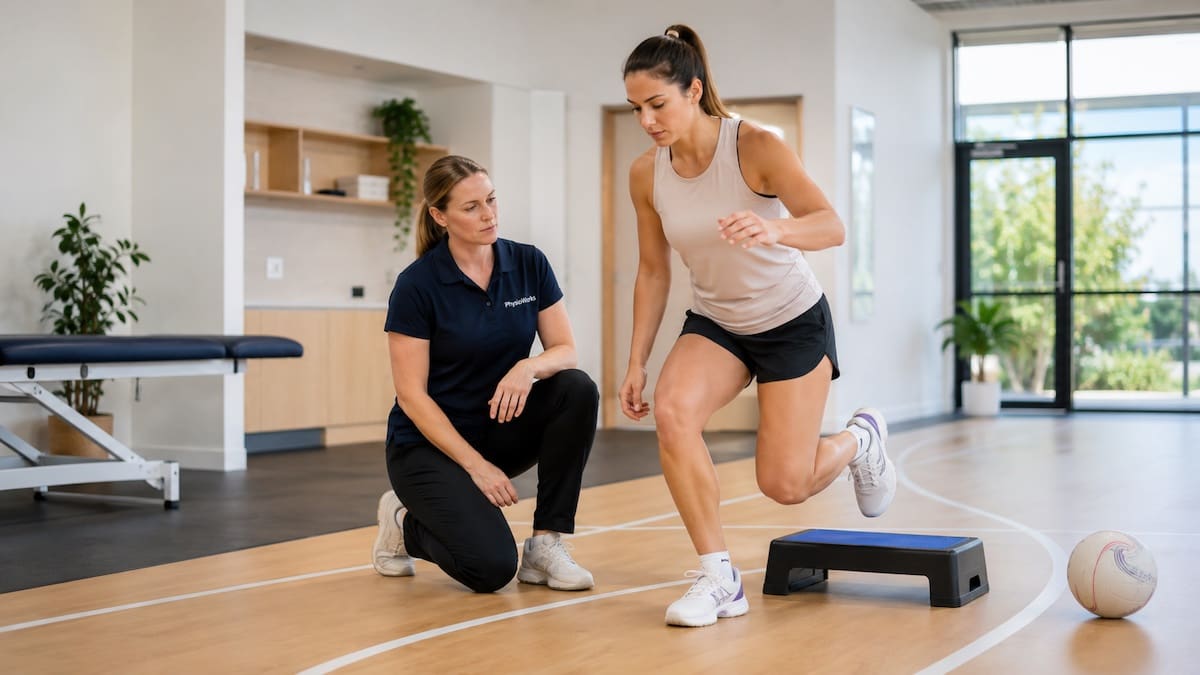
Club sports physiotherapy Brisbane support helps sporting clubs, schools, teams and individual athletes manage injuries with clearer assessment, rehabilitation and return-to-sport planning.
PhysioWorks can help clubs establish practical pathways for injured players. Depending on the club’s needs and service availability, support may include player assessment, clinic-based rehabilitation, injury-prevention advice, education, communication with coaches or parents and guidance during a graded return to training.
Individual players can also access sports physiotherapy, broader sports injury information and our acute sports injury clinic pathway when an injury needs early review.
How Can PhysioWorks Support Your Club?
Support can be tailored to the sport, player group and practical needs of the club. Some organisations need a reliable clinic referral pathway. Others may benefit from education, screening, injury-prevention planning or more regular physiotherapy involvement where availability permits.
Club arrangements should be discussed directly with PhysioWorks so the service scope, location, communication process and availability are clear before the season begins.
What Is Club and Team Sports Physiotherapy?
Club and team sports physiotherapy applies physiotherapy assessment, injury rehabilitation and return-to-sport planning within the demands of a sporting environment.
The service may support players who sprint, jump, change direction, tackle, throw, kick or complete repeated training sessions each week. A physiotherapist can assess the injury, identify current limitations and build a plan that matches the athlete’s sport, position and competition schedule.
Club support does not always mean a physiotherapist attends every training session or game. The right model may involve clinic-based care, a structured player referral pathway, scheduled screening, education or other agreed support.
What Support May Be Available for Sporting Clubs?
Injury Assessment
Early assessment can help determine whether a player should stop, modify training, begin rehabilitation or seek further medical review.
Rehabilitation Planning
Players receive exercise and loading progressions based on their injury, sport demands and current physical capacity.
Return to Sport
A graded plan can rebuild running, jumping, contact, change of direction and confidence before full competition.
Club Education
Where arranged, clubs may receive practical guidance about injury response, training modification and prevention strategies.
How Does a Club Physiotherapy Pathway Work?
1. Discuss the Club’s Needs
The first step is to clarify the sport, age groups, number of players, competition level, location and current injury-management challenges.
2. Choose a Practical Support Model
The arrangement may focus on individual clinic referrals, education, screening, rehabilitation support or another agreed service that fits staff availability.
3. Set Clear Communication Rules
The club should know how injured players enter the pathway and how suitable updates are shared with the player’s consent.
4. Review the Process
During the season, the club can review whether players receive timely care and whether the pathway remains practical for coaches, families and athletes.
Which Club Sport Injuries Are Common?
Injury patterns vary between sports. However, team athletes commonly seek help after joint sprains, muscle strains, contact injuries, concussion and problems linked to sudden increases in training or competition load.
Lower-Limb Injuries
Running, landing, kicking and rapid direction changes commonly load the ankle, knee, calf, hamstring and groin.
Upper-Limb and Contact Injuries
Tackles, falls, collisions and repeated throwing can affect the shoulder, arm, wrist and hand.
- shoulder dislocations
- shoulder pain and instability
- ligament injuries
- muscle strains
- finger, hand and wrist injuries
Sports Health and Overload Problems
Busy schedules, contact exposure and repeated training can also contribute to health and load-related problems.
- concussion
- tendon pain
- bone stress injuries
- recurring muscle soreness
- pain linked to rapid training increases
What Happens When a Player Is Injured?
First, the player should stop or modify activity when continuing could worsen symptoms or create an unsafe situation. A physiotherapy assessment can then examine pain, swelling, movement, strength, stability and sport-specific function. This is particularly important after injuries such as an ankle sprain, suspected ACL injury, shoulder dislocation or concussion.
The physiotherapist may advise relative rest, modified training, taping, exercise rehabilitation or further medical review. Some players can continue selected training tasks. Others need a short period away from competition while they rebuild capacity.
Clinic-based sports injury physiotherapy can provide ongoing rehabilitation when the athlete needs more than immediate first aid or sideline advice.
Seek urgent medical assessment when:
- the player has severe pain, an obvious deformity or a suspected fracture
- they cannot bear weight after a significant ankle, knee or lower-limb injury
- there is suspected concussion, neck injury or loss of consciousness
- breathing, circulation, sensation or strength changes suddenly
- a joint appears dislocated, including a possible shoulder dislocation
How Can Physiotherapy Help with Injury Prevention?
No programme can prevent every sports injury. However, clubs can reduce some avoidable risks through sensible preparation and early action.
Useful strategies may include progressive warm-ups, strength training, movement control, suitable recovery and gradual changes in training load. PhysioWorks also provides guidance about injury prevention programmes.
Prepare
Use a progressive warm-up that reflects the running, jumping, contact or throwing demands of the sport.
Build Capacity
Strength, balance, control and repeated-effort fitness should match the player’s position and training demands.
Manage Load
Avoid sudden jumps in training volume, intensity or competition exposure where practical.
Act Early
Review persistent soreness, weakness or reduced performance before the problem becomes harder to manage.
How Should Coaches, Parents and Physiotherapists Communicate?
Clear communication helps prevent mixed messages. However, the player’s privacy and consent remain important.
With appropriate consent, a physiotherapist may explain whether the player can complete full training, modified drills, non-contact work or rehabilitation only. Updates should focus on practical participation limits rather than sharing unnecessary health information.
For junior athletes, parents or guardians should remain involved in healthcare decisions. Coaches should avoid pressuring players to return before they have rebuilt suitable function and confidence.
Who May Benefit from Club Sports Physiotherapy?
Support may suit junior and senior teams, community clubs, schools, social competitions and higher-level athletes. Relevant sports include football, cricket, netball, basketball, volleyball, hockey, athletics, rugby and other team-based activities.
Players can also explore the broader team sports injury hub for sport-specific injury information.
When Should a Club Review Its Injury Pathway?
A club should consider reviewing its current system when players do not know where to seek care, injuries are repeatedly managed late, return-to-play decisions are unclear or communication regularly breaks down.
A review may also help before pre-season, during a demanding competition period or when several similar injuries occur within one team.
Planning Support for Your Club
Before discussing a club arrangement, collect a brief summary of your sport, player numbers, age groups, competition schedule, preferred location and the main problem you want to solve.
PhysioWorks can then advise whether a suitable clinic referral, education, screening or support pathway may be available.

What Should an Individual Athlete Do Next?
Book a physiotherapy assessment when pain, swelling, weakness, instability, repeated niggles or loss of confidence is limiting normal training or competition.
Bring details about how the injury happened, the activities that aggravate it, your training schedule and any upcoming matches or events. This information helps the physiotherapist build a plan that fits your sporting goals.
Choose your clinic and appointment pathway
Select a PhysioWorks clinic to continue to live booking, an appointment request or reception assistance.
Club and Team Sports Physiotherapy FAQs
How can a sporting club work with PhysioWorks?
A club can discuss its sport, player group, location and injury-management needs with PhysioWorks. The suitable pathway may involve individual clinic referrals, education, screening or another agreed service, depending on availability and the club’s requirements.
Does PhysioWorks provide regular game-day coverage?
Game-day or regular club coverage should not be assumed. Availability depends on the sport, location, schedule, clinician capacity and agreed service scope. Clubs should discuss these details directly before promoting physiotherapy coverage to players.
What does a sports physiotherapist do for a team?
A sports physiotherapist may assess injuries, plan rehabilitation, advise on modified training and guide return-to-sport progression. With suitable consent, they may also provide practical participation updates to coaches, parents or support staff.
Can club sports physiotherapy prevent every injury?
No. Sport always carries some injury risk. However, progressive warm-ups, strength training, sensible load increases and early review of symptoms may reduce some preventable problems.
When should an injured player see a physiotherapist?
A player should consider assessment when pain, swelling, weakness, instability, reduced movement or repeated symptoms stop normal training. Significant trauma, suspected concussion, deformity or inability to bear weight may need urgent medical assessment.
Can a physiotherapist communicate with coaches or parents?
Yes, when the player or guardian provides appropriate consent. Communication should focus on practical training limits, rehabilitation progress and return-to-sport planning while protecting private health information.
Is sports physiotherapy only for elite athletes?
No. Sports physiotherapy can help junior athletes, school teams, community clubs, weekend competitors and higher-level players. The assessment and rehabilitation plan should match the athlete’s sport and goals.
Can a physiotherapist help with return-to-sport decisions?
Yes. A physiotherapist may assess pain response, strength, movement quality, confidence and sport-specific capacity. They can then guide a graded progression from rehabilitation to training and competition.
Related Information
- Sports Injuries
- Sports Physiotherapy Brisbane
- Sports Injury Physiotherapy
- Team Sports Injuries
- Netball Injuries
- Acute Sports Injury Clinic
- Injury Prevention Programs
- How Can I Speed Up Muscle Recovery?
For independent public health information, see Healthdirect’s sports injury guidance.
References
- Liddle N, Devereux G, Hassan S, et al. The effects of exercise-based injury prevention programmes on injury risk in adult recreational athletes: a systematic review and meta-analysis. Sports Med. 2024;54:1457-1476.
- Robles-Palazón FJ, Blázquez-Rincón D, López-Valenciano A, et al. A systematic review and network meta-analysis on the effectiveness of exercise-based interventions for reducing injury incidence in youth team-sport players: part 1, analysis by classical training components. Ann Med. 2024;56(1):2408457. doi:10.1080/07853890.2024.2408457.
- Lutz D, van den Berg C, Räisänen AM, et al. Best practices for the dissemination and implementation of neuromuscular training injury-prevention warm-ups in youth team sport: a systematic review. Br J Sports Med. 2024;58(11):615-625.
- Bullock GS, et al. Prevention strategies for lower-extremity injury. Br J Sports Med. 2025;59(22):1575.
- Patricios JS, Schneider KJ, Dvorak J, et al. Consensus statement on concussion in sport: the 6th International Conference on Concussion in Sport—Amsterdam, October 2022. Br J Sports Med. 2023;57(11):695-711.


