
Ligament Tear


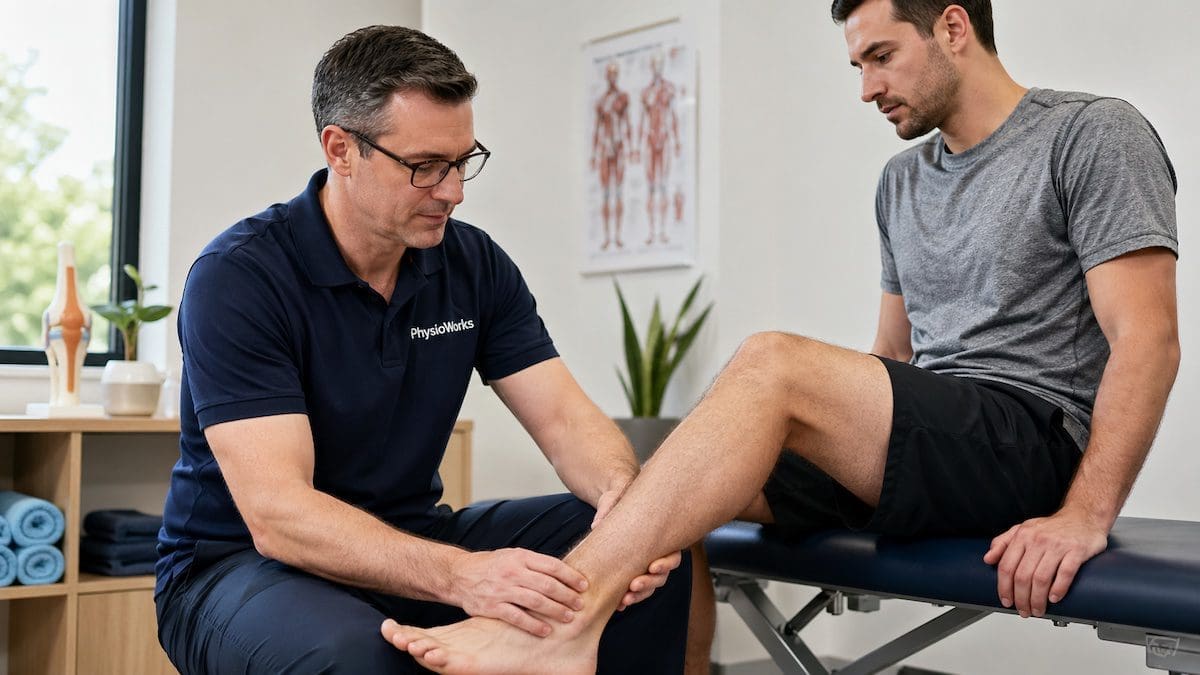
Assessment helps clarify ligament injury severity.
A ligament tear is a sprain involving stretched, partially torn, or fully ruptured ligament fibres. It can cause pain, swelling, bruising, stiffness, and joint instability. Physiotherapy helps guide safe loading, strength, balance, and return-to-activity decisions.
Ligament tears often happen during sport, falls, awkward landings, or sudden twisting movements. If your injury involves the knee, start with our knee ligament injury guide. If your ankle rolled in, see ankle sprain. For shoulder trauma, read about shoulder injuries.
Quick ligament tear signs may include:
- Pain, swelling, or bruising after a twist, fall, or impact
- Stiffness or reduced confidence loading the joint
- A popping feeling at the time of injury
- Instability, buckling, or repeated giving way
- Difficulty returning to walking, stairs, work, or sport
What Is a Ligament Tear?
A ligament tear is an injury to the strong tissue bands that connect bone to bone. These ligaments guide joint movement and help provide stability. When a ligament overloads, the joint may become painful, swollen, stiff, or unstable.
Common Causes of Ligament Tear
Ligament tears usually occur when a joint moves beyond its safe range or absorbs more force than it can control. This can happen during sport, falls, tackles, awkward landings, or sudden changes of direction.
- Unplanned twisting during sport or running
- A fall onto an outstretched arm or shoulder
- Landing awkwardly after a jump
- Rolling an ankle on uneven ground
- A sudden impact, such as a tackle or collision
Common Symptoms of a Ligament Tear
Symptoms depend on the joint and injury grade. Many people notice pain, swelling, bruising, stiffness, reduced movement, or reduced confidence loading the joint. Some also feel a pop or sense the joint giving way.
- Sharp pain at the time of injury
- Swelling that increases over hours
- Bruising over the next 24–72 hours
- Reduced range of motion
- Instability, buckling, or fear of loading the joint
How Are Ligament Tears Graded?
Ligament tear grading helps guide protection, loading, rehabilitation progressions, and return-to-sport decisions. A physiotherapist may assess swelling, movement, strength, balance, and joint stability before recommending next steps.
| Grade | What it means | Common signs |
|---|---|---|
| Grade I | Mild stretching with minor fibre damage | Mild to moderate pain and swelling |
| Grade II | Partial tear | More swelling, reduced function, and some instability |
| Grade III | Complete rupture | Marked instability and major activity limitation |
Do You Need Scans for a Ligament Tear?
Not every ligament tear needs imaging. A physiotherapist can screen the joint, assess stability, and help decide whether a scan would change the plan. Sometimes an X-ray helps rule out fracture after a fall, collision, or ankle roll.
An ultrasound or MRI may assist when symptoms persist, instability remains, or a return-to-sport decision depends on clearer tissue information. For knee injuries, related pages on ACL injury, MCL injury, and PCL injury may help guide your next step.
What Should You Do in the First 48–72 Hours?
Early care should reduce irritation while keeping safe movement where possible. Avoid repeatedly testing the joint to see if it is better. This often increases swelling and delays progress.
- Reduce painful activity, but keep gentle movement if tolerated
- Use compression where practical to manage swelling
- Elevate when resting
- Ask your pharmacist or doctor about pain relief if needed
- Avoid sudden return to running, jumping, or sport
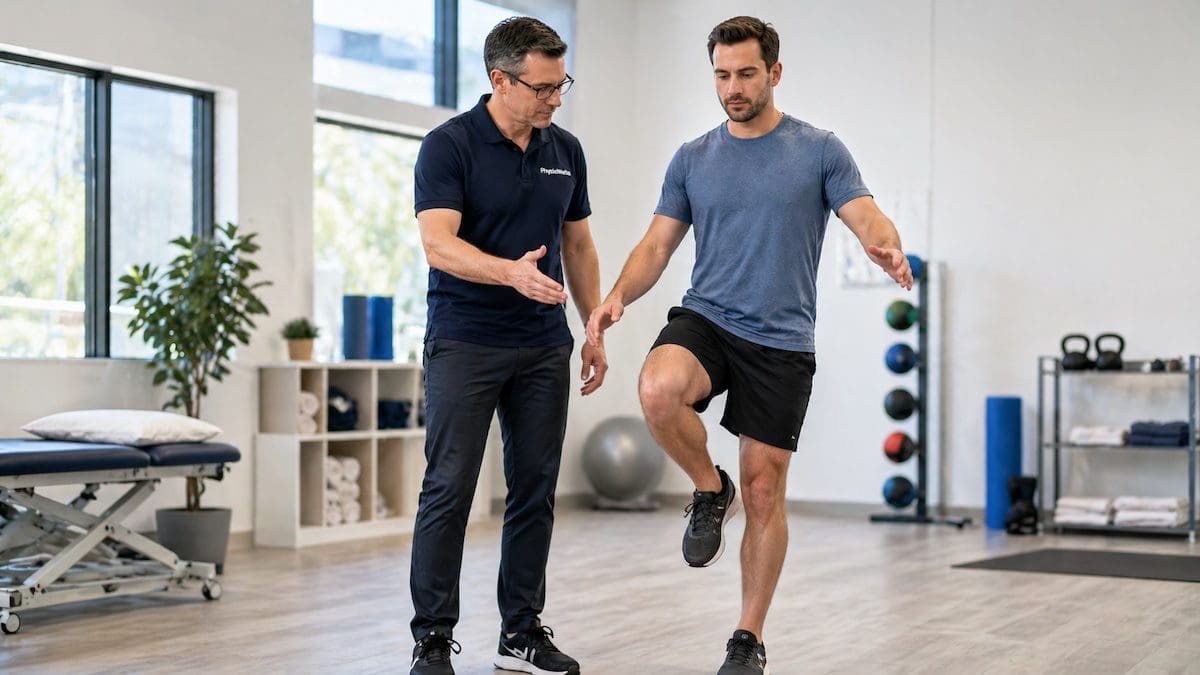
Balance training helps restore joint control.
How Is a Ligament Tear Treated?
Ligament tear treatment usually progresses from symptom control to strength, balance, and activity-specific loading. The goal is to restore joint confidence, reduce giving way, and prepare the joint for daily life, work, or sport.
- Education: clear timelines, safe loading, and ways to avoid flare-ups
- Swelling management: strategies that suit your joint and schedule
- Mobility: graded range-of-motion work so the joint moves well again
- Strength: progressive strengthening for the muscles that support the joint
- Balance and control: proprioception and coordination training
- Functional progression: walking, stairs, running, jumping, and sport drills
- Return-to-sport planning: criteria-based progressions and testing
Why Does Load Management Matter for Ligament Tear?
Load management for ligament tear means reducing painful stress, rebuilding strength, then progressing activity in steps. This approach helps calm irritated tissue while restoring the joint’s ability to handle walking, work, training, and sport.
- Reduce aggravating loads during flare-ups
- Maintain movement within tolerance
- Rebuild strength and joint control gradually
- Avoid sudden spikes in running, jumping, or pivoting
- Monitor swelling and pain response over 24–48 hours
How Long Does a Ligament Tear Take to Heal?
Recovery depends on the joint, tear grade, activity demands, and loading plan. Pain settling is only one part of recovery. Strength, control, confidence, and repeat-injury prevention also matter.
- Grade I: often improves over 2–6 weeks with graded rehab
- Grade II: commonly needs 6–12+ weeks for stability and confidence
- Grade III: may take months and sometimes needs surgical review
Which Joints Are Most Commonly Affected?
Ligament tears can affect many joints. The ankle and knee are common during sport, while shoulder, elbow, wrist, and spinal ligament injuries often follow falls, collisions, or sudden force.
Knee Ligaments
- ACL injury — rapid turns, deceleration, and landing
- MCL injury — valgus force or side impact
- PCL injury — direct blow to the shin or dashboard-type mechanism
- LCL injury — varus force or inside impact
Ankle Ligaments
Shoulder, Elbow, Wrist, and Spine
- AC joint injury
- Shoulder dislocation and instability
- Elbow pain and ligament irritation
- Wrist sprain
- Whiplash
Can an ACL Tear Heal Without Surgery?
Some ACL tears may be managed without surgery, depending on injury type, stability, goals, and timing. Cross bracing has gained attention as one non-surgical pathway for selected cases. Evidence continues to develop, so a tailored assessment matters. You can also read our overview on cross bracing.
How Can You Reduce Reinjury Risk?
Reinjury risk often increases when rehab stops once pain settles. A structured program should rebuild strength, balance, control, and sport-specific loading before full return to activity.
- Build single-leg strength through the hips, thighs, calves, and foot
- Train balance and landing mechanics, not just strength
- Return to running and sport in steps, not jumps
- Keep up maintenance rehab after symptoms settle
- Use appropriate footwear for the surface and sport
When Should You Seek Help for a Ligament Tear?
Seek help for a ligament tear if the joint gives way, swelling remains significant, or function does not improve as expected. Early assessment can clarify injury grade, check for associated damage, and guide safe loading.
Seek urgent medical attention if you notice:
- You cannot weight bear after the injury
- Severe swelling, obvious deformity, or worsening pain
- Numbness, colour change, or major loss of movement
- The joint repeatedly gives way or feels highly unstable
FAQs About Ligament Tear
What is the difference between a ligament tear and a sprain?
A sprain is a ligament injury. It can involve stretching, partial tearing, or a complete tear. Many people use sprain and ligament tear to describe the same problem, although clinicians may grade the injury to guide treatment.
How long does a ligament tear take to heal?
Healing time depends on the joint, grade, and activity demands. Mild sprains may improve over 2–6 weeks. Partial or complete tears often need 6–12 weeks or several months of rehabilitation.
Do I need an MRI for a ligament tear?
You do not always need an MRI for a ligament tear. Many injuries can be assessed clinically first. MRI may help when instability persists, symptoms do not improve, or return-to-sport decisions require clearer tissue detail.
Can physiotherapy help a torn ligament without surgery?
Physiotherapy can help many torn ligaments recover without surgery. Mild and moderate ligament tears often improve with guided rehabilitation. Some complete ruptures may also be managed without surgery, depending on the ligament, stability, goals, and symptoms.
When should I worry about a ligament tear?
You should worry about a ligament tear if you cannot weight bear, swelling is severe, pain worsens quickly, or the joint repeatedly gives way. Numbness, deformity, or major loss of movement also need prompt medical advice.
Can you walk on a ligament tear?
Some people can walk on a mild ligament tear, but walking tolerance does not always show injury severity. If walking causes sharp pain, swelling, limping, or instability, reduce load and book an assessment.
What rehab helps a ligament tear?
Useful ligament tear rehab is progressive and criteria-based. It usually moves from swelling control and mobility into strength, balance, functional loading, and sport-specific drills when the joint is ready.
What To Do Next
If you suspect a ligament tear, avoid guessing your way through recovery. Early assessment can clarify the likely grade, check for associated injury, and help you start the right loading plan.
PhysioWorks can help you plan safe progress from early symptom control through to strength, balance, sport drills, and return-to-activity goals.
What to do now:
- Reduce painful loading while swelling settles
- Book an assessment if the joint feels unstable
- Start strength and balance work when safe
- Progress running, jumping, and sport in stages

Rehab should build confidence before return to sport.
Book your appointment – 24/7
Choose your preferred PhysioWorks clinic and book online.
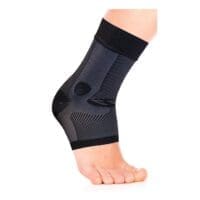
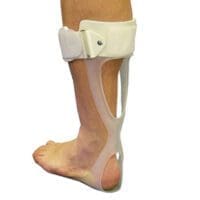
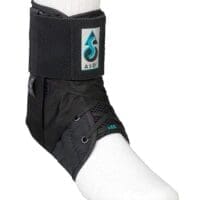
Ankle Products
These ankle products are commonly used by our physiotherapists to improve ankle pain, strength, balance, proprioception, endurance and flexibility, plus assist home exercise programs.
-
-
 Ankle, Braces & Supports, Foot, Walking
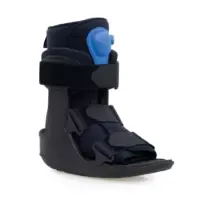
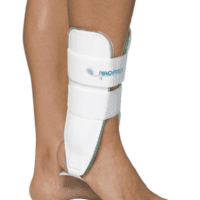
Victor Moonboot 1.0 Air or No Air
$77.00 – $79.00Select optionsQuick View -
-
-
 Ankle, Braces & Supports, Foot
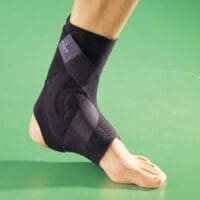
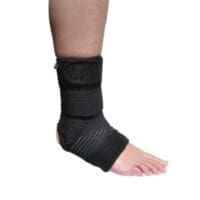
Ankle Support with Plastic Stay – OPPO 1109
$52.00Select optionsQuick View -
-
-
-
 Ankle, Braces & Supports, Clearance Sale
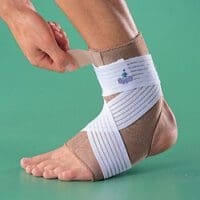
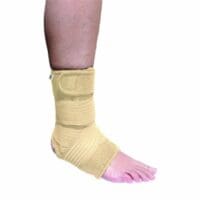
Ankle Support with Strap – OPPO 1003
$42.00Select optionsQuick View -
-
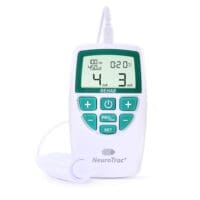
- EMS Machines, Pain Management, TENS Machine, TENS Machine & EMS
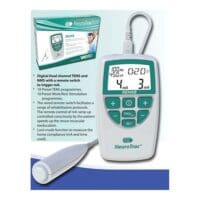
NeuroTrac Rehab (TENS Machine + EMS)
$299.95Add to cartQuick View -
-
-
- Liniments & Gels, Massage Liniments, Pain Management
Fisiocrem
$16.95 – $39.95Select optionsQuick View


Follow PhysioWorks
Get free physiotherapy tips, exercise videos, recovery advice, and blog updates.
 |  |  | B |  |  |
Related Articles
- Knee Ligament Injury – Physiotherapist Guide & Tips
- ACL Injury – A Comprehensive Guide
- Cross Bracing for ACL Injuries
- MCL Sprain Treatment and Prevention
- PCL Injury
- Ankle Sprain
- High Ankle Sprain
- Shoulder Dislocation
- Hand and Wrist Injuries
- Whiplash
External Authority
For general medical information, MedlinePlus provides a plain-English overview of sprains and strains.
References
- Filbay SR, Dowsett M, Chaker Jomaa M, et al. Healing of acute anterior cruciate ligament rupture on MRI after the Cross Bracing Protocol. Br J Sports Med. 2023.
- Whittaker JL, Culvenor AG, Juhl CB, et al. OPTIKNEE 2022: consensus recommendations to optimise knee health after traumatic knee injury to prevent osteoarthritis. Br J Sports Med. 2022.
- Martin RL, Davenport TE, Fraser JJ, et al. Ankle stability and movement coordination impairments: lateral ankle ligament sprains revision 2021. J Orthop Sports Phys Ther. 2021.
- Kotsifaki R, Korakakis V, King E, et al. Aspetar clinical practice guideline on rehabilitation after anterior cruciate ligament reconstruction. Br J Sports Med. 2023.
- Svantesson J, Hamrin Senorski E, Webster KE, et al. Rehabilitation of medial collateral ligament injuries: a systematic review. 2024.