
Strain, tear, contusion and rhabdomyolysis explained in plain English.
What Are the Four Main Skeletal Muscle Injury Types?


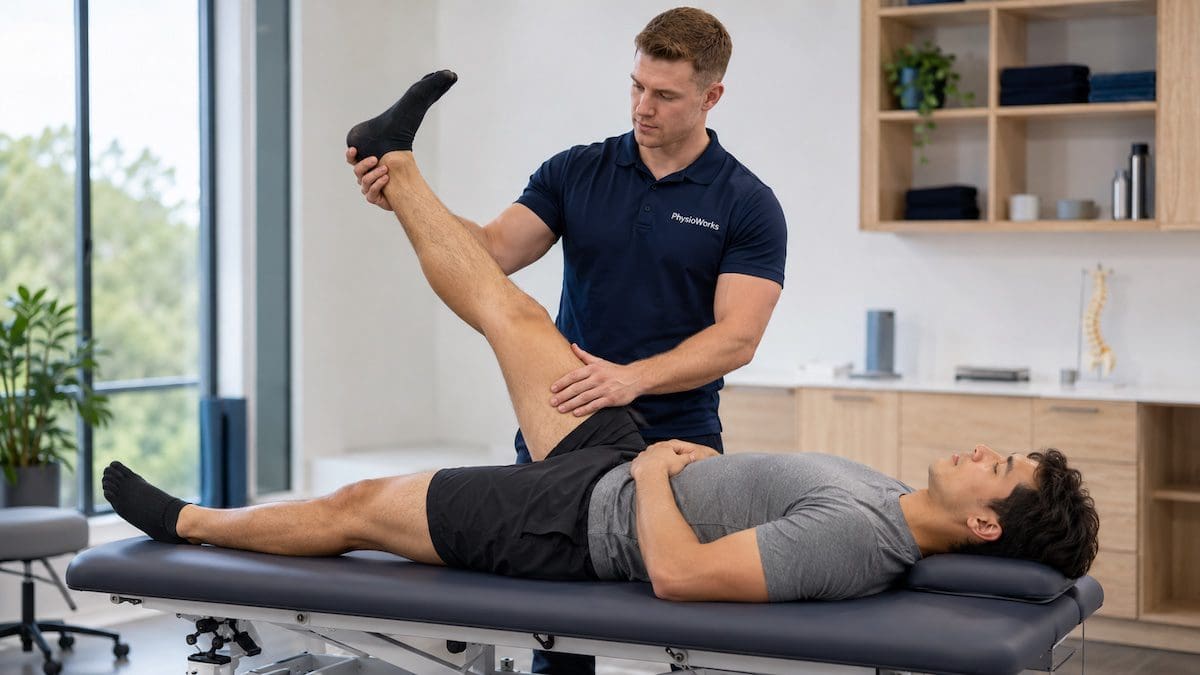
Skeletal muscle injury types usually fall into four broad groups: muscle strain, muscle tear or rupture, muscle contusion or haematoma, and rhabdomyolysis. Each type has a different pattern, risk level and recovery pathway.
Start by matching the story of the injury. A strain or tear often follows overload, sprinting or lifting. A contusion usually follows a direct knock. Rhabdomyolysis is less common, but it can become urgent when dark urine, marked weakness or severe swelling appears. For a deeper guide to grading and rehabilitation, read Muscle Strain: Causes, Symptoms & Physiotherapy Treatment.
Quick Summary: Which Muscle Injury Fits?
- Strain: pain after overload, stretch or a training spike.
- Tear: sharper pain, weakness, swelling or bruising.
- Contusion: pain and bruising after a direct knock.
- Rhabdomyolysis: serious muscle breakdown that needs urgent care when red flags appear.
Skeletal Muscle Injury Types: 1) Muscle Strain
A muscle strain happens when muscle fibres overload beyond their current capacity. It may feel like a sharp pull during sport. It may also build as soreness after exercise. This is one of the most common skeletal muscle injury types.
- Common signs: soreness, stiffness, pain with stretch or contraction, mild swelling and reduced strength.
- Common triggers: sprinting, sudden direction change, lifting, fatigue or a fast training-load spike.
- Early care: modify activity, use compression where suitable, keep gentle movement and reload gradually.
Not every sore muscle is a strain. Delayed onset muscle soreness can feel stiff and tender after unfamiliar exercise, but it usually settles with time and sensible movement. If pain is sharp, localised or linked to weakness, book an assessment.
Skeletal Muscle Injury Types: 2) Muscle Tear or Rupture
A muscle tear involves more fibre disruption than a mild strain. Some tears cause a sudden snap, pop or grabbing pain. More severe tears may stop you from continuing sport, work or normal activity.
- Common signs: sudden pain, clear weakness, swelling, bruising over the next few days, or a possible gap in the muscle.
- Higher-risk signs: rapid bruising, major strength loss, trouble walking or pain that stays severe.
- Next step: organise a physiotherapy or medical review early if the injury is severe or function drops sharply.
Rehabilitation should match the injury stage. A physiotherapist may guide strength testing, movement progressions and return-to-sport decisions. Related examples include calf strain or tear, thigh strain and pulled back muscle.
Skeletal Muscle Injury Types: 3) Muscle Contusion or Haematoma
A muscle contusion usually follows a direct blow. Blood can pool within the muscle, which is called a haematoma. This can make the area painful, swollen and stiff.
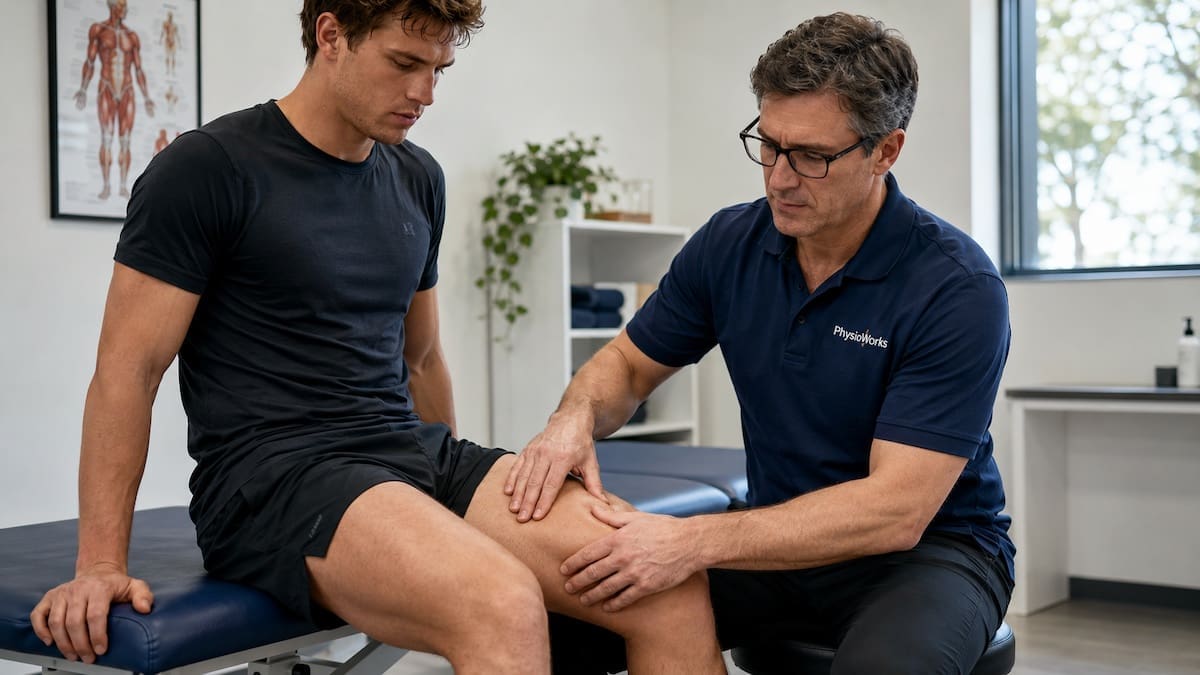
- Common signs: pain after a knock, swelling, bruising, tenderness and reduced movement.
- Common setting: contact sport, falls, collisions or a heavy impact at work.
- Early care: protect the area, use compression where suitable and keep gentle movement within comfort.
A corked thigh is a common example. Read more about corked thigh treatment and recovery if your injury followed a direct knock to the quadriceps.
When Should You Book an Assessment?
Book a physiotherapy assessment if pain is severe, bruising spreads quickly, movement is limited, strength drops, or symptoms are not improving as expected. Early advice may help you avoid doing too much too soon.
If the injury followed a hard collision, or swelling is large and worsening, medical review may be needed first.
Skeletal Muscle Injury Types: 4) Rhabdomyolysis
Rhabdomyolysis is different from a normal muscle strain or bruise. It means serious muscle breakdown. Muscle contents can enter the bloodstream and may affect the kidneys. It can follow extreme exercise, heat illness, crush injury, medication effects or other medical causes.
Seek urgent medical care if muscle pain or swelling appears with any of these signs:
- dark, tea-coloured or cola-coloured urine
- marked weakness or severe swelling
- fever, confusion or feeling very unwell
- symptoms after heat illness, extreme exertion or crush injury
Hospital care often focuses on monitoring and fluids to help protect the kidneys. Physiotherapy may assist later with a graded return to exercise once you have medical clearance.
How Are Muscle Injuries Assessed?
A physiotherapist will usually ask how the injury happened, where you feel pain, what movements make it worse and what you need to return to. They may test range of motion, strength, walking, sport-specific movements and tenderness.
Imaging is not always needed. However, ultrasound, MRI or medical review may be considered when a complete rupture, large haematoma, fracture, nerve issue or more serious condition is suspected. For early management and staged rehabilitation, see Muscle Treatment.
What Helps Most Muscle Injuries Settle?
Most muscle strains, tears and contusions need calm early management followed by progressive loading. The goal is to protect healing tissue without letting the muscle become underloaded for too long.

- First stage: reduce aggravating load, control swelling and keep comfortable movement.
- Middle stage: rebuild range, strength and control.
- Later stage: restore speed, power, endurance or sport-specific demands.
If you are unsure whether to keep exercising, reduce the intensity first. Then choose movements that do not increase pain during or after activity. A physiotherapist can help you progress safely.
Simple Load Check
- Green light: gentle movement feels comfortable and symptoms settle after activity.
- Amber light: pain rises during exercise or soreness lasts into the next day.
- Red light: pain is sharp, bruising spreads, strength drops or swelling worsens.
Related Information
- Muscle Strain
- Muscle Treatment
- Calf Strain or Tear
- Corked Thigh
- Thigh Strain
- Pulled Back Muscle
- Delayed Onset Muscle Soreness
- Physiotherapy
Frequently Asked Questions
What are the four main skeletal muscle injury types?
The four main skeletal muscle injury types are muscle strain, muscle tear or rupture, muscle contusion or haematoma, and rhabdomyolysis. Strains, tears and contusions are more common in sport and daily activity. Rhabdomyolysis is less common, but it needs urgent care when warning signs appear.
What is the difference between a muscle strain and a muscle tear?
A muscle strain usually describes overload-related fibre injury. A tear often means greater fibre disruption, with more weakness, swelling or bruising. In practice, the terms can overlap, so assessment focuses on symptoms, strength, function and how the injury happened.
How do you treat a muscle contusion or haematoma?
Early care often includes protection, compression and gentle movement as tolerated. Avoid forcing deep stretching too early after a strong knock. If swelling is large, pain worsens, or movement is very limited, book an assessment or seek medical advice.
When is muscle pain urgent?
Seek urgent medical care if muscle pain occurs with dark urine, severe swelling, marked weakness, fever, confusion, heat illness symptoms or feeling very unwell. These signs may suggest rhabdomyolysis or another condition that needs medical review.
Do all muscle injuries need imaging?
No. Many muscle injuries are managed with a clinical assessment and graded rehabilitation. Imaging may be useful when symptoms suggest a complete rupture, large haematoma, fracture, nerve issue, or when progress is slower than expected.
When can I return to sport after a muscle injury?
Return timing depends on the injury type, severity and sport demands. You should usually regain comfortable movement, strength, control and sport-specific loading before returning fully. A physiotherapist may guide staged testing and training progressions.
What To Do Next
If your symptoms are mild and improving, start with modified activity, compression where suitable, gentle movement and a gradual return to loading. Avoid sprinting, heavy lifting or hard stretching until the muscle tolerates easier tasks.
If pain is sharp, bruising is extensive, strength has dropped, or you are unsure which injury pattern fits, book a physiotherapy assessment. If dark urine, severe swelling or marked weakness is present, seek urgent medical care first.
Choose your clinic and appointment pathway
Select a PhysioWorks clinic to continue to live booking, an appointment request or reception assistance.
Muscle & Soft Tissue Products
These muscle and soft tissue products are commonly used by our physiotherapists to relax or loosen muscles, improve strength, comfort, flexibility, and home exercise programs.
-
 Exercise Equipment, Knee, Resistance Band
POW.R Fabric Mini Loop Bands
$12.00 – $55.00Select optionsQuick View -
-
-
-
 Exercise Equipment, Resistance Band
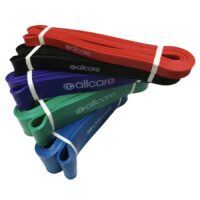
AllCare Powerloop Bands
$24.95 – $79.95Select optionsQuick View -
-
-
-
-

-
 Exercise Balls, Back, Exercise Equipment, Knee, Shoulder
66fit Exercise Balls | Core & Rehab Stability Ball
$32.00 – $57.00Select optionsQuick View - Liniments & Gels, Massage Liniments, Pain Management
Fisiocrem
$16.95 – $39.95Select optionsQuick View - EMS Machines, Pain Management, TENS Machine, TENS Machine & EMS
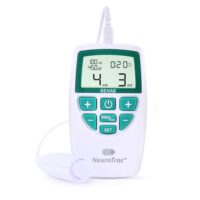
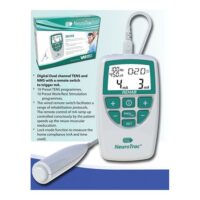
NeuroTrac Rehab (TENS Machine + EMS)
$285.00Add to cartQuick View -








References
- Fontanier V, Bruchard A, Tremblay M, et al. Classification of myo-connective tissue injuries for severity grading and return to play prediction: a scoping review. J Sci Med Sport. 2025;28(1):46-55. doi:10.1016/j.jsams.2024.07.016
- Yang BF, Li D, Liu CL, et al. Advances in rhabdomyolysis: a review of pathogenesis, diagnosis, and treatment. Chinese Journal of Traumatology. 2026;29(1):21-31. doi:10.1016/j.cjtee.2024.10.005
- Davis DD, Kane SM. Muscular Hematoma. In: StatPearls. StatPearls Publishing; updated June 12, 2023.
