
A calf assessment helps identify whether pain involves muscle, tendon, nerve or another cause.
Common Causes of Calf Pain


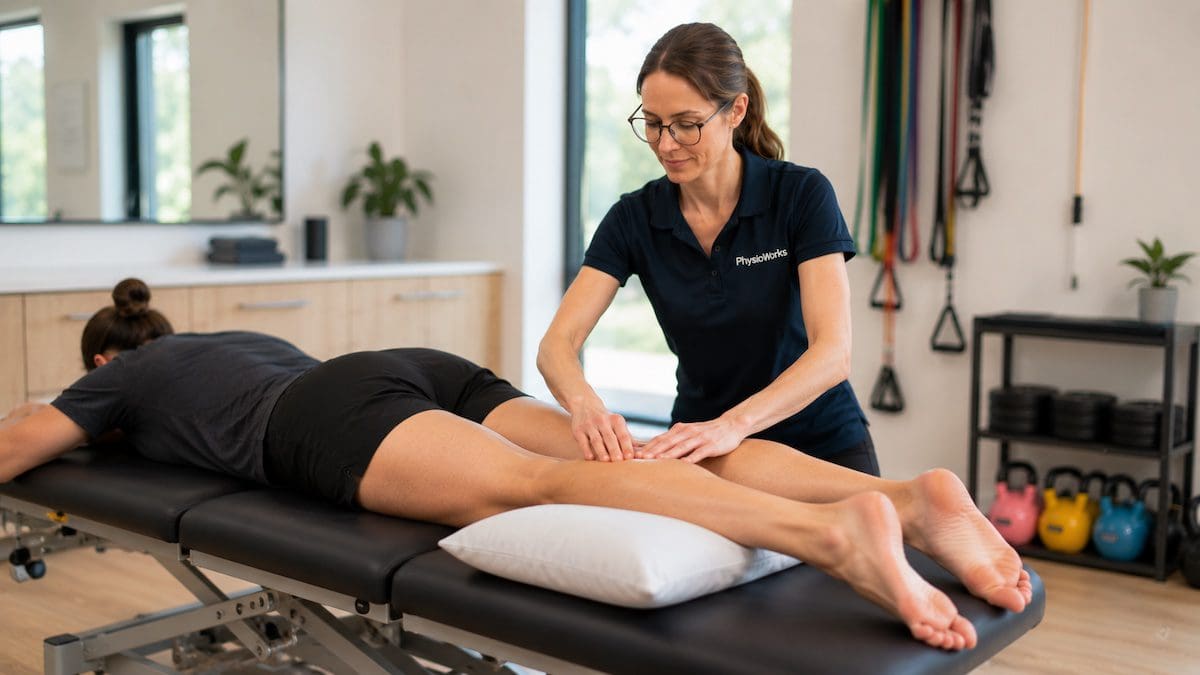
Common causes of calf pain include muscle strain, Achilles tendon problems, muscle cramps, exercise-related pressure, referred nerve pain and circulation problems. Some causes improve with sensible activity changes and rehabilitation. Others need prompt medical assessment.
How the pain started provides an important clue. Sudden pain during sprinting may suggest a muscle injury. In contrast, pain that gradually increases with running, hills or walking may reflect tendon overload, reduced calf capacity or another lower-leg condition.
This guide compares common symptom patterns, warning signs and practical next steps. You can also explore the broader calf pain conditions guide.
Quick Guide to Calf Pain
The symptom pattern can help narrow the likely source, although it cannot confirm a diagnosis by itself.
Sharp pain during sprinting or jumping
May indicate a calf muscle strain or tear.
Morning stiffness near the heel
May indicate Achilles tendon irritation or tendinopathy.
A sudden pop and weak push-off
May indicate an Achilles tendon rupture.
Predictable tightness during exercise
May occur with chronic exertional compartment syndrome.
Burning, tingling or back-related pain
May indicate referred nerve pain.
Swelling, warmth or redness
Needs prompt medical assessment.
What Structures Can Cause Calf Pain?
The calf contains several structures that help you walk, run, jump and push away from the ground. The main calf muscles are the gastrocnemius and soleus. These muscles connect with the Achilles tendon, which attaches to the heel bone.
Pain may also arise from nerves, blood vessels, the knee, the lower back or pressure inside the lower-leg muscle compartments. Therefore, calf pain does not always mean that the calf muscle itself is injured.
Sudden Causes of Calf Pain
Calf Strain or Tear
A calf strain or tear often causes sudden pain during sprinting, jumping, lunging or changing direction. Some people describe a sharp pull, tearing sensation or feeling like something struck the calf.
Common features include:
- localised tenderness;
- pain when walking or pushing off;
- weakness during a calf raise;
- swelling or bruising;
- difficulty running or climbing stairs.
The severity can vary. A mild strain may allow walking with discomfort, while a larger tear can cause marked weakness, swelling and limping.
Achilles Tendon Rupture
An Achilles tendon rupture usually causes sudden pain at the back of the ankle or lower calf. People often report a popping sound or a feeling that someone kicked the back of the leg.
Walking may become difficult, and the injured leg may feel weak when pushing away from the ground. A suspected rupture needs prompt assessment because early diagnosis helps guide appropriate management.
Direct Impact or Contusion
A collision, fall or direct blow can bruise the calf muscles. Pain and swelling usually sit around the impact area. More severe trauma may also injure deeper tissues or, less commonly, contribute to acute compartment syndrome.
Gradual and Overuse Causes
Achilles Tendinopathy
Achilles tendinopathy can cause pain in the lower calf, along the tendon or close to the heel. Symptoms commonly build after increased running, hill training, jumping or a rapid change in activity.
Typical features include morning stiffness, tenderness, pain during calf raises and discomfort when starting exercise. Some people feel better after warming up, although symptoms may return during or after activity.
Calf Muscle Overload
The calf muscles can become painful when activity exceeds their current capacity. This may happen after increasing walking distance, running volume, hills, court sport or gym exercises too quickly.
Overload usually causes a gradual ache, tightness or fatigue rather than one clear moment of injury. Reduced calf strength, limited ankle movement, recent inactivity and a previous calf injury may contribute.
Muscle Cramps
Muscle cramps cause a sudden, involuntary and often painful tightening of the calf. Exercise-related cramps may occur with fatigue, unfamiliar loading, poor pacing or inadequate conditioning.
Hydration may play a role in some cases. However, recurrent cramps are not always caused by dehydration alone. Persistent or unexplained cramping deserves further assessment, especially when it occurs without exercise or alongside weakness, swelling or other symptoms.
Calf Pain During Exercise
Chronic Exertional Compartment Syndrome
Chronic exertional compartment syndrome can cause predictable tightness, pressure or cramping during running or repeated exercise. Symptoms often begin after a similar amount of activity and ease after stopping.
Some people also experience tingling, numbness or weakness. This pattern differs from a simple muscle strain because symptoms often recur at a repeatable exercise threshold.
Circulation-Related Walking Pain
Reduced blood flow can cause calf discomfort during walking. The pain may begin after a consistent walking distance and improve with rest. This pattern requires medical assessment, particularly in people with cardiovascular risk factors.
A physiotherapy assessment may help determine whether symptoms behave like a muscle, tendon or nerve problem. However, suspected circulation problems require medical investigation.
Referred Pain from the Back or Nerves
Not all calf pain starts in the calf. Irritation of a nerve in the lower back may refer symptoms into the back of the leg. This can occur with sciatica or another nerve-related condition.
Nerve-related calf symptoms may include:
- burning or electric pain;
- tingling or numbness;
- pain extending from the back or buttock;
- weakness in the ankle or foot;
- symptoms affected by spinal position.
A thorough assessment helps distinguish referred nerve pain from a local calf muscle or tendon problem.
Other Possible Causes
Baker’s Cyst
A Baker’s cyst is a fluid-filled swelling behind the knee. If the cyst becomes irritated or leaks fluid down the leg, it may cause calf tightness, swelling or discomfort.
These symptoms can resemble other conditions, including a blood clot. Therefore, new or unexplained calf swelling should be medically assessed.
Stress Injury or Fracture
A stress injury of the tibia or another lower-leg bone can sometimes feel like calf or shin pain. Symptoms commonly worsen with repeated weight-bearing activity and may become more localised over time.
Persistent bone tenderness, night pain or increasing pain with walking or running needs further assessment.
Inflammation or Infection
Less commonly, calf pain may relate to infection or an inflammatory condition. Increasing redness, heat, swelling, fever or feeling generally unwell requires prompt medical care.
When Calf Pain Needs Urgent Medical Care
Seek urgent medical assessment if calf pain occurs with:
- new one-sided swelling;
- redness, warmth or unexplained tenderness;
- chest pain or shortness of breath;
- a cold, pale or discoloured foot;
- severe pain after trauma;
- rapidly increasing tightness or pressure;
- progressive numbness or weakness;
- fever or signs of infection.
These features may indicate a blood clot, circulation problem, acute compartment syndrome, infection or another condition that needs urgent medical investigation.
Could Calf Pain Be a Deep Vein Thrombosis?
A deep vein thrombosis, or DVT, is a blood clot within a deep vein. It may cause calf pain, swelling, warmth, tenderness or a change in skin colour. However, symptoms vary, and some people have few obvious signs.
Risk may increase after surgery, prolonged immobility, long-distance travel, serious illness or a previous clot. Pregnancy, some medications and certain medical conditions may also affect risk.
A suspected DVT is not suitable for routine self-treatment, exercise testing or massage. Seek prompt medical assessment. A doctor may arrange appropriate testing, commonly including vascular ultrasound.
Why Does My Calf Hurt When Walking?
Calf pain while walking may come from reduced muscle capacity, Achilles tendon irritation, a recovering strain, referred nerve pain or a circulation problem.
The timing of symptoms can help identify the next step:
- Pain from the first few steps: may occur with an acute muscle injury or an irritable tendon.
- Pain after increasing distance: may reflect reduced load tolerance.
- Pain at a consistent distance that eases with rest: may require assessment for circulation or exertional pressure problems.
- Pain with tingling or back symptoms: may indicate nerve involvement.
How Is Calf Pain Assessed?
A physiotherapist will ask how the pain started, where it sits and which activities aggravate it. The assessment may include walking, ankle movement, calf strength, balance, calf raises and tests of the knee, ankle and lower back.
The clinician will also check for swelling, bruising, weakness, altered sensation and warning signs that require medical referral.
Imaging is not necessary for every calf problem. Ultrasound or MRI may help clarify selected muscle and tendon injuries. Suspected blood clots, fractures, circulation problems or other medical conditions require the appropriate medical pathway.
How Physiotherapy May Help
Treatment depends on the cause rather than the symptom alone. A rehabilitation program may include:
- temporary activity modification;
- progressive calf strengthening;
- ankle mobility exercises;
- walking or running progression;
- tendon or muscle loading;
- balance and lower-limb control exercises;
- return-to-sport planning.
The aim is to rebuild the calf’s capacity for daily activity, work or sport without progressing the load too quickly.

Progressive calf strengthening can rebuild walking, running and push-off capacity.
Reducing the Risk of Calf Pain
You may reduce the risk of recurrent calf pain by progressing activity gradually and maintaining calf strength.
Useful strategies include:
- avoiding sudden increases in running or walking volume;
- including both straight-knee and bent-knee calf exercises;
- warming up before high-speed or jumping activity;
- allowing enough recovery between demanding sessions;
- reviewing footwear when symptoms follow a major footwear change;
- addressing persistent ankle stiffness or calf weakness;
- following a staged return after a previous injury.
People increasing their walking load may also find the walking injury guide helpful.
Related Calf and Leg Conditions
Explore the most relevant PhysioWorks guides.
Calf Pain FAQs
What is the most common cause of calf pain?
Muscle overload and calf strains are common causes, particularly after running, jumping, hills or a rapid increase in activity. However, the most likely cause depends on how the pain started, where it sits and whether there is swelling, weakness or nerve-related symptoms.
Why does my calf hurt after walking?
Calf pain after walking may come from reduced muscular capacity, Achilles tendon irritation, a recovering calf strain or a rapid increase in walking distance. Pain that predictably starts after a set distance and eases with rest also needs assessment for circulation or exertional pressure problems.
What should I do for a pulled calf muscle?
Reduce activities that cause sharp pain, keep the leg moving within a comfortable range and avoid returning to running or jumping too quickly. A staged strengthening program usually works better than prolonged complete rest. Seek assessment if walking is difficult, bruising is extensive or weakness is significant.
How can I prevent calf cramps?
Build exercise capacity gradually, manage fatigue and allow enough recovery between demanding sessions. Hydration may help in some situations, but repeated cramping is not always caused by dehydration. Seek advice if cramps are frequent, unexplained or occur alongside weakness, swelling or other symptoms.
When is calf pain serious?
Calf pain is more concerning when it occurs with one-sided swelling, warmth, redness, chest pain, shortness of breath, severe weakness, a cold or discoloured foot, fever or rapidly increasing pressure. These symptoms require urgent medical assessment.
What to Do Next
Seek urgent medical care when calf pain occurs with swelling, redness, warmth, breathing difficulty, severe weakness or another warning sign.
Otherwise, consider a physiotherapy assessment when calf pain keeps returning, affects walking or running, follows an injury, or does not improve as expected. Identifying whether the problem involves muscle, tendon, nerve or another structure helps guide an appropriate rehabilitation plan.
Choose your clinic and appointment pathway
Select a PhysioWorks clinic to continue to live booking, an appointment request or reception assistance.


References
- de Jonge S, et al. The tendon unit: biochemical, biomechanical, hormonal influences and pathophysiology in tendinopathy. Sports Med Open. 2021;7(1).
- Healthdirect Australia. Deep vein thrombosis. Accessed July 2026.
