What Are the Most Common Running Injuries?


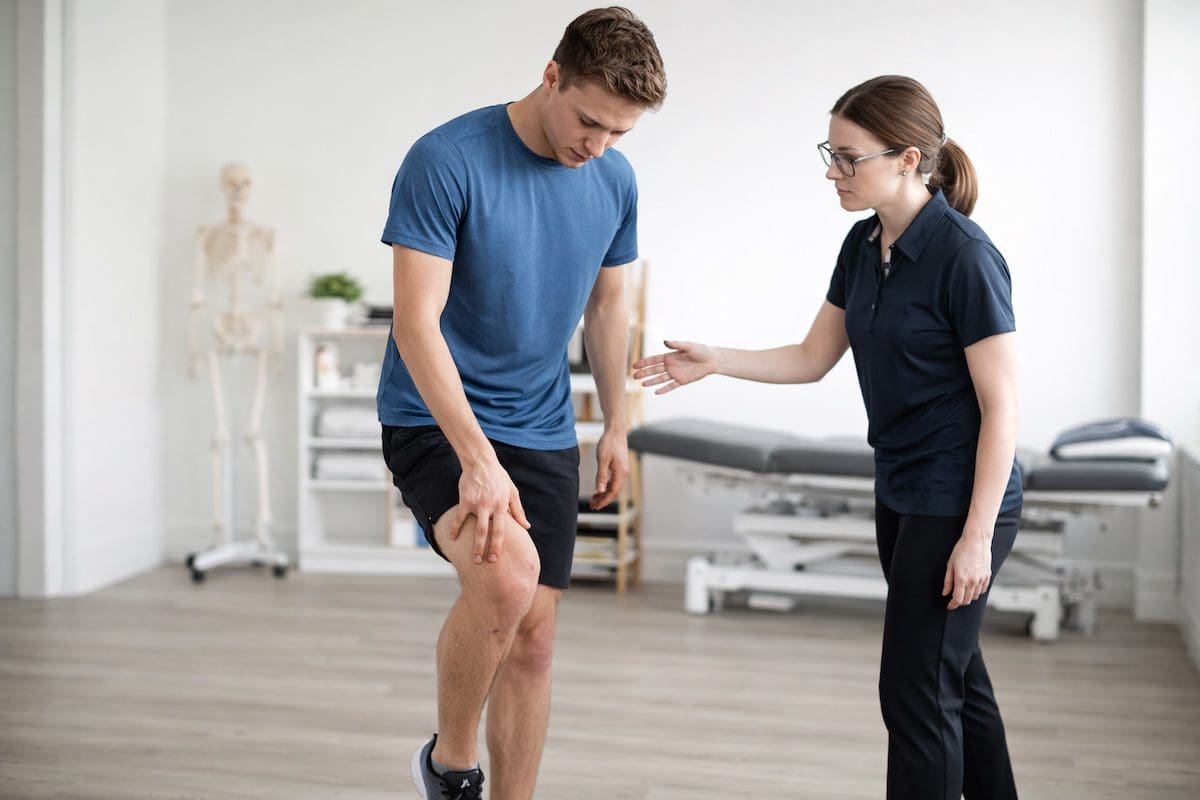
Running injuries most often affect the knee, shin, Achilles tendon, calf, foot and hip. Many develop gradually when a recent running demand exceeds the capacity of a muscle, tendon, joint or bone.
Common pattern
Pain builds during a run, appears afterwards or feels worse the next morning.
Important clue
Symptoms often follow a change in distance, speed, hills, frequency, surface or recovery.
Seek assessment
Book earlier when pain changes your stride, causes limping or becomes sharp and localised.
Which running injuries are most common?
Running-related injuries can affect muscles, tendons, joints, bones and other supporting tissues. Some start suddenly, such as an ankle sprain or calf strain. However, many build over several runs as repeated loading exceeds the tissue’s current capacity.
The eight conditions below account for many of the knee, shin, calf, heel, foot and thigh symptoms reported by recreational runners.
Runner’s knee
Pain around or behind the kneecap. It commonly becomes noticeable during hills, stairs, squats or longer runs.
Shin splints
A broader area of exercise-related pain along the shin. Symptoms often follow a change in impact load or training volume.
Achilles tendinopathy
Pain and stiffness around the Achilles tendon. Morning stiffness and discomfort at the start of running are common features.
Plantar fasciopathy
Pain under the heel or arch. The first steps after rest may feel uncomfortable before symptoms ease with movement.
ITB syndrome
Pain around the outside of the knee. It may appear at a similar point during each run, particularly on hills.
Calf strain
A sudden or gradually worsening pain in the calf. Faster running, sprinting and hills can increase calf demand.
Hamstring injury
Pain at the back of the thigh or near the sitting bone. Symptoms may affect faster running, acceleration and longer strides.
Bone stress injury
Focal bone pain that may progress from running pain to discomfort with hopping, walking or normal daily activity.
Where do runners commonly feel pain?
Front or outside of the knee
Front-of-knee pain may relate to runner’s knee, also called patellofemoral pain. Symptoms often become noticeable during downhill running, stairs, squats or after sitting with the knee bent.
Pain on the outside of the knee may fit an iliotibial band presentation. However, several knee structures can cause pain in a similar area. The location alone does not confirm a diagnosis.
Along the shin
A broad area of tenderness along the inner shin often fits shin splints. By contrast, a small and sharply localised painful area raises more concern about a bone stress injury.
Shin pain warrants earlier assessment when hopping is painful, symptoms persist after exercise or discomfort begins affecting walking.
Behind the ankle or in the calf
Achilles tendinopathy commonly causes pain, stiffness or thickening around the tendon. Symptoms may feel worse during the first steps in the morning or when beginning a run.
A calf strain is more likely when pain starts suddenly during acceleration, hills or faster running. Significant weakness, swelling or difficulty pushing through the foot requires prompt assessment.
Under the heel or through the foot
Plantar fasciopathy often causes pain under the heel, particularly during the first few steps after getting out of bed or standing after rest.
Forefoot pain has several possible causes, including metatarsal overload, nerve irritation and bone stress. Persistent focal pain should not be managed simply by continuing to run through it.
At the hip, groin or back of the thigh
Hip and thigh symptoms may involve the gluteal tendons, hamstrings, hip joint or surrounding muscles. Proximal hamstring symptoms often sit close to the lower buttock and may become uncomfortable during faster running or prolonged sitting.
Groin pain has several possible sources. Assessment becomes more important when pain persists, affects walking or does not settle after a reasonable reduction in training.
Why do running injuries happen?
Running injuries rarely have one isolated cause. Instead, they usually reflect an interaction between recent training, previous injuries, recovery, health, tissue capacity and the demands of the runner’s chosen pace, terrain and distance.
Common contributing factors may include:
- A longer individual run than your body has recently tolerated
- Adding speed, hills and distance within the same training period
- Returning quickly after illness, injury or a break from running
- Insufficient recovery between demanding sessions
- Reduced calf, thigh, hip or trunk capacity
- A previous injury that has not regained full strength or running tolerance
- A sudden change in shoes, running surface or training environment
What are the early signs of a running injury?
An early running injury does not always begin with severe pain. Mild changes in comfort, stiffness or movement can appear before running becomes significantly limited.
During running
Pain starts earlier, becomes stronger or makes you shorten your stride.
After running
Soreness lasts longer than expected or increases later in the day.
The next morning
Stiffness, tenderness or pain is worse than your usual post-training response.
Other warning signs include swelling, reduced push-off strength, repeated pain at the same running distance and declining confidence in the affected leg.
Can you keep running with an injury?
Some runners can continue with a temporarily reduced load. Others need to pause running while the injury is assessed. The safest choice depends on the suspected tissue, symptom severity and how the condition responds during and after exercise.
Consider reducing or stopping the run when:
- Pain continues to increase as you run
- Your stride changes or you begin to limp
- Symptoms remain clearly worse the following morning
- You have sharp or highly localised bone pain
- You lose strength, balance or confidence in the leg
- Running causes increasing swelling
A minor symptom that remains mild, does not alter movement and settles promptly may allow a modified run. However, repeatedly testing an injury with the same aggravating session can delay recovery.
How are running injuries assessed?
A physiotherapy assessment usually begins by clarifying where symptoms started, how they respond to running and what changed before the problem developed.
Your assessment may include:
-
Reviewing your recent training
Your physiotherapist may compare distance, pace, hills, speed sessions, surfaces, footwear, recovery and recent interruptions to training.
-
Examining the painful area
Palpation, movement testing and relevant clinical tests help identify which tissues may be contributing.
-
Checking strength and movement capacity
Testing may include calf raises, hopping, squats, step tasks, hip strength or other movements matched to your symptoms.
-
Reviewing your running where useful
A running assessment can examine relevant movement patterns and how they interact with your current injury and training demands.
Imaging is not required for every running injury. However, a medical referral or imaging may be appropriate when the assessment suggests a fracture, significant tendon injury or another condition needing further investigation.

How can physiotherapy help a running injury?
Physiotherapy aims to identify the likely injury, reduce aggravating load and rebuild the capacity needed for running. Your plan should reflect the affected tissue, your current symptoms and the type of running you want to resume.
Management may include:
- Temporary changes to running distance, pace, hills or frequency
- Progressive calf, knee, hamstring, hip or trunk strengthening
- Mobility work when a relevant restriction affects function
- Advice about footwear, surfaces and training structure
- Movement or running retraining when it has a clear clinical purpose
- A staged return-to-run program
- Testing before faster running, hills or longer distances resume
Passive treatment may help some symptoms in the short term. However, rebuilding load tolerance and gradually returning to running usually remain central to rehabilitation.
Runners with recurring symptoms may also benefit from a dedicated running injury risk and performance assessment.
How can you reduce your risk of another running injury?
No strategy can prevent every injury. Even so, sensible progression and adequate recovery can reduce avoidable overload.
-
Build one demand at a time
Avoid making large increases in distance, speed and hills simultaneously.
-
Watch individual long-run changes
Compare a planned longer run with the longest distance you have completed recently, not only your weekly total.
-
Keep regular strength work
Calf, thigh, hamstring, hip and trunk exercises can support the physical demands of running.
-
Respond early to warning signs
Modify training when pain escalates, changes your stride or remains worse the following morning.
-
Return gradually after a break
Fitness can return faster than the load tolerance of bones, tendons and muscles after time away.
When should a runner book an assessment?
Consider booking a physiotherapy assessment when:
- Pain is changing your running technique
- You cannot progress training without another flare-up
- Symptoms are worsening from one session to the next
- Morning pain or stiffness is becoming more noticeable
- Pain is sharply localised over a bone
- You have swelling, weakness or difficulty walking
- You are unsure how much running is currently safe
Earlier assessment is especially useful when a stress fracture, significant calf injury or Achilles tendon injury is possible.
Common running injury FAQs
What is the most common running injury?
Knee pain, including runner’s knee or patellofemoral pain, is consistently among the most frequently reported running injuries. Shin splints, Achilles tendinopathy and plantar heel pain are also common.
Are most running injuries caused by overuse?
Many running injuries develop gradually through repeated loading rather than one traumatic event. However, “overuse” does not identify one cause. Training changes, recovery, previous injury, health and tissue capacity can all contribute.
What are the first signs of a running injury?
Early signs may include pain that begins sooner during a run, soreness that lasts longer afterwards, increasing morning stiffness or a subtle change in stride. Repeated symptoms at a similar distance also deserve attention.
Should I stop running when I have pain?
Stop or reduce running when pain escalates, changes your gait, causes swelling or remains clearly worse the following morning. Mild symptoms that settle promptly may allow modified activity, but the safe approach depends on the injury.
When is shin pain more serious?
Shin pain is more concerning when it is sharply localised, painful with hopping, present during walking or continuing after exercise. These features may indicate a bone stress injury and should be assessed promptly.
Can a running assessment prevent injuries?
A running assessment cannot guarantee injury prevention. It may identify useful changes to strength, training, recovery or movement when interpreted alongside your symptoms, injury history and running goals.
What causes knee pain when running?
Running-related knee pain may involve the patellofemoral joint, iliotibial band, patellar tendon or another structure. Training changes, reduced tissue capacity and a previous injury can contribute, so persistent pain should be assessed rather than diagnosed from location alone.
What should you do next?
Use the links above to compare your painful area with the most relevant condition guide. Meanwhile, reduce the running sessions that clearly aggravate your symptoms rather than repeatedly testing the same painful load.
Book an assessment when pain is changing your stride, limiting normal training or becoming more localised. A clear diagnosis and staged rehabilitation plan can help you return to running with appropriate progression.
Choose your clinic and appointment pathway
Select a PhysioWorks clinic to continue to live booking, an appointment request or reception assistance.


References
- Correia CK, Machado JM, Dominski FH, de Castro MP, Fontana HB, Ruschel C. Risk factors for running-related injuries: an umbrella systematic review. Journal of Sport and Health Science. 2024;13(6):743–757. doi:10.1016/j.jshs.2024.04.011.
- Frandsen JSB, Hulme A, Nielsen RO, et al. How much running is too much? Identifying high-risk running sessions in a 5200-person cohort study. British Journal of Sports Medicine. 2025;59(17):1203–1211.
- Kakouris N, Yener N, Fong DTP. A systematic review of running-related musculoskeletal injuries in runners. Journal of Sport and Health Science. 2021;10(5):513–522. doi:10.1016/j.jshs.2021.04.001.