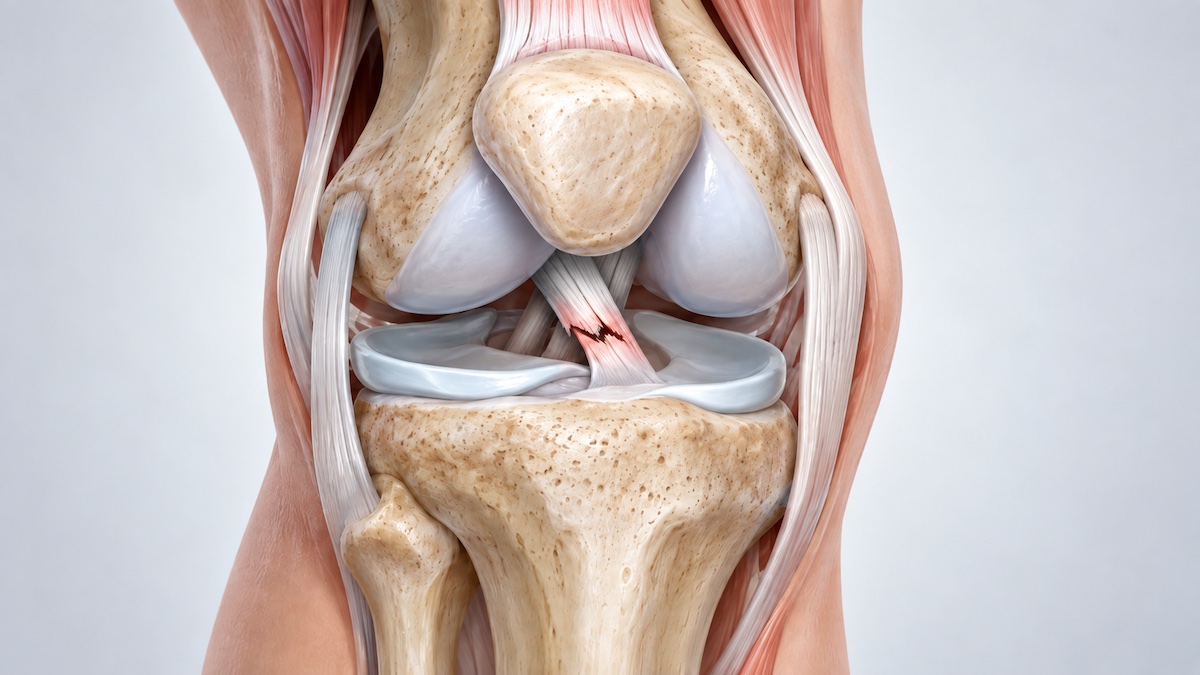
The anterior cruciate ligament helps control knee stability during pivoting, landing and changes of direction.
Torn ACL symptoms often include sudden knee pain, rapid swelling and a feeling that the knee may give way. Many people also notice or hear a pop at the time of injury. An early ACL injury assessment can help clarify whether the ligament may be involved and whether you may also have an associated injury such as a meniscus tear or MCL injury.
What Are the Common Symptoms of a Torn ACL?
An ACL tear usually causes symptoms suddenly rather than through a gradual build-up. Common features include:
A pop, shift or tearing sensation during a twist, pivot, landing or collision.
Rapid swelling within the first few hours.
Knee instability or a feeling that the knee may buckle.
Difficulty walking, changing direction or fully straightening the knee.
Pain or instability that makes sport or fast movement feel unsafe.
The knee may feel stiff and difficult to trust during walking or turning. However, symptoms alone cannot confirm an ACL tear. Other knee injuries, including a meniscus tear, MCL injury or another knee ligament injury, can cause similar symptoms.
A physiotherapist usually begins by asking how the injury happened. ACL tears commonly occur during sudden stops, changes of direction, awkward landings or contact. The injury story can provide useful clues before physical testing begins.
Your physiotherapist may then assess swelling, knee movement, walking and knee stability. Clinical tests such as the Lachman test can help assess whether the ACL may have been injured. Other stability tests may also be used depending on your symptoms and how comfortable the knee is to examine.
Soon after an injury, swelling, pain and muscle guarding can sometimes make testing less clear. In these situations, reassessment after the acute symptoms settle may provide additional information.
Do You Need an MRI for a Torn ACL?
Not everyone with a suspected ACL tear needs an immediate MRI. Clinical history and physical examination can provide important diagnostic information.
An X-ray may be recommended when a fracture or another bone injury is suspected. MRI can provide more information about the ACL and associated structures such as the menisci, cartilage and other knee ligaments.
MRI may be particularly useful when the diagnosis remains uncertain, a significant associated injury is suspected or specialist and surgical decisions are being considered.
Several knee injuries can cause symptoms similar to an ACL tear, particularly after twisting, landing or direct trauma.
Meniscus tear
A meniscus tear may cause pain, swelling, catching, locking or difficulty fully straightening the knee.
MCL injury
An MCL injury often causes pain and tenderness along the inside of the knee and may occur at the same time as an ACL injury.
PCL injury
A PCL injury can cause swelling, deep knee pain and instability, particularly after a direct blow or a fall onto a bent knee.
Patella dislocation
A patella dislocation can cause sudden pain, swelling and instability after twisting, landing or impact.
When Should You Seek Help?
Arrange an assessment promptly if your knee swells rapidly, feels unstable, locks, repeatedly gives way or you cannot return to normal walking after an injury.
What Should You Do If You Think You Have Torn Your ACL?
If you think you may have torn your ACL, stop twisting, pivoting and sporting activity until the knee has been assessed. Relative rest, compression and supported walking may help in the short term if they are comfortable and appropriate for your injury.
A physiotherapy assessment can help assess knee stability, identify signs of an associated injury and determine whether imaging or further medical review may be useful.
Compare common symptoms of meniscal injury with other traumatic knee injuries.
Torn ACL FAQs
How do you know if you have a torn ACL?
A torn ACL often causes rapid knee swelling, pain, a popping or shifting sensation and a feeling that the knee may give way. A physiotherapist or doctor can assess how the injury occurred, examine knee stability and decide whether imaging or further review may help.
What are the common symptoms of a torn ACL?
Common symptoms include a pop at the time of injury, swelling within hours, difficulty changing direction, knee instability and difficulty walking normally. Other knee injuries can cause similar symptoms, so these signs do not confirm an ACL tear by themselves.
Do you need an MRI for a torn ACL?
MRI is not always required immediately. Clinical assessment can guide the early diagnosis, while MRI may help when associated injuries are suspected, the diagnosis remains uncertain or surgical planning is being considered.
What should you do if you think you have torn your ACL?
Stop twisting, pivoting and sporting activity, manage the knee comfortably and arrange a physiotherapy or medical assessment. Seek urgent medical attention after major trauma if the knee is deformed, you cannot safely bear weight or the foot becomes cold or numb.
Choose your clinic and appointment pathway
Select a PhysioWorks clinic to continue to live booking, an appointment request or reception assistance.