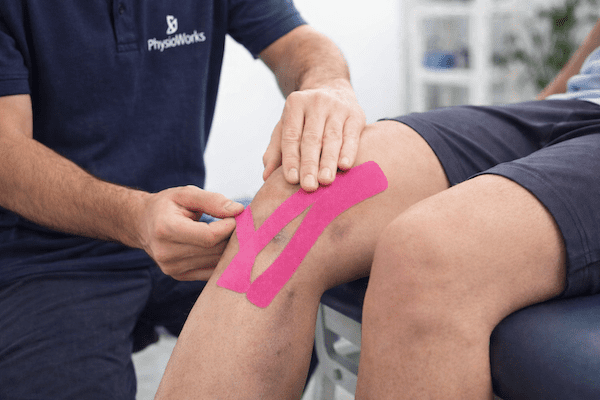
Kinesiology tape for swelling and bruising is often used after a mild soft tissue injury, knock, or sport flare-up. It may help some people feel more comfortable while swelling settles. However, it should not replace a proper check when swelling is severe, unusual, or getting worse.
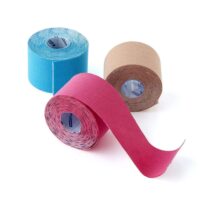
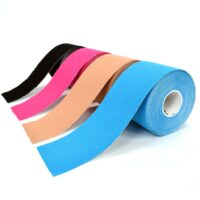
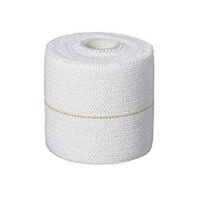
Kinesiology tape is a flexible tape that moves with your skin. A physiotherapist may use it with advice, exercise, load changes, supportive taping and strapping, or acute injury care. It works best as one part of a plan, not as the whole treatment.
Quick Answer
Kinesiology tape may help some people with swelling and bruising by gently lifting the skin. This may reduce pressure on the tissues below and support fluid movement in the area.
The research is mixed. So, tape should be used as an added support rather than a main treatment. Results depend on the injury, body area, skin tolerance, timing, and how the tape is applied.
At A Glance
May support short-term comfort and movement.
May assist swelling in some areas, but evidence varies.
Does not fix the injury that caused the swelling.
Should not be used over broken, infected, or sore skin.
Remove tape if it causes itch, rash, blisters, numbness, or more pain.
Why Swelling and Bruising Occur
Swelling and bruising are normal after many injuries. Small blood vessels can leak into nearby tissues, which creates bruising. Extra fluid can also collect as the body starts repair.
Mild swelling often settles as the area heals. However, large swelling can limit movement, raise pain, and slow your return to sport, work, or daily tasks. Early guidance, safe load, and the right support can help.
Kinesiology tape stretches and recoils. When applied with light tension, it may create small folds in the skin. This may reduce pressure on surface tissues and assist lymph flow.
Tape technique and tension matter.
A 2024 review found kinesiotaping may help short-term swelling around the face and may help lower-limb swelling. However, the review also found very low certainty evidence. It did not show the same clear benefit for upper-limb swelling.
For ankle sprains, the evidence is more cautious. A 2025 review found that kinesio tape may give short-term pain relief for some people. It found limited support for longer-term swelling control or function. This is why tape should sit beside rehab, not replace it.
When Kinesiology Tape May Be Considered
mild swelling after a knock or soft tissue strain
bruising that feels tender during daily tasks
swelling that affects comfort with walking or training
minor knee, thigh, calf, or ankle swelling after sport
post-surgery swelling only after the wound has healed and taping is cleared
Tape should not be used as a shortcut around proper care. Book an assessment, or seek medical care, if swelling or bruising is severe, spreading, unexplained, or linked with heat, redness, fever, calf pain, shortness of breath, numbness, pins and needles, or a cold limb.
Avoid taping over open cuts, fragile skin, infection, rash, or areas with poor blood flow. If you have a known tape allergy, avoid taping unless a health professional clears it.
Tape Safety Check
Remove the tape early if you notice:
itching, rash, blisters, or skin pain
pins and needles, numbness, or colour change
more swelling, tightness, or throbbing
pain that increases instead of settling
What Else Helps Swelling and Bruising?
Good care depends on the cause. Simple early steps may include relative rest, safe movement, elevation, and compression when suitable. Some people also need a brace, tape, strength work, balance drills, or a more detailed plan.
Many soft tissue injuries improve with calm, well-paced movement. Too much load too soon can stir symptoms. Too little movement can make the area stiff. Your plan should match your injury, sport, work, and goals.
Kinesiology tape may suit mild swelling or bruising when the skin is healthy and the injury is safe to tape. It may not suit you if the swelling is unexplained, severe, hot, red, or linked with other warning signs.
A physiotherapist can check the cause, apply the tape safely, and show you what else to do. This may include movement advice, strength work, swelling care, and a clear return-to-activity plan.
Can kinesiology tape help with swelling and bruising?
Kinesiology tape may help some people with swelling and bruising. It may gently lift the skin and support fluid movement. The effect is not certain for everyone, so it works best as part of a broader plan.
How does kinesiology tape work for swelling?
When applied with light tension, kinesiology tape may reduce pressure on surface tissues. This may assist lymph flow and comfort. The tape should feel supportive, not tight or painful.
How long should kinesiology tape stay on?
Many people leave kinesiology tape on for 2 to 5 days if the skin feels fine. Remove it sooner if you notice itch, rash, blisters, numbness, colour change, or more pain.
Can I use kinesiology tape after surgery?
Only use kinesiology tape after surgery if your wound has healed and your treating clinician has cleared it. Do not tape over wounds, scabs, fragile skin, or infected skin.
When should I avoid kinesiology tape?
Avoid kinesiology tape over broken skin, rash, infection, or areas with poor blood flow. Seek advice first if swelling is severe, unexplained, hot, red, or linked with fever or calf pain.
Should I see a physiotherapist for swelling and bruising?
Assessment can help if swelling or bruising affects walking, sport, work, or daily activity. A physiotherapist can check the cause and guide safe taping, exercise, and load changes.
What To Do Next
If swelling or bruising is limiting your sport, work, or daily activity, a physiotherapy assessment can help clarify the cause and guide safe care.
Kinesiology tape may be useful, but it works best when it supports a clear recovery plan. Book an appointment if symptoms persist, worsen, or do not match a simple bruise or mild strain.
Choose your clinic and appointment pathway
Select a PhysioWorks clinic to continue to live booking, an appointment request or reception assistance.