Does Kinesiology Tape Work? Benefits, Limits & Safety
Kinesiology tape may help some people with short-term pain or function, but the overall evidence remains uncertain. It is best used as an optional support tool alongside appropriate exercise, rehabilitation and load management rather than as a stand-alone treatment.
For application advice, taping choices and practical use, see our main Kinesiology Tape guide.
Kinesiology tape may provide short-term support or comfort during movement for some people.
What Does the Latest Research Say About Kinesiology Tape?
The most comprehensive recent review looked across systematic reviews of kinesiology taping for musculoskeletal conditions. It found possible immediate and short-term improvements in pain and some immediate improvements in function. However, the researchers rated the certainty of the evidence as very low.
This matters because a statistically positive result does not always mean the improvement is large enough to make a meaningful difference in everyday life. Results also vary between conditions, taping methods, comparison treatments and follow-up periods.
Pain
Some people may experience short-term pain relief.
Function
There may be a small immediate improvement for some activities or conditions.
Strength
Current evidence does not show a consistent overall improvement in strength.
Movement
Changes in range of motion or movement performance are inconsistent.
Longer-Term Results
Benefits generally become less convincing when follow-up extends beyond the short term.
Evidence Certainty
Overall confidence in the estimated benefits remains very low.
What Are the Possible Benefits of Kinesiology Tape?
Kinesiology tape is elastic, so it moves with you rather than rigidly restricting a joint. Depending on the condition and application, people may use it for several different reasons.
Short-term comfort: tape may reduce pain enough to make some movements more comfortable.
Movement confidence: some people feel more supported when walking, exercising or returning to activity.
Sensory feedback: contact with the skin may provide an extra cue during movement, although this does not reliably translate into better strength or joint control.
Swelling management: selected taping techniques may help some types of swelling, although results vary considerably.
Rehabilitation support: tape can sometimes make it easier to continue appropriate exercise while strength, mobility and load tolerance are rebuilt.
These effects vary between people. A person who finds tape useful for one condition may notice very little difference with another.
What Does Kinesiology Tape Not Do?
Kinesiology tape is sometimes promoted with claims that go beyond the available evidence. It is important to separate a possible short-term symptom response from structural healing or correction.
Kinesiology tape has not been shown to reliably:
repair a torn muscle, ligament or tendon
permanently correct joint alignment
restore lost strength by itself
prevent every sporting injury
replace progressive strengthening or rehabilitation
identify the cause of persistent pain
If tape is the only thing allowing you to keep exercising, it is worth considering why the area remains sensitive or unable to tolerate normal load.
Can Kinesiology Tape Help Swelling or Bruising?
Possibly, but the evidence depends on the type and location of the swelling. A 2024 systematic review found possible reductions in some facial and lower-limb oedema, while benefits were not demonstrated consistently for upper-limb swelling. The certainty of this evidence was very low.
Therefore, kinesiology tape should not be treated as a universal swelling treatment. New or unexplained swelling may need assessment before taping is considered.
A short trial may be reasonable when you have already identified the problem and tape helps you perform an appropriate activity more comfortably.
For example, tape may be considered while gradually returning to walking, running, gym exercise, sport or everyday tasks. The important question is whether it helps you follow the rehabilitation plan rather than simply allowing you to ignore worsening symptoms.
When Is Kinesiology Tape Less Likely to Help?
Tape is less likely to solve the problem when symptoms relate to an injury or condition that needs more specific management.
Examples include:
significant joint instability
marked or progressive weakness
persistent numbness or nerve symptoms
suspected fracture or major acute injury
pain that continues to worsen despite reducing load
symptoms that repeatedly return as soon as tape is removed
In these situations, assessment can help clarify what is driving the problem and whether exercise, load modification, imaging or medical review is more appropriate.
Is Kinesiology Tape Safe?
Most problems from kinesiology tape involve the skin. Irritation can occur from the adhesive, excessive tape tension, repeated applications or leaving tape on despite early symptoms.
Do not apply tape over cuts, broken skin, active rashes or infection.
Avoid tape if you have a known allergy to the adhesive.
Do not aggressively stretch the ends of the tape.
Remove the tape if you develop persistent itching, burning, blistering or increasing redness.
Take extra care if you have fragile skin, reduced sensation or circulation problems.
Seek appropriate advice for unexplained swelling rather than simply covering it with tape.
Remove kinesiology tape slowly rather than tearing it rapidly away from the skin.
How Long Can You Wear Kinesiology Tape?
Many people wear kinesiology tape for several days, but skin tolerance is more important than following a fixed timeframe. Remove it sooner if the tape begins pulling on the skin, becomes uncomfortable or causes irritation.
After removal, check the skin before applying another strip over the same area.
Should Kinesiology Tape Be Part of Rehabilitation?
It can be, provided the tape has a clear purpose. For most musculoskeletal problems, longer-term improvement depends more on addressing relevant strength, mobility, movement, activity load and recovery factors.
A physiotherapist may use tape as one part of a broader physiotherapy plan rather than making taping the centre of treatment.
When Should You Get Advice?
Consider an assessment if you are unsure what is causing your symptoms, tape is becoming necessary for every activity, or the problem keeps returning.
Seek earlier advice if you have substantial swelling, giving way, marked weakness, significant bruising, altered sensation or difficulty putting weight through the affected area.
Understand where taping may fit when swelling or bruising is present.
Kinesiology Tape FAQs
Does kinesiology tape work?
Kinesiology tape may provide a small short-term improvement in pain or function for some musculoskeletal conditions. However, the overall certainty of the evidence remains very low, so it is best viewed as an optional addition to rehabilitation rather than a stand-alone treatment.
How long can you wear kinesiology tape?
Many people wear kinesiology tape for several days if their skin remains comfortable. Remove it sooner if you develop itching, burning, blistering, increasing redness or discomfort.
Can you sleep with kinesiology tape on?
Many people can sleep with kinesiology tape in place. Remove it if the tape pulls on your skin, causes irritation or becomes uncomfortable overnight.
Is kinesiology tape better than rigid sports tape?
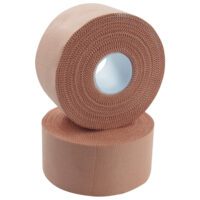
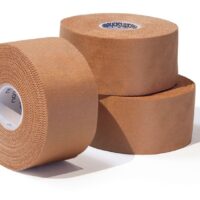
Not necessarily. Kinesiology tape stretches and allows more movement, while rigid sports tape usually provides firmer support or temporary movement restriction. The better option depends on why you are taping.
Does kinesiology tape help swelling?
It may help some types of swelling, but results vary by body region and condition. Current evidence is very uncertain, so unexplained or significant swelling should be assessed rather than relying on tape alone.
Can kinesiology tape irritate your skin?
Yes. Adhesive, excessive tension or repeated taping can irritate the skin. Remove the tape if you develop persistent itching, burning, blistering or increasing redness.
What to Do Next
If kinesiology tape makes an activity more comfortable, it can be reasonable to use it temporarily while you work on the underlying rehabilitation plan.
If pain keeps returning, your symptoms are worsening or you cannot exercise comfortably without tape, consider a physiotherapy assessment. A physiotherapist can assess the problem, decide whether taping is worthwhile and help you progress towards less reliance on external support.