Remedial vs Relaxation Massage: Which Is Right for You?
Compare the goals, pressure and focus of remedial and relaxation massage so you can choose an appointment that better matches what you need.
Compare the goals, pressure and focus of remedial and relaxation massage so you can choose an appointment that better matches what you need.

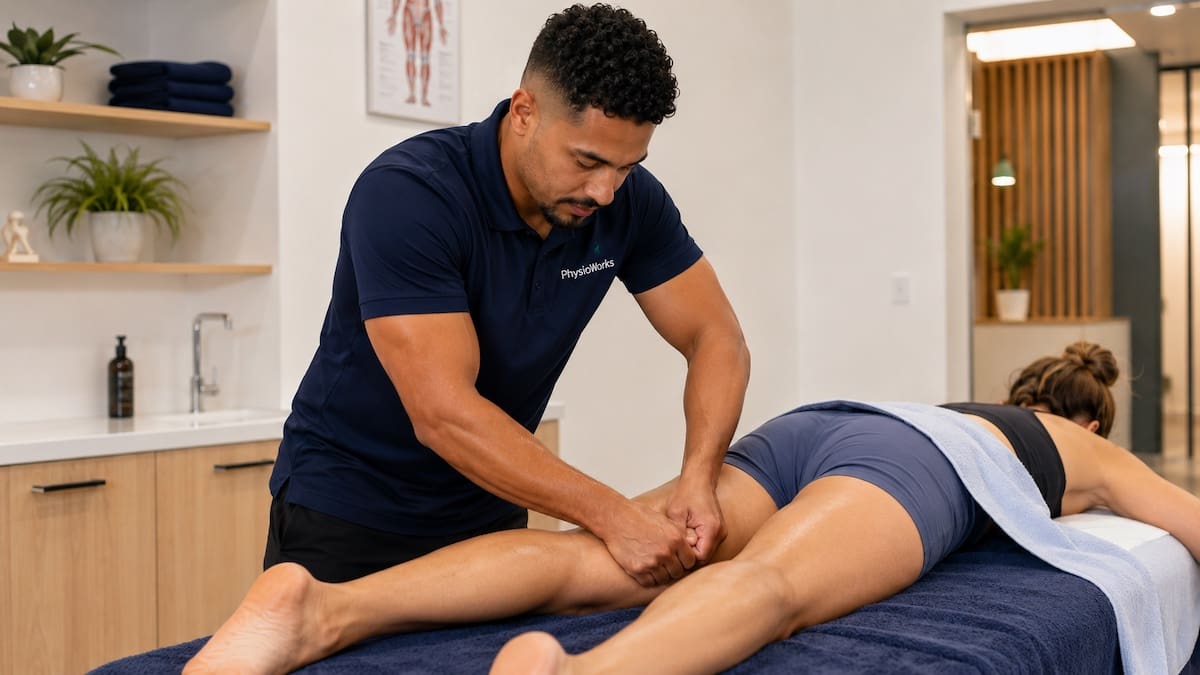
Remedial and relaxation massage can overlap, but they usually begin with different priorities. Relaxation massage focuses on calm and general comfort. Remedial massage uses a more targeted approach for one or several problem areas.
You do not need to make the perfect choice before booking. Tell your therapist whether you want relaxation, recovery or focused help, and they can discuss the most suitable approach with you.
Book a Massage Appointment
Massage is available at selected PhysioWorks clinics. Choose your preferred clinic to view current booking options.
The main difference is the purpose of the session. Relaxation massage usually treats broader areas with smooth, flowing techniques. Remedial massage usually spends more time on a defined area that feels tight, sore or restricted.
A gentler treatment style aimed at general comfort, calm and whole-body relaxation.
A more focused treatment style aimed at a specific muscle group, body region or recurring problem area.
You want to switch off
Relaxation massage will usually provide the calmer and more general treatment experience.
One area keeps tightening
Remedial massage may allow more appointment time for that specific body region.
You prefer gentle pressure
Either style can be gentle. Tell your therapist about your pressure preference before treatment begins.
You prefer firm pressure
Remedial or deep tissue massage may suit, but firmer pressure is not automatically more effective.
You are recovering from training
Remedial or sports massage may suit when one area feels overloaded or sore.
You are still unsure
Choose the session length that suits your needs and explain your goals to the therapist at the start.
Yes. Remedial massage does not need to feel intense or uncomfortable. A therapist may begin with broader, calming techniques and then spend more time on one or two priority areas.
Likewise, a relaxation session can include some additional attention to tight shoulders, calves or the upper back without becoming a fully targeted remedial treatment.
People commonly choose massage for muscle tension, general stiffness, post-exercise soreness and stress-related tightness. Common treatment areas include the neck, shoulders, upper back, lower back, hips, thighs and calves.
Useful related guides include:
Tell your therapist whether your priority is relaxation, general recovery or treatment of a particular area.
Your therapist will discuss which areas you would like treated and any areas you want avoided.
Pressure, positioning, clothing and draping can be adjusted to help you feel comfortable and secure.
Tell your therapist when the pressure feels too light, too firm or uncomfortable. You can request a change or stop treatment at any time.
Your session should stay aligned with your goals. You may ask questions, request a pressure change, decline treatment to an area or stop treatment at any stage.
Tell your therapist before treatment if you are pregnant, take anticoagulant medication, recently had surgery, have a fracture or skin condition, or are receiving treatment for cancer or another significant medical condition. This information can affect pressure, positioning and treatment suitability.
Massage may suit many everyday muscle aches. However, some symptoms need medical or physiotherapy assessment before hands-on treatment.
Choose relaxation massage when your main goal is calm, rest and general comfort. Choose remedial massage when you want focused treatment for one or several specific areas.
During the appointment, tell your therapist what you want from the session and how the pressure feels. They can adapt the treatment as your needs become clearer.
Meet the PhysioWorks massage therapists and choose a practitioner, clinic and appointment pathway that suits your needs.
Relaxation massage focuses on calm, general comfort and broad muscle tension using smooth techniques at a comfortable pressure. Remedial massage focuses more closely on a specific tight, sore or restricted area. Pressure can be adjusted in either style.
No. Remedial massage can use gentle, moderate or firm pressure. The therapist should adjust the treatment according to your sensitivity, preferences and response. Pain is not required for massage to be useful.
Relaxation massage will usually suit someone whose main goals are stress relief, comfort and help switching off. Individual responses vary, and massage does not guarantee improved sleep.
Yes. A therapist may use broader relaxation techniques before spending more time on one or two priority areas. Explain what you want from the session so the balance can be tailored to you.
Choose pressure that feels comfortable and tolerable. Start lighter when an area is sensitive or reactive. You can ask the therapist to increase or reduce pressure at any time.
Arrange medical or physiotherapy assessment first when symptoms follow significant trauma, keep worsening, include unexplained weakness or swelling, or involve numbness, pins and needles or pain travelling down an arm or leg.