
A practical guide to vertigo, dizziness, red flags, vestibular assessment and treatment options.
Vertigo Treatment Physiotherapy for Dizziness Relief


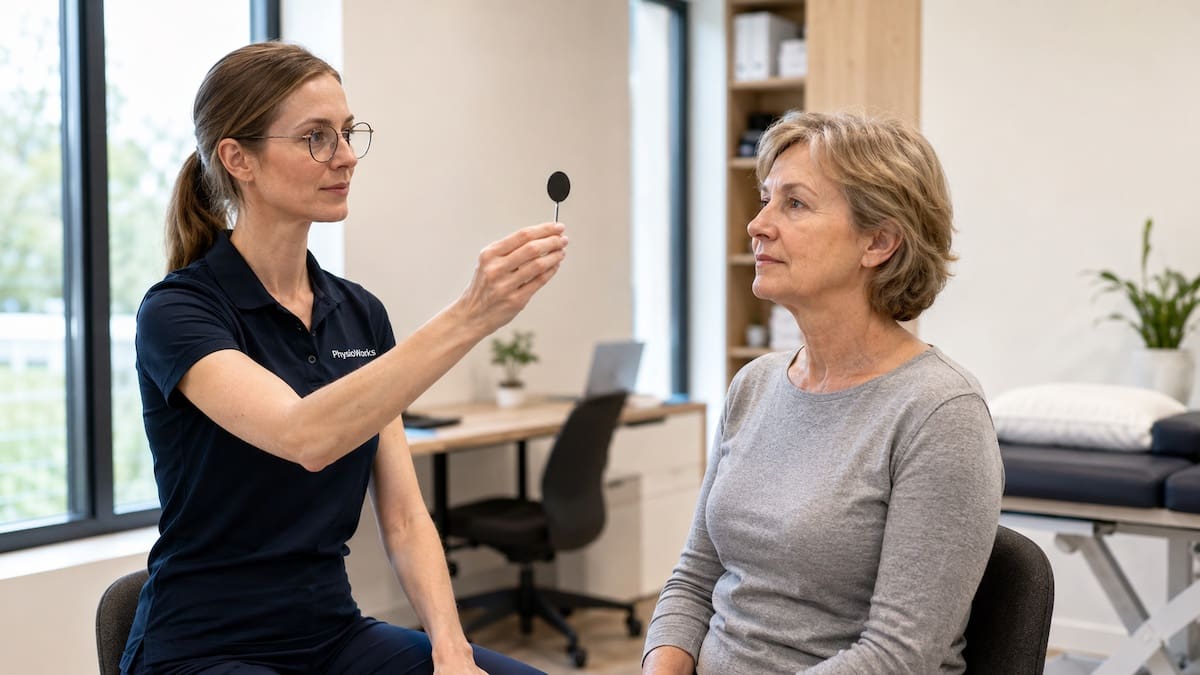
Vestibular assessment helps guide vertigo treatment.
Vertigo treatment physiotherapy may help when dizziness comes from the vestibular system, BPPV, neck movement, balance problems, or movement sensitivity. A vestibular physiotherapist can assess your symptoms, screen for warning signs, and guide treatment such as repositioning manoeuvres, vestibular rehabilitation, balance retraining, and home exercises.
Experiencing dizziness can feel unsettling and confusing. Dizziness can include feeling faint, woozy, weak, light-headed, or unsteady. Vertigo is a more specific type of dizziness where you feel that you or your surroundings are spinning or moving.
To determine the likely cause of dizziness, a vestibular physiotherapist or medical practitioner needs to complete a proper assessment. This helps separate common vestibular problems from symptoms that may need urgent medical care.
Quick answer: If dizziness is triggered by rolling in bed, turning your head, walking in busy places, or changing position, vestibular physiotherapy may help identify the cause and guide safe treatment.
Our Brisbane physiotherapists provide vertigo treatment physiotherapy to assess dizziness, explain likely contributing factors, and guide a practical treatment plan where physiotherapy is appropriate.
How Do You Know If You Have Vertigo or Dizziness?
Vertigo usually feels like spinning, tilting, rocking, or movement when you are still. General dizziness may feel more like light-headedness, faintness, imbalance, or unsteadiness. Some people also feel nausea, visual blurring, motion sensitivity, or reduced confidence when walking.
Your symptom pattern matters. For example, brief spinning when rolling in bed often points toward BPPV, while dizziness linked with neck movement may suggest cervicogenic dizziness. Migraine-related dizziness may also occur with light sensitivity, headache, nausea, or visual symptoms.
What Are the Common Causes of Dizziness?
Dizziness can come from many systems in the body. The most common groups include inner ear disorders, neurological causes, blood pressure changes, medication effects, neck-related problems, and anxiety or motion sensitivity.
- Inner ear disorders: Common examples include BPPV, vestibular neuritis, and Meniere’s disease.
- Vestibular migraine: Migraine can cause dizziness, imbalance, motion sensitivity, and vertigo, sometimes without a strong headache.
- Blood pressure or cardiovascular causes: Light-headedness when standing, palpitations, faintness, or chest symptoms need medical assessment.
- Neck-related dizziness: Some people notice dizziness linked with neck pain, stiffness, headache, or head movement.
- Neurological conditions: Less commonly, dizziness may relate to serious neurological causes and needs urgent care when red flags are present.
What Red Flags Should You Watch For?
Seek urgent medical care if dizziness appears with symptoms that may suggest a serious neurological, cardiac, or medical cause.
- Sudden severe headache
- Chest pain, shortness of breath, or heart palpitations
- Difficulty speaking or understanding speech
- New double vision or major vision changes
- Weakness, numbness, or facial drooping on one side
- New trouble walking, loss of coordination, or collapse
- Loss of consciousness or fainting
Healthdirect Australia explains dizziness as a broad term that can include feeling unsteady, woozy, weak, or faint. Dizziness with symptoms such as numbness, chest pain, severe headache, fainting, or difficulty speaking needs urgent medical care.
How Can You Stop Feeling Dizzy?
For short-term symptom control, sit or lie down, avoid sudden head movements, drink water, and focus on a fixed point if that helps. Do not drive, climb ladders, or continue risky activity while dizzy.
These strategies may settle symptoms temporarily, but they do not replace assessment. If dizziness keeps returning, affects walking, or is linked with head movement, a targeted assessment can help identify whether vestibular rehabilitation, repositioning manoeuvres, medical review, or another pathway is most appropriate.
What Is Vertigo?
Vertigo is a specific type of dizziness where you feel spinning, tilting, rocking, falling, or movement despite being still. Healthdirect Australia describes vertigo as a feeling that you or your surroundings are spinning or moving when your body is not actually moving.
Vertigo commonly relates to the vestibular system, which includes the inner ear, balance pathways, eye movement control, and how your brain processes head movement. It can also overlap with migraine, neck-related symptoms, or broader balance issues.
Why Do People Get Vertigo?
People get vertigo for different reasons, so treatment depends on the cause. BPPV is one of the most common vestibular causes and can often respond well to repositioning manoeuvres. Vestibular neuritis, vestibular migraine, Meniere’s disease, neck-related dizziness, and some neurological conditions can also cause vertigo-like symptoms.
- BPPV: brief spinning episodes, often triggered by rolling, lying down, looking up, or turning in bed.
- Vestibular neuritis: dizziness or vertigo that may last days and gradually improve.
- Vestibular migraine: dizziness linked with migraine features, light sensitivity, nausea, or motion sensitivity.
- Cervicogenic dizziness: dizziness associated with neck pain, stiffness, headache, or movement sensitivity.
- Medical or neurological causes: symptoms that appear suddenly or with red flags need urgent medical care.
How Long Does Vertigo Usually Last?
Vertigo duration depends on the cause. BPPV episodes are often brief and may last seconds to less than a minute. Meniere’s disease episodes may last longer. Vestibular neuritis can cause symptoms for days, with gradual recovery over weeks.
If vertigo is recurrent, worsening, or affecting daily activity, assessment can help clarify what is driving the symptoms and whether physiotherapy may help.
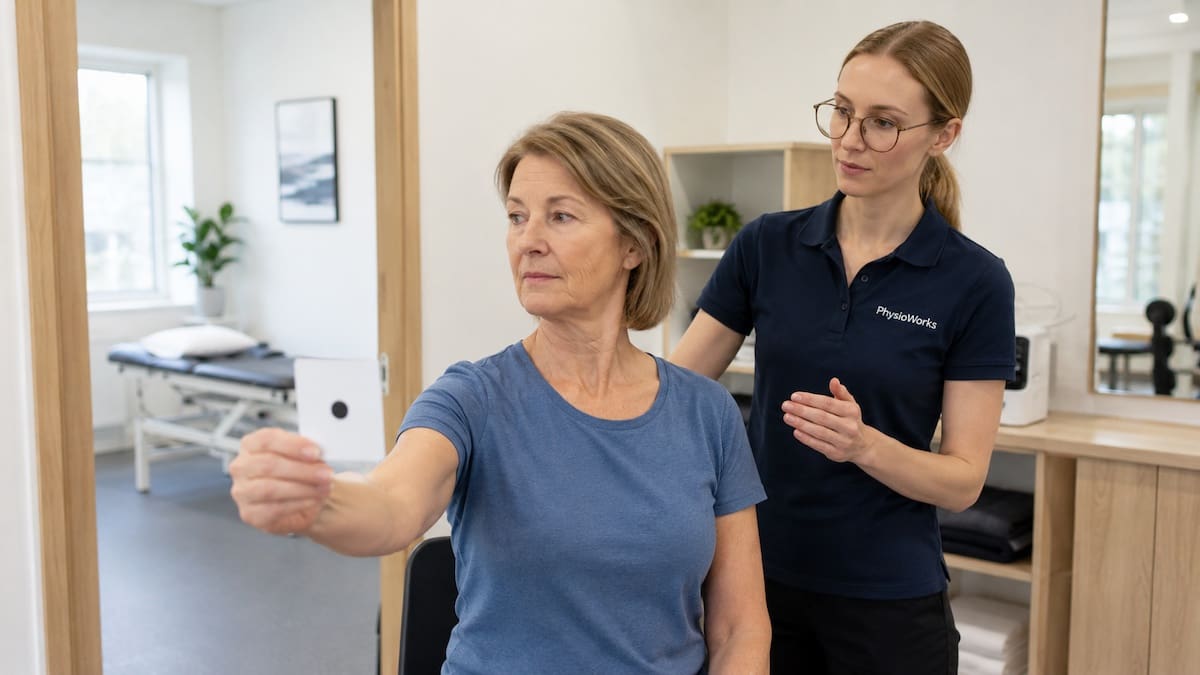
Gaze exercises can support vestibular recovery.
Which Vertigo Treatment May Help?
The most suitable treatment depends on the diagnosis. For BPPV, canalith repositioning manoeuvres such as the Epley manoeuvre are commonly used after assessment confirms the affected canal. For vestibular hypofunction, vestibular rehabilitation exercises may help improve gaze stability, balance, and walking confidence. For migraine, Meniere’s disease, or medical causes, physiotherapy may form only part of the care pathway.
- Canalith repositioning manoeuvres: commonly used for BPPV after assessment confirms the affected canal.
- Vestibular rehabilitation therapy: uses graded exercises to improve gaze stability, movement tolerance, and balance.
- Balance retraining: helps improve confidence with standing, walking, and busy environments.
- Neck assessment and treatment: may help when dizziness is linked with neck pain, headache, or restricted movement.
- Medical management: may be needed for migraine, Meniere’s disease, medication-related dizziness, cardiovascular symptoms, or red flags.
How Do You Get Vertigo to Go Away?
Vertigo improves fastest when the treatment matches the cause. For BPPV, a vestibular physiotherapist may use positional testing and canalith repositioning manoeuvres. For other vestibular causes, treatment may involve gaze stabilisation, balance drills, walking progression, and symptom-specific home exercises.
Some people also need medical review, medication, migraine management, hydration support, or further investigation. Avoid assuming all dizziness is BPPV, especially when symptoms are constant, unusual, severe, or linked with red flags.
Vertigo Treatment FAQs
What is the fastest way to treat vertigo?
The fastest treatment depends on the cause. If BPPV is confirmed, canalith repositioning manoeuvres such as the Epley manoeuvre may help quickly. Other causes may need vestibular rehabilitation, medical care, migraine management, or a combined approach.
Can physiotherapy help dizziness?
Physiotherapy may help dizziness related to BPPV, vestibular hypofunction, balance problems, movement sensitivity, or some neck-related dizziness. A vestibular physiotherapist can assess symptom triggers, screen for warning signs, and guide targeted exercises or manoeuvres.
How do I know if my dizziness is BPPV?
BPPV often causes brief spinning with position changes such as rolling in bed, looking up, bending forward, or lying down. A trained clinician can use positional tests to check for BPPV and choose the correct repositioning manoeuvre.
When should dizziness be checked urgently?
Dizziness should be checked urgently if it appears with chest pain, fainting, severe headache, slurred speech, double vision, facial drooping, one-sided weakness, numbness, or new difficulty walking. These symptoms may need emergency medical care.
How long does vestibular rehabilitation take?
Timeframes vary. Some BPPV cases may improve quickly after appropriate manoeuvres, while vestibular rehabilitation for balance or gaze stability can take several weeks. Your program should match your diagnosis, symptom irritability, and functional goals.
Can neck problems cause dizziness?
Neck problems may contribute to dizziness in some people, especially when dizziness links with neck pain, stiffness, headache, or head movement. A physiotherapist can assess whether your neck, vestibular system, or another cause is more likely.
Related Vertigo and Dizziness Articles
These related guides may help you understand the different causes of dizziness and the treatment pathways available at PhysioWorks.
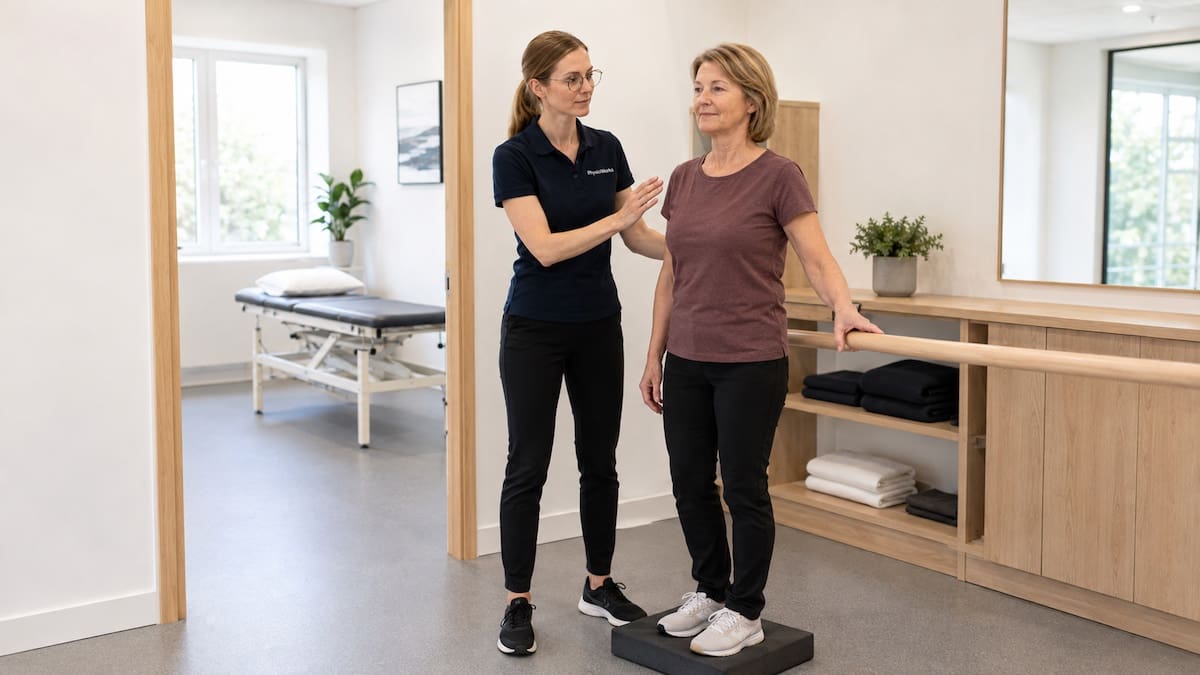
Balance training can rebuild movement confidence.
What Should You Do Next?
If vertigo or dizziness is limiting your daily life, a physiotherapy assessment can help clarify the likely cause and guide your next step. Your physiotherapist can complete vestibular tests, check balance and movement triggers, screen for red flags, and recommend treatment where physiotherapy is suitable.
Book an appointment if dizziness is recurring, affecting walking, limiting work or sport, or making you feel unsafe with daily activity.
Choose your clinic and appointment pathway
Select a PhysioWorks clinic to continue to live booking, an appointment request or reception assistance.
Balance Products
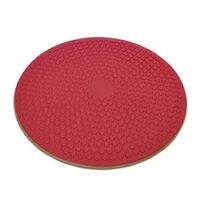
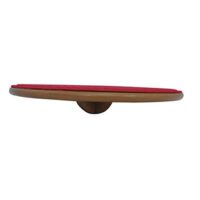
These balance products are commonly used by our physiotherapists to improve strength, balance, prevent injuries falls or injuries, plus assist home exercise programs.
-
- Gift Ideas, Back, Christmas Gift Ideas, Exercise Balls, Exercise Equipment, Knee, Pelvic Floor, Product Search
66fit Pilates Balls
$14.95 – $16.95Select optionsQuick View -
-
-







Research and Guidelines
These recommendations align with recognised vertigo and vestibular rehabilitation research and public health guidance.
- Bhattacharyya N, Gubbels SP, Schwartz SR, et al. Clinical Practice Guideline: Benign Paroxysmal Positional Vertigo (Update). Otolaryngol Head Neck Surg. 2017;156(3_suppl):S1-S47. doi:10.1177/0194599816689667.
- Hall CD, Herdman SJ, Whitney SL, et al. Vestibular Rehabilitation for Peripheral Vestibular Hypofunction: An Updated Clinical Practice Guideline From the Academy of Neurologic Physical Therapy of the American Physical Therapy Association. J Neurol Phys Ther. 2022;46(2):118-177.
- Healthdirect Australia. Dizziness. Accessed 2 June 2026.
- Healthdirect Australia. Vertigo. Accessed 2 June 2026.
