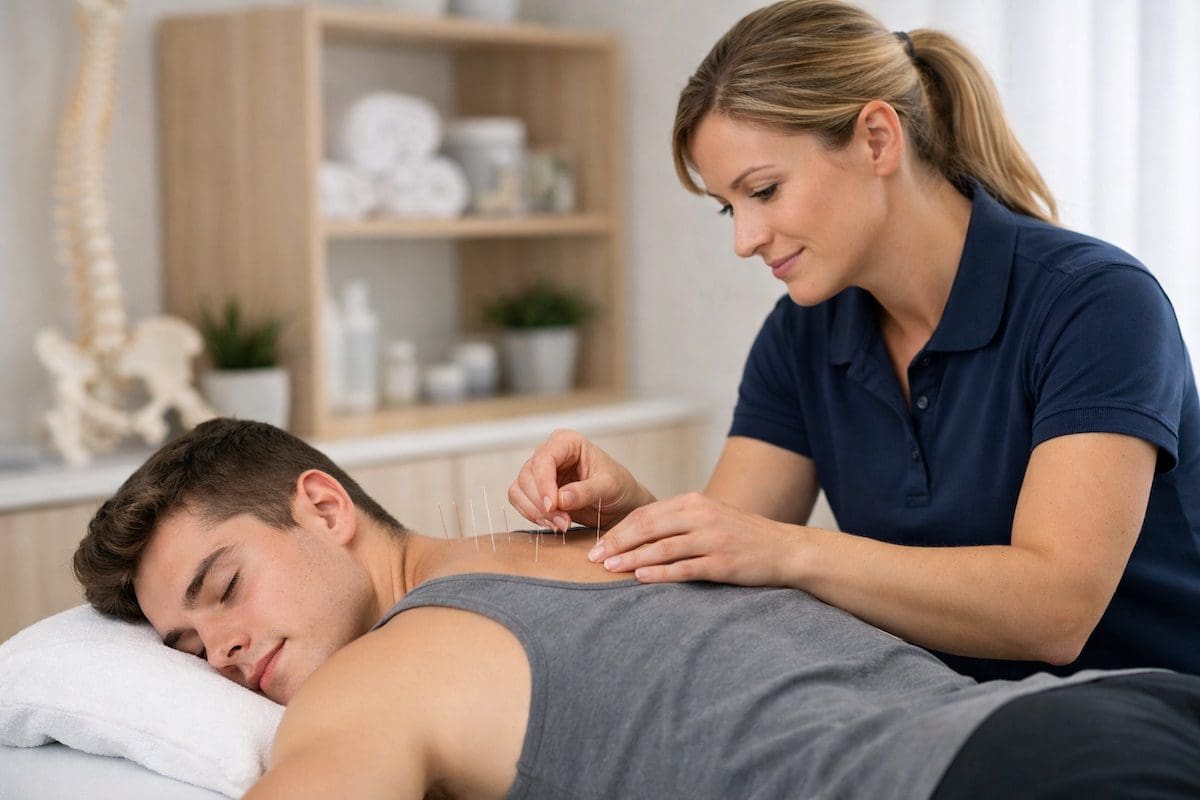
Acupuncture may help some people manage persistent back pain, neck pain, knee osteoarthritis and certain headache conditions. However, the evidence varies between conditions, and not everyone responds to treatment.
Acupuncture is one possible part of a broader pain management plan. At PhysioWorks, a physiotherapy assessment can help determine whether acupuncture, dry needling, exercise or another treatment approach suits your symptoms and goals.
Acupuncture is used for several pain presentations, although its effectiveness differs between conditions. The most relevant question is whether needling may offer a useful benefit for your particular symptoms.
Chronic low back pain
Acupuncture may improve pain-related function and provide symptom relief for some people with persistent low back pain.
Neck pain
Some people experience short-term pain relief. Treatment may complement movement exercises and activity advice.
Knee osteoarthritis
Acupuncture may offer modest improvements in pain and function for some people, alongside exercise-based management.
Headaches
Evidence suggests acupuncture may help prevent some recurring migraine and tension-type headaches.
Shoulder and muscle pain
Needling may be considered for selected presentations, although evidence is less consistent and treatment suitability varies.
Other persistent pain
Acupuncture may be considered as an additional pain management option after assessment, rather than a universal treatment.
Research suggests acupuncture may help some pain conditions, but results depend on the condition, treatment approach and comparison treatment. Some studies report improvements compared with usual care, while benefits compared with sham acupuncture are often smaller.
Chronic low back pain
Acupuncture has been studied extensively for chronic low back pain. A 2025 randomised clinical trial involving 800 older adults reported improvements in back pain-related disability with acupuncture added to usual medical care. These findings support acupuncture as a possible treatment option, although the results may not apply equally to every patient.
For people with persistent back pain, acupuncture may form part of a plan that also addresses movement, strength, activity tolerance and pain management.
Knee osteoarthritis
Systematic reviews suggest acupuncture may provide pain relief and some functional improvement for people with knee osteoarthritis. However, the size and duration of benefit vary.
Exercise, strength training, suitable physical activity and weight management where relevant remain important parts of osteoarthritis care.
Neck pain and headaches
Acupuncture may reduce symptoms for some people with neck pain. Research also supports a possible preventive role in certain migraine and tension-type headache presentations.
However, headaches require an appropriate diagnosis. Neck stiffness does not automatically mean that a headache originates in the neck.
Acupuncture involves inserting fine, sterile needles at selected points in the body. Researchers believe needling may influence how the nervous system processes pain and may affect local and central pain-related responses.
However, the mechanisms are not completely understood, and different explanations have varying levels of scientific support.
For some people, a reduction in pain may make it easier to participate in normal activities and rehabilitation exercises. Acupuncture itself does not rebuild muscle strength, correct every cause of pain or replace an appropriate exercise program.
Can Acupuncture Help Back Pain and Sciatica?
Acupuncture may be considered for persistent low back pain, particularly when discomfort affects movement, sleep or daily activities. Treatment response varies, and acupuncture is not necessary for everyone with back pain.
Sciatica requires more careful consideration. Pain travelling into the leg can have several causes, including irritation of a spinal nerve. Acupuncture may help some people’s pain, but it does not necessarily resolve nerve compression or another underlying cause.
New or progressive weakness, changing sensation or worsening neurological symptoms warrant clinical assessment. Problems with bladder or bowel control, or numbness around the saddle region, require urgent medical assessment.
When Might Acupuncture Fit Into Physiotherapy?
Acupuncture may be worth discussing when persistent pain limits activity and other appropriate strategies have not provided enough relief. It may also be considered when a person prefers a non-medicine pain management option.
Your physiotherapist can consider:
the likely source and nature of your symptoms;
how long the pain has been present;
previous treatment and your response;
your medical history and needling-related precautions;
the quality of evidence for your condition; and
whether symptom relief could support progress towards meaningful activity goals.
Acupuncture is optional. Some people prefer education, graded exercise, manual therapy, pacing or other conservative treatments.
What Is the Difference Between Acupuncture and Dry Needling?
Both approaches use fine needles, but their treatment frameworks and point-selection methods may differ.
Acupuncture commonly uses points selected according to an acupuncture treatment framework. Contemporary clinical acupuncture may also incorporate musculoskeletal and pain science reasoning.
Dry needling generally follows a musculoskeletal assessment and may focus on painful muscles, trigger points or other relevant soft tissues.
There is overlap in how the techniques are performed and in some proposed physiological effects. Neither approach is automatically better for every pain condition.
Acupuncture is not suitable for everyone. A clinician should review your health history, symptoms and potential risks before treatment.
Tell your treating clinician if you:
take anticoagulant medicines or have a bleeding disorder;
are pregnant or may be pregnant;
have an infection or skin condition near a proposed treatment area;
have a history of fainting or significant reactions to needles;
have reduced sensation or relevant neurological symptoms; or
have a significant medical condition, recent surgery or other concern that may affect treatment safety.
Common minor adverse effects can include temporary soreness, bruising or bleeding. Serious complications are uncommon but can include infection or injury to deeper structures. Appropriate training, sterile single-use needles and safe technique are important.
Acupuncture may help some people with chronic musculoskeletal pain, particularly persistent low back pain. The level of benefit varies, and treatment should be considered alongside other appropriate pain management strategies.
Does acupuncture help knee osteoarthritis?
Acupuncture may provide modest pain relief and functional improvement for some people with knee osteoarthritis. It does not reverse arthritis and should not replace strengthening, suitable exercise and other recommended care.
Can acupuncture help headaches?
Acupuncture may help reduce the frequency of some migraine and tension-type headaches. However, headache types differ, and new, severe or unusual headaches require appropriate medical assessment.
Is acupuncture the same as dry needling?
No. Both use fine needles, but acupuncture and dry needling may use different assessment frameworks and point-selection methods. Your treating clinician can explain their approach and whether needling is appropriate for you.
What Should You Do Next?
If persistent pain is affecting your work, sleep, exercise or everyday activities, a physiotherapy assessment can help clarify the likely causes and suitable management options.
Your physiotherapist can discuss whether acupuncture is appropriate, whether another approach may suit you better and how treatment can support your activity and rehabilitation goals.
Choose your clinic and appointment pathway
Select a PhysioWorks clinic to continue to live booking, an appointment request or reception assistance.