Upper Back Pain Physiotherapy: Causes, Treatment & Relief



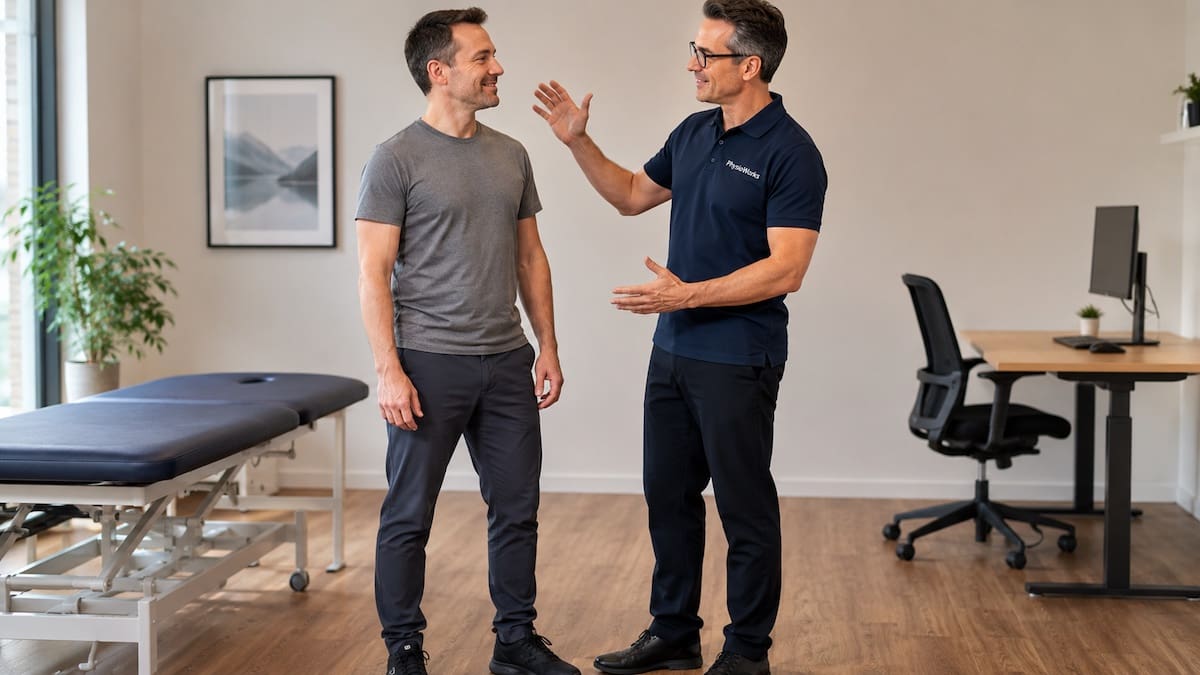
Thoracic spine posture assessment in clinic
Upper back pain physiotherapy helps identify the likely source of pain around the thoracic spine, improve movement, and guide the right next step before symptoms become more persistent. Upper back pain can come from joints, muscles, discs, nerves, ribs, posture overload, or, less commonly, an underlying medical condition.
If you are comparing possible causes, it also helps to review broader thoracic pain conditions and related problems such as thoracic facet joint pain. A physiotherapist can assess your symptoms, identify likely pain drivers, and guide treatment that matches your work, activity, and recovery goals.
- Upper back pain may feel stiff, aching, sharp, tight, or hard to settle.
- Symptoms often worsen with prolonged sitting, twisting, lifting, coughing, or poor posture.
- Common sources include thoracic joints, muscles, discs, ribs, and nerves.
- Many cases improve with guided treatment, better load management, and progressive exercise.
Related upper back pain pages
What causes upper back pain?
Upper back pain usually comes from overloaded thoracic joints, strained muscles, rib or spinal stiffness, disc irritation, posture stress, or referred pain from nearby structures. In some cases, symptoms relate to a more specific diagnosis, so the pattern of pain, stiffness, and aggravating activities matters.
Many people notice symptoms after long periods of desk work, sudden lifting, awkward twisting, sport, coughing, poor sleep positions, or repeated postural strain. Healthdirect also notes that most upper back pain is not caused by a serious medical problem, although some symptoms do need prompt review. Healthdirect’s upper back pain guide is a useful overview.
Common causes of upper back pain
- Thoracic joint irritation: including thoracic facet joint pain and stiffness through the thoracic spine.
- Muscle pain and strain: including pulled back muscle, side strain, DOMS, or postural overload.
- Postural contributors: prolonged slumped sitting, repetitive desk work, or reduced thoracic movement.
- Structural conditions: such as Scheuermann’s disease, scoliosis, or osteoporosis.
- Disc or nerve irritation: including bulging disc, thoracic outlet syndrome, or pinched nerve.
- Inflammatory or systemic conditions: such as ankylosing spondylitis, fibromyalgia, or rheumatoid arthritis.
How can upper back pain physiotherapy help?
Upper back pain physiotherapy helps by assessing the structures involved, identifying aggravating movements or loads, and matching treatment to your symptoms and goals. Treatment often combines education, targeted exercise, manual therapy when appropriate, posture advice, and a gradual return to normal activity.
Your physiotherapist may look at thoracic mobility, rib movement, shoulder blade control, breathing pattern, lifting mechanics, work setup, training load, and how long you have been in pain. If symptoms overlap with back pain, neck pain, or posture-related problems, they may also assess nearby regions to make sure the pain source is not being missed.
Common upper back pain physiotherapy treatments
- hands-on therapy for stiff or irritated joints and soft tissues
- mobility exercises for the thoracic spine, ribs, and shoulders
- strengthening for postural muscles, trunk support, and shoulder blade control
- load management advice for work, gym, parenting, and daily tasks
- posture and workstation guidance where helpful
- graduated return to sport, exercise, or heavier activity
Is posture the real cause of upper back pain?
Posture can contribute to upper back pain, but it is rarely the only reason. More often, symptoms build up when posture combines with long sitting, poor movement variety, stress, fatigue, reduced strength, or a sudden spike in physical load.
That is why treatment usually works best when it improves movement habits, strength, and load tolerance rather than simply trying to sit perfectly all day. If posture is a clear contributor, pages on posture correction, sitting posture, standing posture, and thoracic stiffness can help.
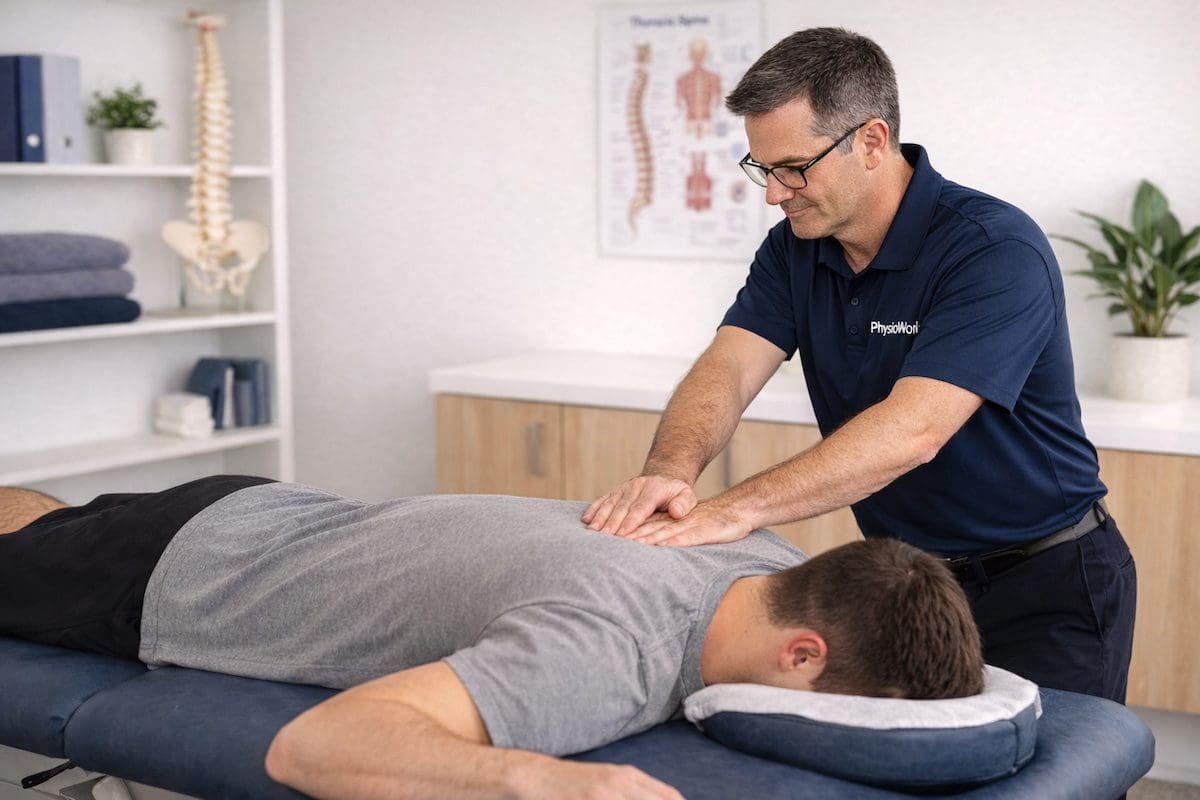
Thoracic spine mobilisation for upper back stiffness
Is upper back pain physiotherapy right for you?
Upper back pain physiotherapy may suit you if stiffness, pain, posture strain, or repeated flare-ups are limiting work, exercise, sleep, or daily activity. It is especially useful when self-management has only partly helped, or when you are unsure whether the pain is coming from a joint, muscle, disc, rib, or nerve-related problem.
Many people also book when symptoms keep returning after desk work, lifting, sport, or long periods of sitting. Early assessment can help you reduce aggravation, improve confidence, and follow a clearer recovery plan.
When should you worry about upper back pain?
You should seek prompt medical or physiotherapy review if upper back pain follows significant trauma, is getting worse quickly, causes marked weakness or numbness, affects balance, disturbs breathing, or is linked with fever, unexplained weight loss, or night pain that does not settle.
Less urgent but still worthwhile reasons to book include pain lasting more than a few weeks, repeated flare-ups, stiffness that limits work or sport, pain with coughing or deep breathing, or symptoms that keep returning despite rest and stretching.
Upper Back Pain Physiotherapy FAQs
Can upper back pain come from muscles?
Yes. Muscles are a common source of upper back pain, especially after lifting, sport, prolonged desk work, coughing, or awkward sleep. Muscle-related pain often feels tight, sore, or stiff and may improve as movement gradually returns.
Can poor posture cause upper back pain?
Poor posture can contribute, especially when combined with long periods of sitting, low movement variety, or weak postural endurance. However, posture is usually just one part of the bigger picture rather than the whole cause.
Do I need a scan for upper back pain?
Usually not. Many upper back pain presentations can be assessed well from your history, symptom pattern, and physical examination. Scans are more useful when symptoms suggest fracture, serious pathology, nerve compromise, or another less common diagnosis.
Is exercise good for upper back pain?
In many cases, yes. The right exercise program can improve thoracic mobility, reduce stiffness, build strength, and improve load tolerance. The best exercises depend on whether your pain is driven by joints, muscles, posture load, or another condition.
How long does upper back pain take to settle?
Recovery varies. A mild muscular flare-up may settle in days to weeks, while persistent joint, disc, postural, or inflammatory presentations can take longer. Early assessment often helps you avoid repeated aggravation and unnecessary delays.
Can physiotherapy help recurring upper back pain?
Yes. Recurring pain often improves when treatment addresses the real drivers, such as thoracic stiffness, repeated load spikes, poor conditioning, lifting habits, or work setup. Physiotherapy also helps you build a plan to reduce future flare-ups.
Related upper back pain articles
- Thoracic pain
- Thoracic facet joint pain
- Side strain
- Thoracic outlet syndrome
- Scheuermann’s disease
- Scoliosis
- Osteoporosis
- Back pain physiotherapy
What should you do next for upper back pain?
If your upper back pain is new, persistent, or keeps returning, a physiotherapy assessment can help clarify the likely cause and guide the most suitable treatment path. Early advice is especially helpful if you are unsure whether the pain is coming from a joint, muscle, disc, nerve, posture overload, or an underlying condition.
If your symptoms are affecting work, exercise, sleep, or daily comfort, booking now can help you move from guesswork to a clearer plan. PhysioWorks can assess your upper back pain, explain what is most likely driving it, and build a treatment plan that matches your goals.
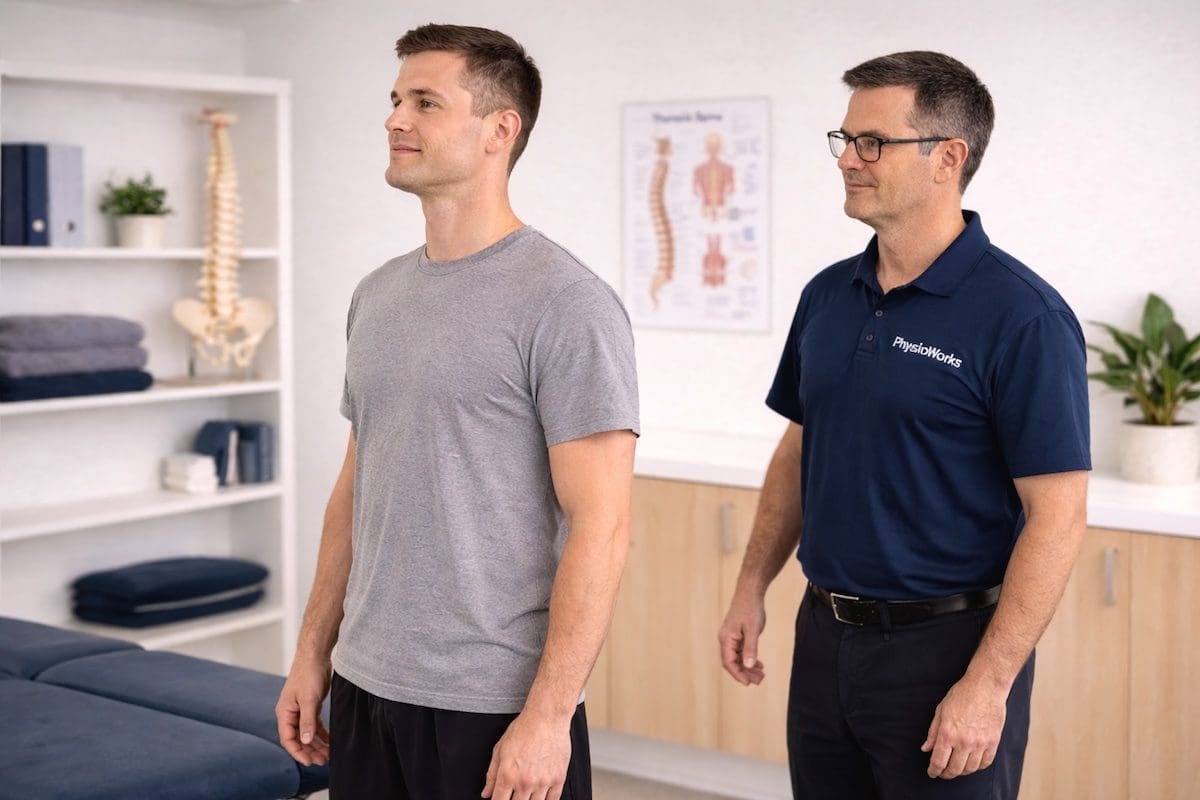
Standing taller with improved thoracic posture
Choose your clinic and appointment pathway
Select a PhysioWorks clinic to continue to live booking, an appointment request or reception assistance.
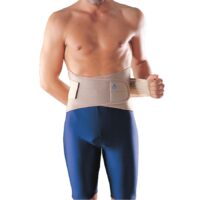
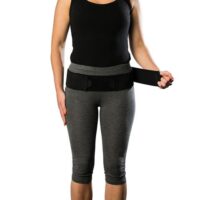
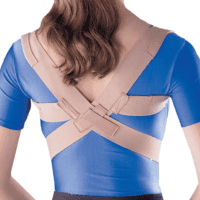
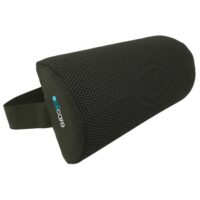
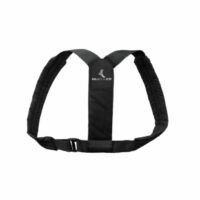
If you are looking at supports, posture aids, or home-management tools, these thoracic-friendly products may help support comfort and recovery between sessions.
Thoracic and Upper Back Products
These thoracic and upper back products are commonly used by our physiotherapists to improve strength, posture, movement, plus assist home exercise programs.
-
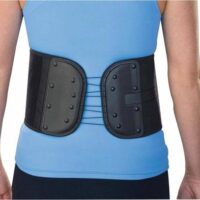
 Back, Braces & Supports, Posture
Mueller Green Adjustable Back Abdominal Support
$125.00Add to cartQuick View -
-
-

 Exercise Balls, Back, Exercise Equipment, Knee, Shoulder
66fit Exercise Balls | Core & Rehab Stability Ball
$32.00 – $57.00Select optionsQuick View -
-
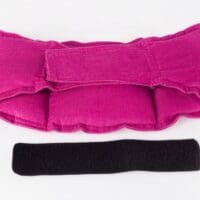
 Ice & Heat, Pain Management, Uncategorized
PhysiPak Universal Heat pack
$79.00Select optionsQuick View -


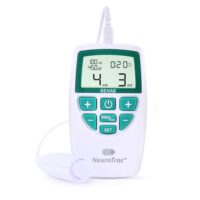
- EMS Machines, Pain Management, TENS Machine, TENS Machine & EMS
NeuroTrac Rehab (TENS Machine + EMS)
$285.00Add to cartQuick View -
-
- Liniments & Gels, Massage Liniments, Pain Management
Fisiocrem
$16.95 – $39.95Select optionsQuick View -
















References
- Healthdirect. Upper back pain (thoracic pain). Healthdirect Australia. Accessed April 12, 2026.
- Risetti M, Gambugini R, Testa M, Battista S. Management of non-specific thoracic spine pain: a cross-sectional study among physiotherapists. BMC Musculoskelet Disord. 2023;24(1):398. doi:10.1186/s12891-023-06505-8
- Sampath KK, Smith T, Farrell G, et al. Diagnosing and treating upper back pain: insights from New Zealand's manipulative physiotherapists and osteopaths. J Man Manip Ther. 2025;33(2):149-157. doi:10.1080/10669817.2024.2438196