
Common Football Injuries


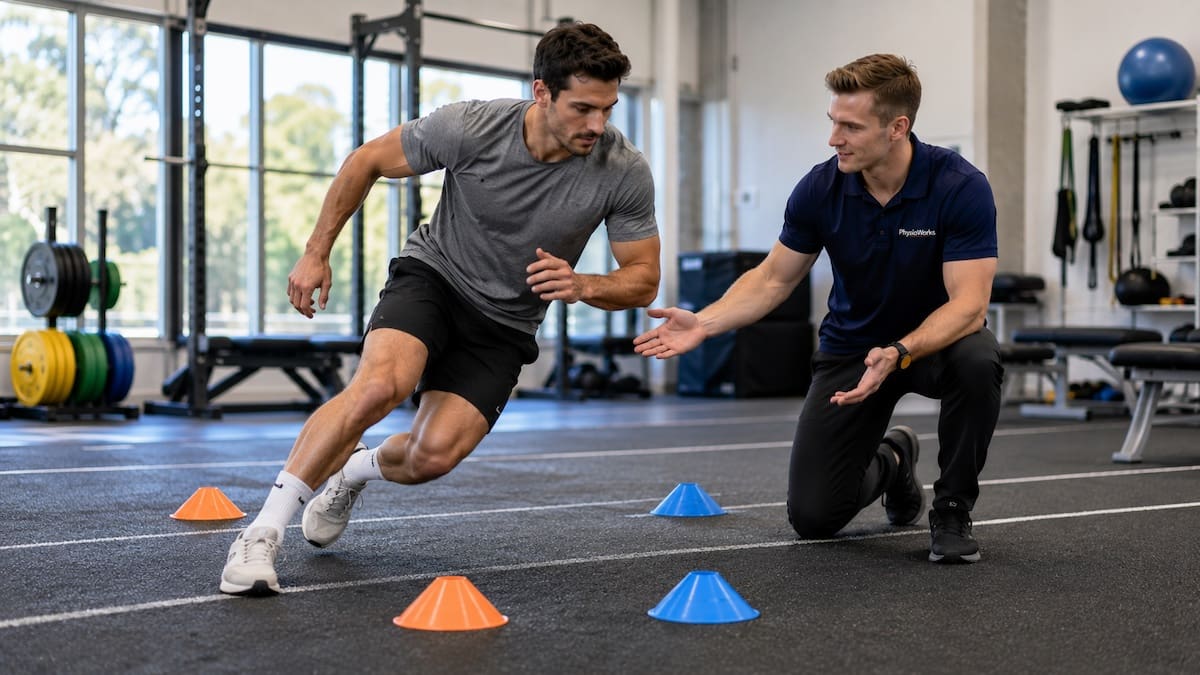
Common football injuries usually affect the ankle, knee, hamstring, calf, groin and shoulder. Sprinting, tackling, landing, kicking and fast direction changes all add load. These injury patterns affect AFL, rugby union, rugby league, touch football and soccer players. For the broader football code overview, visit our Football Injuries hub or the wider Sports Injuries hub.
Quick Guide: Common Football Injuries
- Most common areas: ankle, knee, hamstring, calf, groin and shoulder.
- Common triggers: sprinting, cutting, landing, tackling and kicking.
- Concerning signs: swelling, limping, giving-way, sharp pain or concussion symptoms.
- Best next step: match rehab to running, sprinting, cutting, contact and game demands.
What Are the Most Common Football Injuries?
The most common football injuries include ankle sprains, knee injuries, hamstring strains, groin pain, calf strains, shoulder injuries and concussion. They often happen during sprinting, twisting, landing, tackling or kicking. Mild soreness can settle quickly. However, swelling, limping, instability or repeated flare-ups need a clearer plan.
- Ankle sprain after rolling, landing awkwardly or contact
- Knee pain or ligament injury during pivoting, braking or collision
- Hamstring strain during sprinting or late-game fatigue
- Groin or adductor pain with kicking and cutting
- Calf pain during repeated acceleration and running load
- Shoulder pain after tackles, falls or contact
- Concussion after head impact, whiplash force or collision
Common Football Injuries by Body Region
Football injury patterns vary by code and position. Even so, the same body regions are exposed to high load across most football sports. Use the links below to move from this overview to the most relevant condition page.
- Ankle sprains are common during sidestepping, landing or contact. See Sprained Ankle.
- Knee injuries may involve overload pain, meniscus irritation or ligament injury. See Knee Pain and ACL Injury.
- Hamstring strains often occur during high-speed running. See Hamstring Strain.
- Groin pain is common with kicking, sprinting and sharp direction changes. See Groin Pain.
- Calf pain can appear during repeated acceleration, jumping or running load. See Calf Pain and Calf Strain.
- Shoulder injuries are more common in contact codes due to tackles, falls and direct impact. See Shoulder Pain.
- Concussion should always be managed carefully. See Concussion: Return to Sport.
Football Codes and Common Injury Patterns
| Code | Common demands | Useful guide |
|---|---|---|
| AFL | Running, jumping, kicking and contact | AFL Injuries |
| Rugby union | Contact, tackling, scrums and sprinting | Rugby Injuries |
| Rugby league | Repeated contact, acceleration and change of direction | Rugby League Injuries |
| Touch football | Repeated sprinting, cutting and rapid deceleration | Touch Football Injuries |
| Soccer | Kicking, sprinting, cutting and lower-limb load | Football (Soccer) Injuries |
What Feels Normal After Football?
Mild muscle soreness after football can be normal, especially after a harder session, new drill, increased minutes or return after a break. It should usually ease within 24 to 72 hours and feel better as you move. It should not cause limping, giving-way or worsening pain.
Usually less worrying: mild general soreness, stiffness that eases with warm-up, and symptoms that improve over the next day or two.
More concerning: a pop, swelling, sharp pain, instability, pins and needles, limping, night pain or pain that returns every session.
Why Do Football Injuries Happen?
Football injuries happen when tissue load exceeds what the player can tolerate at that time. The risk can rise when speed, contact, fatigue, training spikes or poor recovery reduce control. Previous injury also matters, especially if strength, sprinting, cutting and contact tolerance have not been rebuilt.
Football loads the body in several ways at once. Players sprint, brake, twist, tackle, jump, land and kick repeatedly across training and matches. Fatigue can reduce timing and control. This may increase stress on joints, muscles, tendons and ligaments.
Research on football injury prevention supports structured load management, strength work and warm-up programs. For a public health overview of injury prevention principles, Healthdirect provides a useful guide to accidents and injuries.
Why Do Football Players Get Hamstring and Calf Injuries?
Hamstring and calf injuries in football often relate to sprinting, acceleration, fatigue and rapid changes in speed. Risk can increase when sprint load rises too quickly, strength is not ready for top speed, or the player returns before running mechanics and tissue capacity are restored.
These injuries are common because football asks the lower limb to produce force quickly. Rehab should usually progress from pain control and strength into running, sprint exposure, change of pace and football-specific drills.
Why Do Football Players Get Knee and Ankle Injuries?
Knee and ankle injuries often occur when the foot sticks, the body rotates, or the player lands awkwardly under pressure. Contact can also force the joint into a position it cannot control. Swelling, giving-way or difficulty running normally should not be treated as simple soreness.
Good rehab often includes balance, landing control, strength, agility and return-to-contact planning. Players who have had an ankle sprain or knee injury before may also need prevention work to reduce recurrence risk.
When Should You Worry About a Football Injury?
You should worry about a football injury if pain stops play, swelling appears quickly, you cannot run normally, or the joint feels unstable. You should also be cautious with concussion symptoms, pins and needles, obvious deformity, or pain that worsens each day.
Football Injury Decision Guide
| Situation | Best next step |
|---|---|
| Mild soreness that improves with warm-up | Modify load and monitor response over 24 to 72 hours |
| Pain changes running, kicking or cutting | Reduce football load and consider assessment |
| Swelling, giving-way or sharp pain | Stop play and arrange prompt review |
| Concussion symptoms or head injury concern | Do not return to play that day; seek appropriate medical guidance |
How Can Physiotherapy Help Common Football Injuries?
Physiotherapy can help by identifying the likely injured structure and matching rehab to football demands. Management may include pain control, mobility, strength, balance, running progressions and return-to-play planning. The goal is to restore function, not just wait for pain to settle.
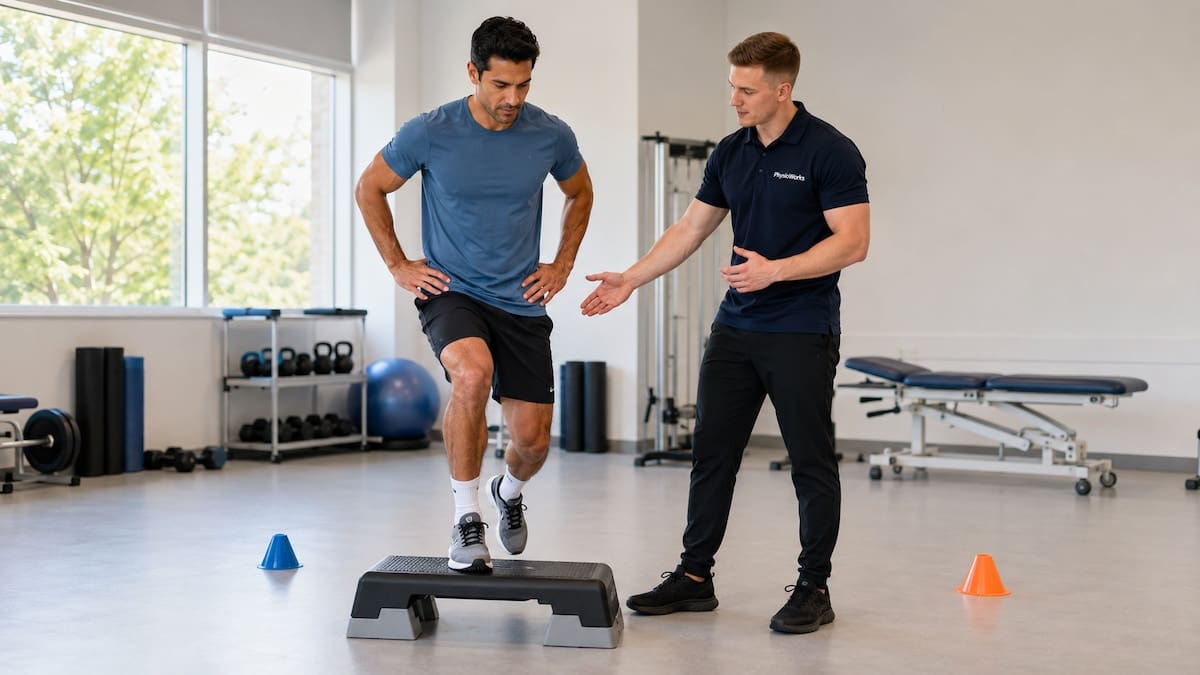
- Assessment of pain, swelling, movement and function
- Strength and control testing
- Return-to-running and sprint progressions
- Landing, cutting and change-of-direction drills
- Load planning across training and matches
- Prevention strategies after a previous injury
If you want sport-specific management, see Sports Physiotherapy Brisbane.
Return-to-Play Progression After Football Injury
A return to football should usually progress from basic movement to full sport demand. Time alone is not enough. Players should rebuild strength, running tolerance, sprint speed, cutting control and contact confidence before returning to match play.
| Stage | Focus | Examples |
|---|---|---|
| 1. Settle symptoms | Reduce pain and swelling | Walking, gentle mobility, low-load strength |
| 2. Rebuild strength | Restore local and whole-limb capacity | Calf, hamstring, hip, knee and trunk strength |
| 3. Reintroduce running | Build tolerance gradually | Walk-jog, steady running, strides |
| 4. Add football speed | Prepare for game demands | Sprinting, braking, cutting, kicking and jumping |
| 5. Return to training | Rebuild confidence under pressure | Non-contact drills, controlled contact, full training |
| 6. Return to play | Match load and recurrence prevention | Managed minutes, recovery planning, ongoing strength work |
How Can Football Players Reduce Injury Risk?
Football players can reduce injury risk by building strength, progressing load gradually, warming up well, recovering between sessions and finishing rehab after injury. Prevention works best when it becomes part of weekly training rather than a short add-on after pain starts.
- Progress running volume and sprint work gradually
- Include hamstring, calf, hip and trunk strength
- Practise landing, balance and change-of-direction control
- Use a structured warm-up before training and matches
- Respect fatigue, sleep, recovery and sudden training spikes
- Complete return-to-play steps after injury before full match exposure
Practical Weekly Injury-Prevention Checklist
- Keep at least one lower-limb strength session in the week.
- Include some sprint exposure when match speed is part of your sport.
- Build cutting and landing drills gradually after injury.
- Reduce load early if pain changes your running or kicking style.
- Do not return from concussion symptoms without appropriate guidance.
Common Football Injury FAQs
What are the most common football injuries?
The most common football injuries include ankle sprains, knee injuries, hamstring strains, groin pain, calf strains, shoulder injuries and concussion. They often occur during sprinting, cutting, landing, kicking or contact.
Is it normal to feel sore after football?
Mild soreness after a hard session or match can be normal and often improves within 24 to 72 hours. Pain that worsens, causes limping or keeps returning with the same activity is more concerning.
Should I play through a mild strain or sprain?
Playing through a football injury can worsen tissue damage and increase recurrence risk. It is usually smarter to modify load early, then build back through walking, jogging, sprinting, cutting and contact as symptoms and function improve.
What helps prevent football injuries?
Gradual load progression, lower-limb strength work, trunk control, balance training and a structured warm-up can all help reduce injury risk. After an injury, finishing rehab matters just as much as the early treatment phase.
Which football injuries need urgent review?
Concussion symptoms, major swelling, obvious deformity, inability to bear weight, severe instability, or pain with pins and needles need prompt medical assessment. These signs can suggest a more significant injury.
How do I know when I can return to football?
Return to football is usually safer when you can run, sprint, cut, kick and complete training drills without symptoms or compensation. Your strength, confidence and sport-specific control should match the demands of your code and position.
Related Information
What to Do Next
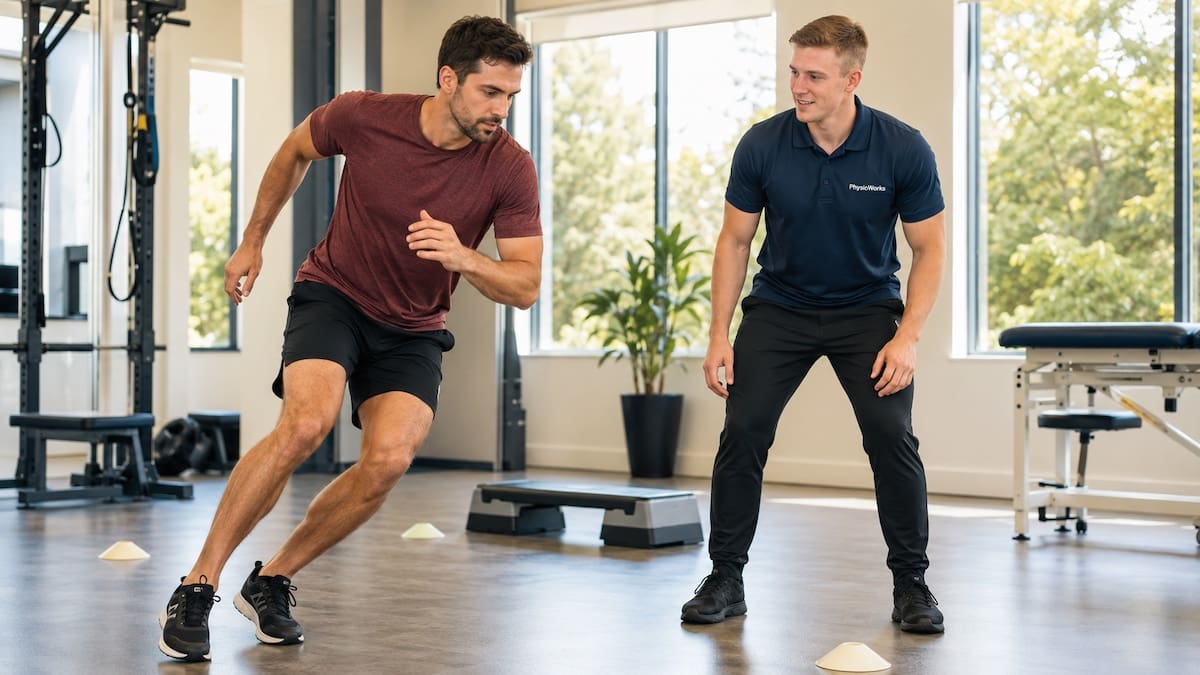
If your symptoms are mild, reduce football load briefly, keep moving gently and build back gradually. However, if pain is sharp, persistent or keeps returning, an assessment can help clarify the injury and guide the next stage of rehab.
A staged return based on walking, jogging, sprinting, cutting, kicking and contact is usually more reliable than returning based on time alone.
Choose your clinic and appointment pathway
Select a PhysioWorks clinic to continue to live booking, an appointment request or reception assistance.
Muscle & Soft Tissue Products
These muscle and soft tissue products are commonly used by our physiotherapists to relax or loosen muscles, improve strength, comfort, flexibility, and home exercise programs.
-
-

-
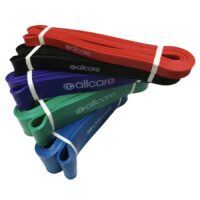
 Exercise Equipment, Resistance Band
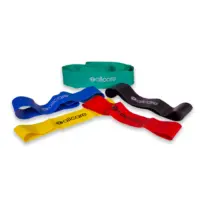
AllCare Powerloop Bands
$24.95 – $79.95Select optionsQuick View - Liniments & Gels, Massage Liniments, Pain Management
Fisiocrem
$16.95 – $39.95Select optionsQuick View -
-
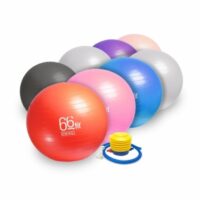
 Exercise Balls, Back, Exercise Equipment, Knee, Shoulder
66fit Exercise Balls | Core & Rehab Stability Ball
$32.00 – $57.00Select optionsQuick View -
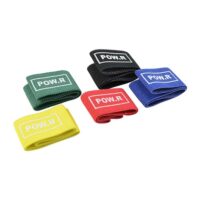 Exercise Equipment, Knee, Resistance Band
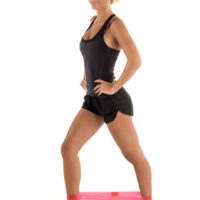
POW.R Fabric Mini Loop Bands
$12.00 – $55.00Select optionsQuick View -
-

-
-
- EMS Machines, Pain Management, TENS Machine, TENS Machine & EMS
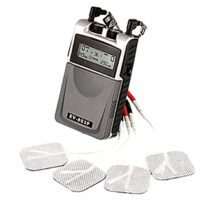
NeuroTrac Rehab (TENS Machine + EMS)
$285.00Add to cartQuick View -
-












References
- Bolling C, Delfino Barboza S, van Mechelen W, Pasman HRW, Verhagen E. The “sequence of prevention” for musculoskeletal injuries among adult recreational footballers: a systematic review of the scientific literature. Phys Ther Sport. 2018;32:1-8. doi:10.1016/j.ptsp.2018.04.005
- Green B, Bourne MN, van Dyk N, et al. Incidence and prevalence of hamstring injuries in field-based team sports: a systematic review and meta-analysis. Br J Sports Med. 2023;57(18):1183-1190. doi:10.1136/bjsports-2022-106764
- Smith NA, Franettovich Smith MM, Bourne MN, Barrett RS, Hides JA. A prospective study of risk factors for hamstring injury in Australian football league players. J Sports Sci. 2021;39(12):1395-1401. doi:10.1080/02640414.2021.1877033
For code-specific injury guidance and management pathways, visit our main Football Injuries hub.
